Category: Concerts

  • An interview with Joe O’Herlihy, U2’s Sound Engineer

    U2 2020 8
    Photo © Dara Munnis

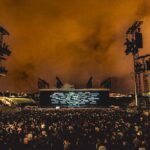
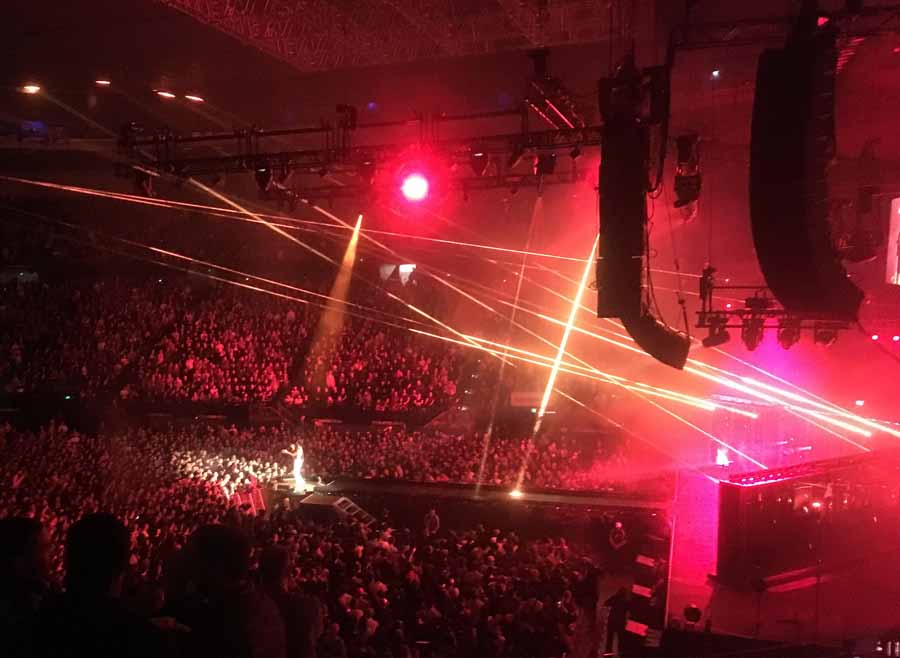
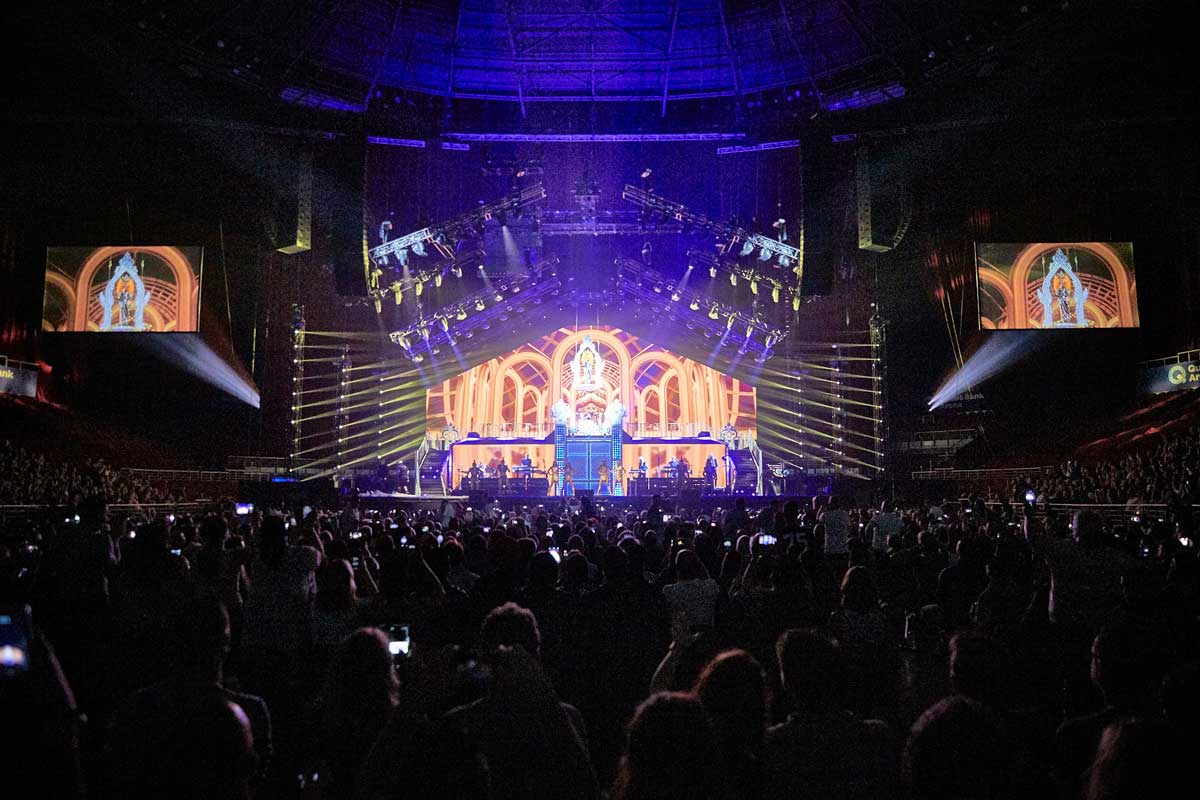
    U2’s The Joshua Tree tour began in 2017 and has since played to over 2.5 million fans. After a bit of a hiatus, when they slipped in a totally different tour, the tour was resurrected for Australia and New Zealand.

    Sound engineer Joe O’Herlihy has been with the band for decades and Cat Strom travelled to Brisbane for a chat. The PA is a Clair CO12 out of our Sydney office, all the crew and control gear was supplied by Clair Global.

    U2 2020 8
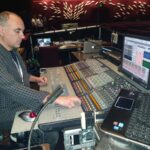
    Sound engineer Joe O’Herlihy

    After the first two shows in Auckland where Joe had to deal with 43 kilometres an hour winds gusting from the stage, Brisbane’s still and balmy 34°C was a blessed relief.

    I was looking all night long for my wind knob to dial it down but I couldn’t find it,” said Joe tongue in cheek. “It would be a sound engineer’s dream if someone could invent one!


    The sound system hasn’t changed dramatically since 2017 although there has been plenty of software updates that obviously improve the efficiency of all the technology.

    U2 2020 3
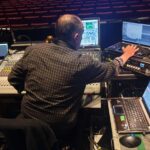
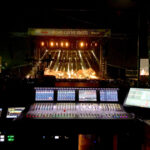
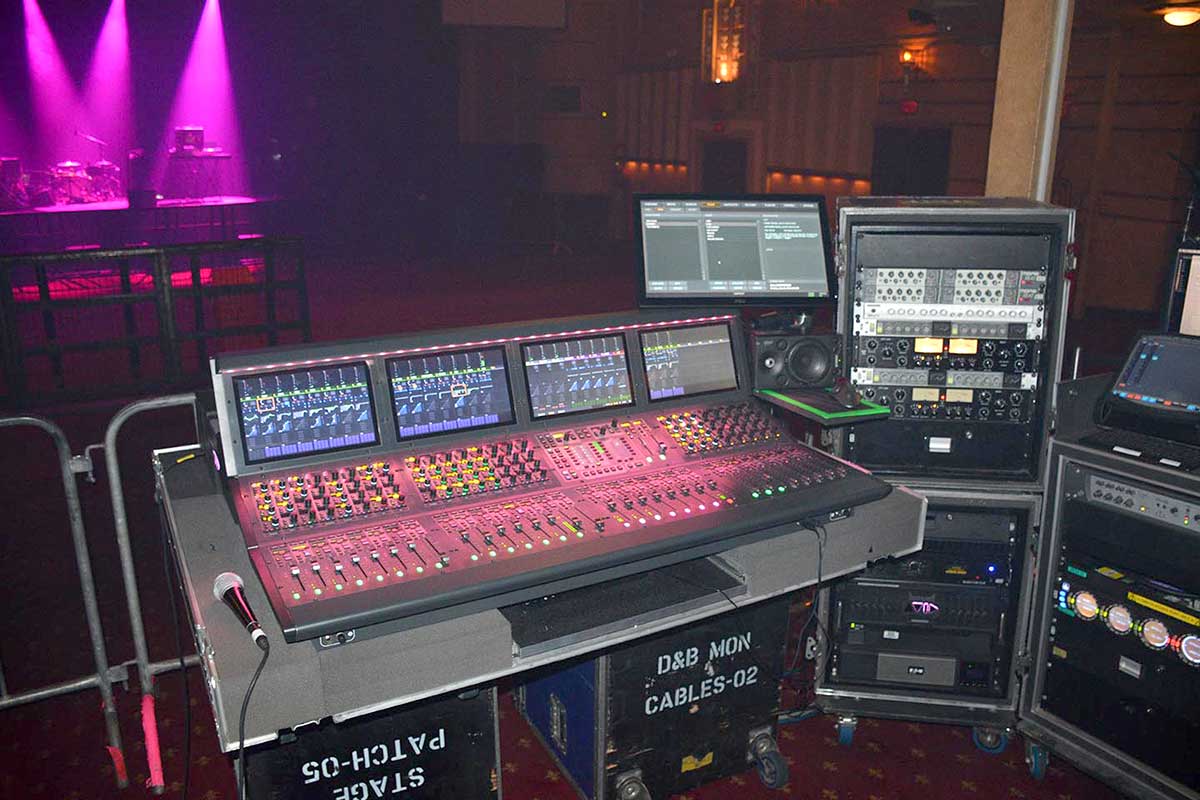
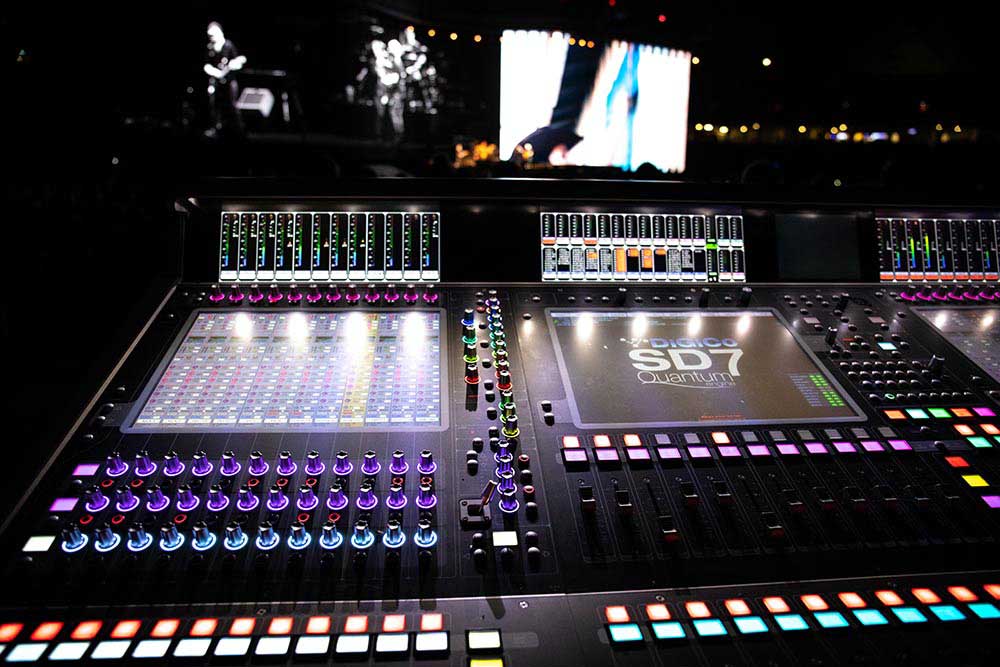
    Digico SD7

    We now have the DiGiCo SD7 Quantum consoles and I believe we have the biggest selection of DiGiCo SD7s on any tour,” added Joe. “We’ve got eight of them if you include the rehearsal room at the moment. With the software update to use the Quantum engines, they sound very transparent and very much more efficient with this upgrade than on previous occasions. It’s nice to have gear that is improving all the time like the SD7.

    Although the onboard selection has been improved enormously on the SD7, Joe still uses units that he has relied on for the past forty years with the band. For guitars, he has eight Summit Audio DCL-200 tube compressors for each of the eight different amplifiers that The Edge uses in a combination of what is affectionately known as The Edge Orchestra.

    For Bono’s main vocal, Joe uses a Manley Voxbox, three so there’s one for each of the three different vocal mics he uses. A couple of Sweet compressors are used on Edge’s vocal and he uses a headset for maneuverability.

    The treatments and effects are standard Lexicon 480L as the reverb of choice for all of the vocals and believe it or not, PCM70s dating back to prehistoric times,” said Joe. “They’re classic drum verbs and are really, really good selection plus I’ve also got a couple of harmonizers. They’re all uniquely part of their songs now and I have tried out all of the various plugins but the older, vintage products have such a unique sound. However, you have to cross your fingers that they’ll work every time the back of the truck opens!


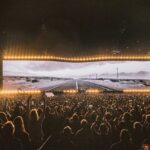
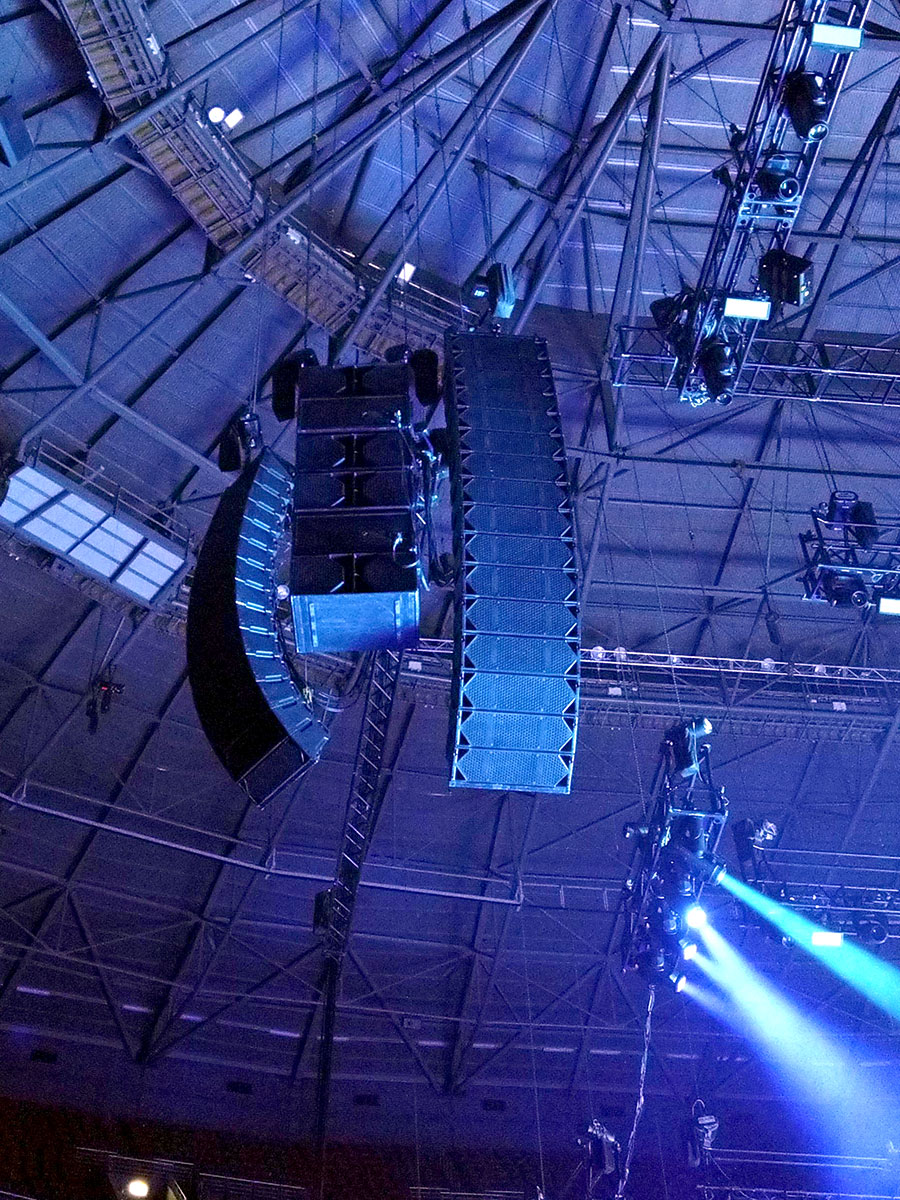
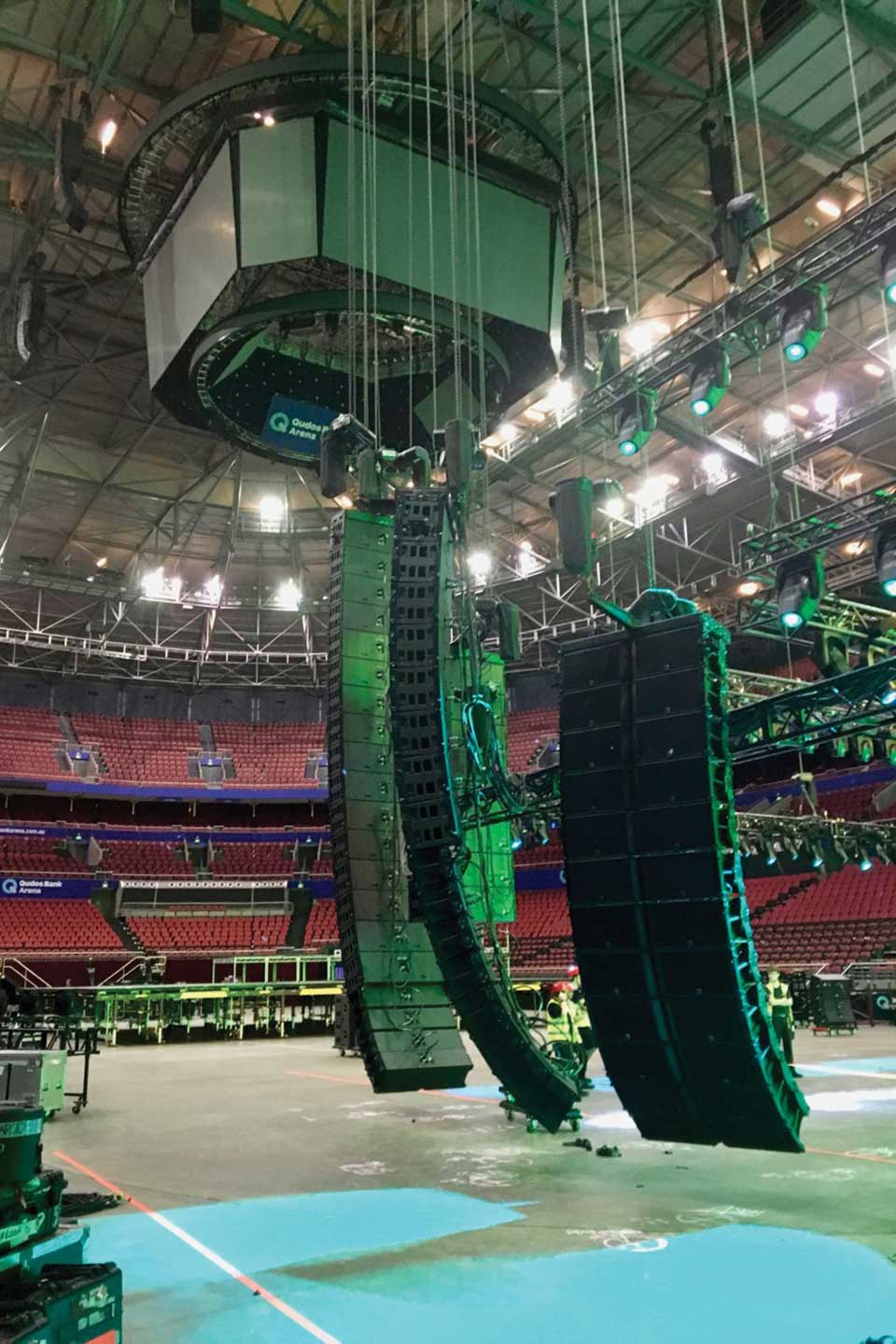
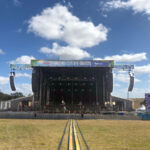
    The band has been a Clair Global client for 36 years so it was no surprise to see a Cohesion CO-12 system consisting of four sets of line arrays suspended from cantilever cranes and trimmed at 30 metres, carefully positioned so as not to obstruct the giant screen.

    The curvature of the system is designed and configured to get right up into the stands and areas that physically are very difficult to reach. Behind the mix position which is 36m away from the stage, are four delay positions placed in an arc shape to ensure sound reaches the back of the stadium.


  • Guy Sebastian

    Guy Sebastian 7

    There’s no denying that Guy Sebastian is a very talented performer with an amazing vocal range and the ability to play a wide variety of instruments. The audience at Sydney’s Star Events Centre were pumped before he took to the stage and the vibe was electrifying from start to finish.

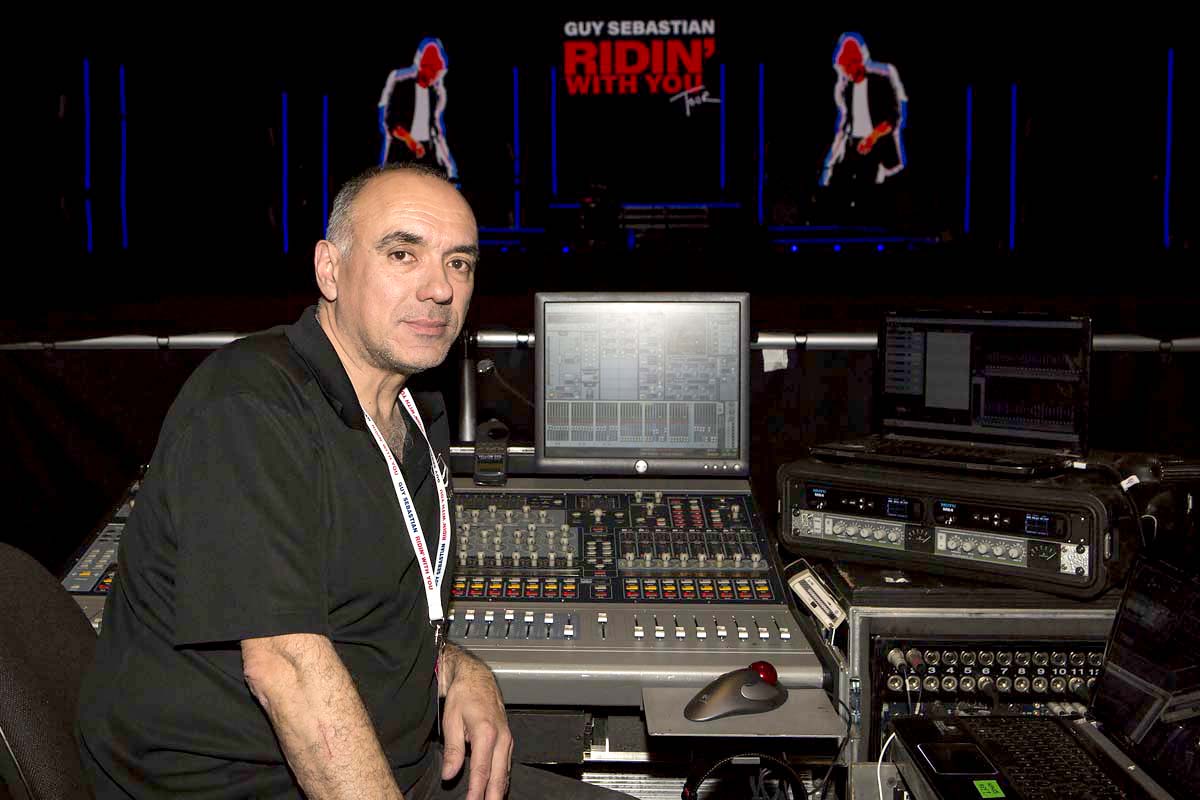
    FOH engineer George Gorga also looks after monitors which isn’t a mammoth task for him as the band control their own monitor mix on their phones via an app – a process George describes as fantastic.

    Guy owns his own a Midas M32C Digital Rackmount Mixer with a DL32 32-input / 16-output Stage Box and he really wanted to use them to try get some consistency, mainly for the one-off corporate shows that we do,” explained George. “We decided to try it on this tour so at the beginning of rehearsals I set all the gains, EQs and reverb effects which took about ½ an hour, after that I let the musicians build their own in-ear mixes. I didn’t hear from the band for the entire four days of rehearsals as they happily controlled their own mixes on their phones. In fact, during the tour I’ve very rarely heard anything from them about monitors.

    George remarked that the band love this set up as they are in control of their own destiny although all they can really control with the app are the faders of their own mix with George doing anything else required. Each singer also has their own effects unit so they’re not interfering with each other.

    A Nowsonic 2.4Ghz /5Ghz Stage Router is used on stage which George says delivers excellent coverage.


    I run more than 32 input channels at FOH but everything the band needs for monitors fits into the M32 channel count,” explained George. “I also have an AUX feed from the FOH console running back into the MIDAS Talkback input for any extra lines that may pop up. This set up may not work for every act but it really suits this one.

    George has been mixing for Guy since the beginning of the year, mainly corporate and promo gigs, but this is the first concert tour he has done with him. He was running his weapon of choice at FOH – an Avid Profile – saying that although he occasionally uses an Avid S6L, the Profile is always reliable and does what he needs it to do. Plus he can get one pretty much anywhere in the world. He added that there are no great mysteries to mixing this show.

    It’s a stock standard console with just a couple of Waves plugins; the C4 Multiband Compressor, the SSL Buss Compressor and the TrueVerb Reverb that I run on Guy’s vocal, ” added George. “The rest is all standard plugins. I have a Smart Research C2 Compressor as an external unit inserted on the main stereo buss, something I take everywhere and find it hard to mix without it these days. There’s also MADI card in the FOH rack as we multitrack record every show.

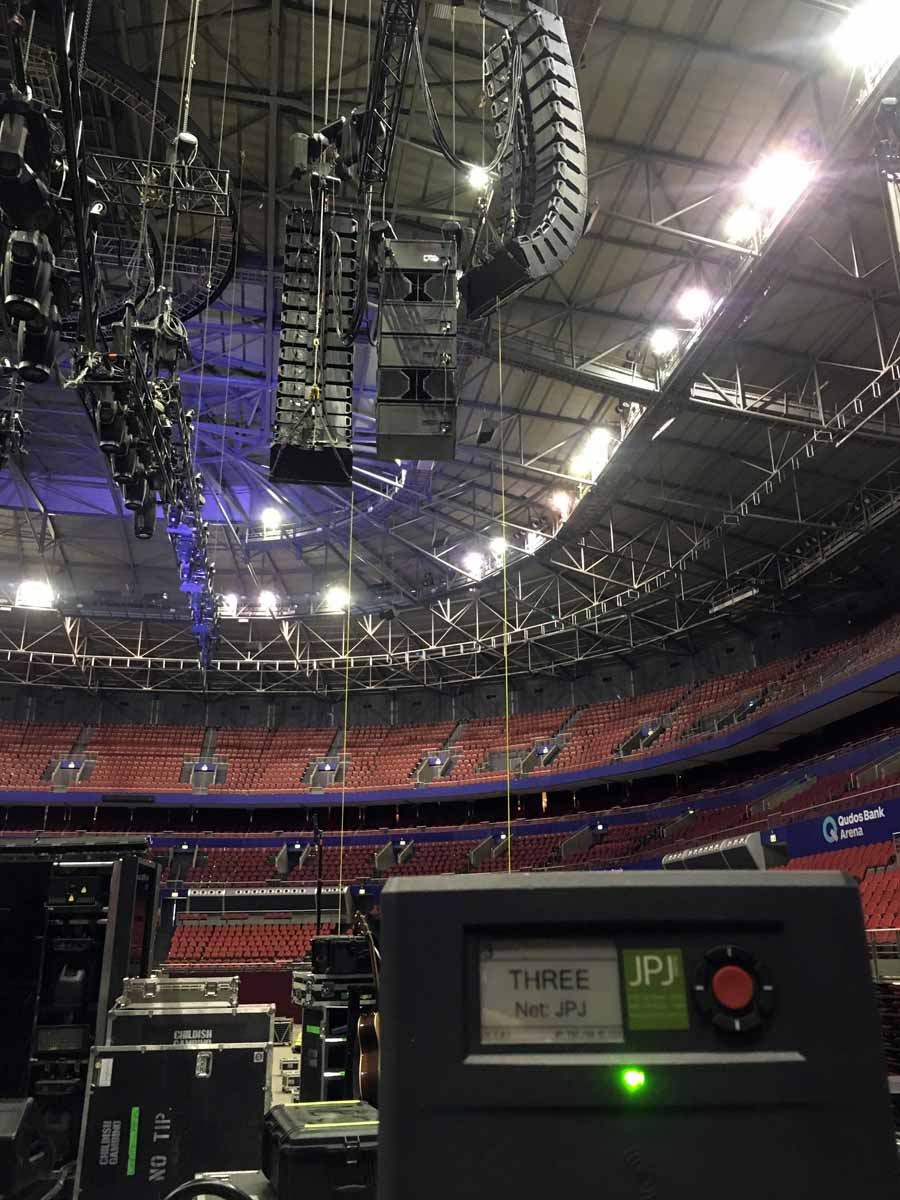
    The tour travelled an audio control package from JPJ Audio but utilised in-house PAs with George commenting that all of the venues they played had decent speaker systems. Extra gear was added locally when required, mainly subs and maybe some extra front fills.


    Guy, who has an endorsement with Sennheiser, used an EM 2050 two channel wireless receiver, two SKM 2000 handheld wireless transmitters, along with two KK 205 Neumann Condenser Microphone capsules.

    I’m a real Shure person and I hadn’t really worked with this setup before,” said George. “However, it just seems to suit his voice really well and sounds amazing”. The backing singers are on Shure Beta 58s with UR radios and everyone is on Sennheiser SR2000 IEMs of which we have eight sends.” Guy also uses a Sennheiser EW500 G4 radio system for his acoustic guitar.

    On stage are a pair of L-Acoustics 112P wedges for Guy, one 108P on Guy’s piano riser when it is rolled in plus a d&b Q-SUB for the drums – again all run off the Midas app. George can control them from his computer at FOH if needed, all on WiFi but he runs a Cat5 cable too as a backup.

    This article first appeared in the print edition of CX Magazine November 2019. CX Magazine is Australia and New Zealand’s only publication dedicated to entertainment technology news and issues. Read all editions for free or search their archive www.cxnetwork.com.au


  • Dope Lemon

    Dope Lemon 6

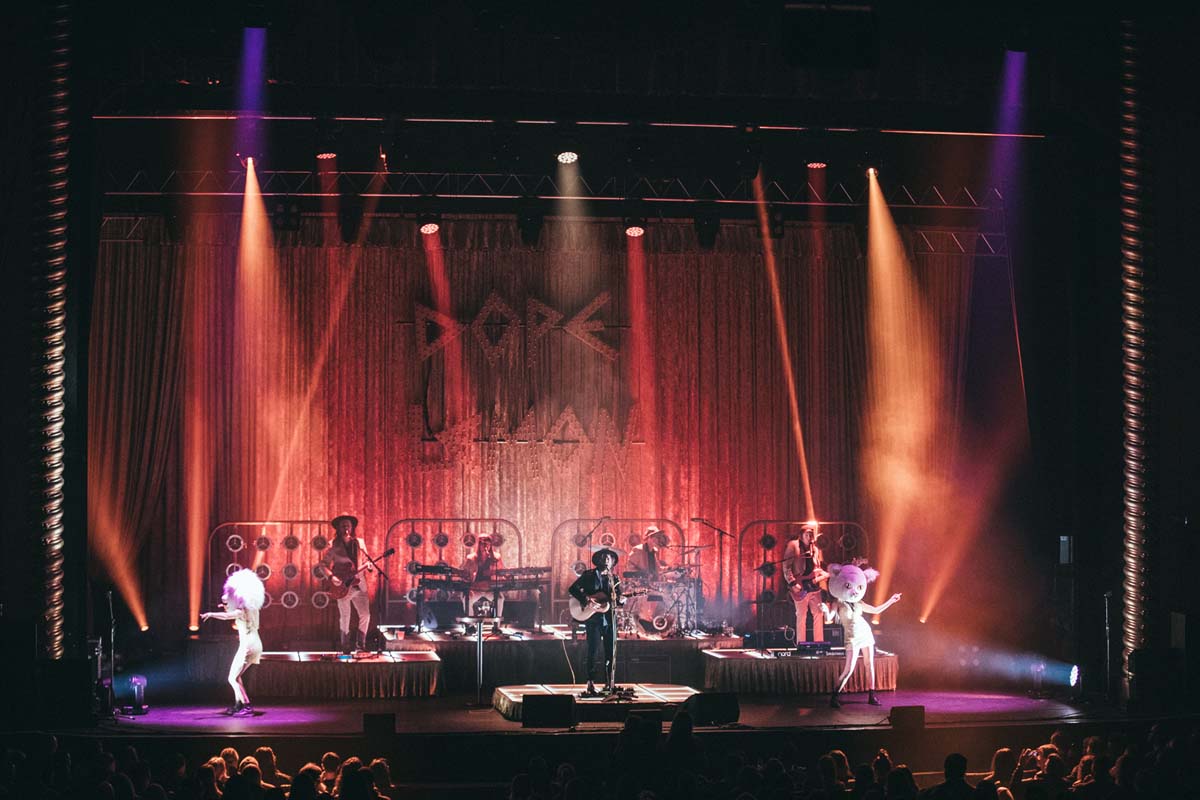
    Dope Lemon returned to the stage for their first headline tour in three years and audiences were invited to step into the real world of Angus Stone – a dream zone layered with melty moments, mischief and romance.

    At FOH, behind an Avid S6L console, was Adam Rhodes who has worked with Angus for the past 11 years. He describes mixing for Dope Lemon as quite a challenge with all of the vocals going through a TC Helicon Voice live distorted compression effect with slap delay at all times.

    It makes the gain before feedback issue much harder than usual,” added Adam. “It’s a balancing act between keeping the energy level of the band up whilst trying to ensure the vocals are intelligible and on top of the mix – particularly when it’s a distorted vocal and both Angus and Louis are playing distorted guitars, Brad has his big muff pedal on the bass and its one big wall of distortion. The traditional sound guy in me struggles with that!

    Adam doesn’t use any Waves with the Avid S6L preferring to use solely what comes in the console package. He uses the Bomb Factory 1176, Classic Bundle and Digirack compressors and the standard Revibe and Reverb One reverbs that come with the console.

    I’m enjoying the Pro Multiband compressor too,” he added. “The main reason I don’t use anything external or use any third party products is that when you’re touring around, there’s very little support for it. If I’m going into a festival situation and they don’t have that equipment, I don’t want to be having to load and install things to make my show work in the 20 minutes I have to get everything running.

    When it comes to reverbs, delays and effects, Adam says that he has always sculpted and created his own sounds rather than use presets from the pull-down lists.

    I’ll always create my own patches and all this is easily done on the consoles proprietary system,” he said. “I don’t use any feedback on the plugins, I do it all on the console. I do it old school where I feed the delay back on itself and if I want it to be a little crunchy, I’ll put a Sansamp in front of it or whatever I need to do to make the sounds I want to create.

    Adam admits he sees other engineers use plugins and achieve the same results but he suspects a lot of people just flick through presets until they find one they like. Adam will have a sound in mind and then work out how to make it.

    I’m never really happy with presets anyway so if I’m going to change them, I might as well do it from scratch,” he continued. “Plus Angus is quite particular about those sounds.


    JPJ Audio supplied the touring control package and inhouse PA systems were utilized with Adam commenting that he loves the Nexo Alpha at The Tivoli as well as the d&b J Series at The Palais.

    The Nexo GEO-D at The Enmore is a challenge to deal with particularly with my gain issues,” Adam elaborated. “It was one of the early attempts at cardioid PAs and without a proscenium arch I get a lot of mid-range honk out of the side of the boxes, heading straight towards Angus’ microphone and I struggle to get Angus’ vocals up against that.

    Everyone was on Shure PSM1000 IEMs and there were wedges on the back of the keyboard riser to provide stage vibe for Angus who doesn’t like the fact that the keyboards are DI’ed and there’s no sound coming out of them on stage. When he pulls an IEM out, he wants to be able to hear it acoustically on stage and whilst all the guitars and bass have output through their amplifiers, the keyboard is silent which leaves Angus feeling disconnected. The drummer doesn’t use a drum sub so Angus has a d&b V Sub right behind him as he likes that drum sub feel onstage.

    Most microphones are fairly standard Shure models; 57s on guitar amps and snares, Beta 98s on toms and congas, KSM32s as overheads, however it’s the KSM8 that excites Adam. All vocals use a KMS8 microphone with Angus recently acquiring two new nickel versions for this tour. Adam says that the KSM8 has changed his life with both Angus as a solo artist and Angus & Julia Stone.

    I could wax lyrical about that microphone for hours if you want!” he laughed. “The amount of gain before feedback I can get out of it is incredible plus the lack of proximately effect is fabulous. It’s the microphone I’ve always wanted.

    Eric Coelho mixed monitors on an Avid Profile monitor console.

    This article first appeared in the print edition of CX Magazine September 2019. CX Magazine is Australia and New Zealand’s only publication dedicated to entertainment technology news and issues. Read all editions for free or search their archive www.cxnetwork.com.au


  • Childish Gambino

    Childish Gambino 1

    With shows that are as immersive, interactive, and mesmerising as they are entertaining, Childish Gambino lights up the stage like very few artists can.

    In Australia to headline Splendour in the Grass, Childish Gambino played a handful of arena shows for those not lucky enough to get to Byron Bay.

    FOH Engineer Kevin Brown has been fortunate to work with some very talented artists over the years, which include Toni Braxton, American Authors, Chris Brown, OutKast, Joi, Nicki Minaj, and Cody Simpson.

    He has been with Childish Gambino for only four months after he was approached by Tim Colvard, the artist’s previous FOH guy, to take over after the first weekend of Coachella.

    Kevin was mixing on a DiGiCo SD7, saying he has tried to use the SD Platform exclusively for quite a few years. “At the time it was the only desk that didn’t make me feel restricted by its workflow,” he added.

    The SD7 has a very powerful engine and you can do almost anything, whenever you want. That type of flexibility is paramount in allowing us to be creative as mixers.

    Kevin was using a Neve 1073 and Avalon 737 for the main vocal, remarking that the 1073 is a great mic pre, and if you combine that with the smooth EQ of the Avalon, you start off in a great space for your vocal. For effects processing he was using an Eventide H3000 along with various UAD and Waves plugins for reverbs, delays and some chorusing.

    Kevin describes Childish Gambino as a solid performer and dynamic with the microphone; there are times when he projects and others where he forces you to listen.

    It’s all about dynamics, the ups and down are what create the journey,” he added.

    This is a very exciting mix, especially from a mixer’s position. There is six-piece band on stage that consists of drums, bass, two guitars, keys, and percussion.
    On top of that, you have playback tracks and five choir members. This puts us in the ballpark of 110 channels. There are so many layers that allow you to create a dynamic mix with lots of depth.

    Childish Gambino 8

    JPJ Audio provided gear and crew for the Australian leg of the tour and Kevin found himself using a Clair Brothers CO12 PA system for the first time. The system comprised of 16 CO-12 in the main with six CP-218 subs flown. For side hangs there were 14 CO-12 plus eight CO-8 for front fills and 16 CP-218s on the ground.

    The first word that comes to my mind is powerful!” commented Kevin.

    In the air the PA looked smaller than some other systems, but they sound big, and the subs sound huge. I was really impressed. It’s not every day you get that type of energy moving from an active speaker.

    Kevin remarked that there was nothing special going on with microphones. There are a few Shure 57s, 58s, 98s, and AKG 414s on stage whilst Childish Gambino is on a Shure Axient Digital 58.
    As Kevin concludes, the main ingredient is the group of talented individuals on stage. It starts at the source!

    Childish Gambino_5A touring comms package included a Riedel Artist comms system, 2300 Series Smart Panels with David Clark headsets, and Bolero wireless comms for the stage, all interfaced into Big Picture’s comms system for seamless integration with cameras and directors.

    Tour radios were also supplied by JPJ Audio with D2N also supplying a Hytera radio solution for the tour.

    Charlie Izzo, who has mixed monitors for Childish Gambino the past 18 months, says everyone in the band has really good ears and expects a higher level of fidelity in their mixes. He ran a Solid State Logic (SSL) L500, with a Lexicon Pro 480L and a Bricasti M7 outboard, and Shure PSM 1000s for IEM.“I just really like the sound of SSL’s live consoles,” he added.

    The preamps, EQs and summing have a real analogue feel to them. I use a Waves package as the flexibility and quality of Waves plugins really makes a huge difference for me.

    Childish Gambino_7Charlie utilised an ELI Distressor to control vocal dynamics and a Lexicon 480L for the vocal reverb, saying it has been a standard in recording studios for years for a reason. “In the IEMs it really shines,” he said.

    I also have a Bricasti M7 for verb. It is a really solid reverb unit that produces very clean, rich verbs. I use the internal SSL buss compressor. There are so many companies that emulate it with plugins, but having it straight from the source is spot on.

    I use the Shure PSM1000’s because they simply sound great. They have a super quiet noise floor for IEM packs and they really translate what I’m doing on the console well.

    Charlie commented that it really is a pleasure to mix for Childish Gambino, adding that aside from everyone being incredibly talented musicians and performers, they are also really great people to work with.

    Photo Credits: ©Troy Constable


    This article first appeared in the print edition of CX Magazine September 2019. CX Magazine is Australia and New Zealand’s only publication dedicated to entertainment technology news and issues. Read all editions for free or search their archive www.cxnetwork.com.au


  • Bryan Ferry

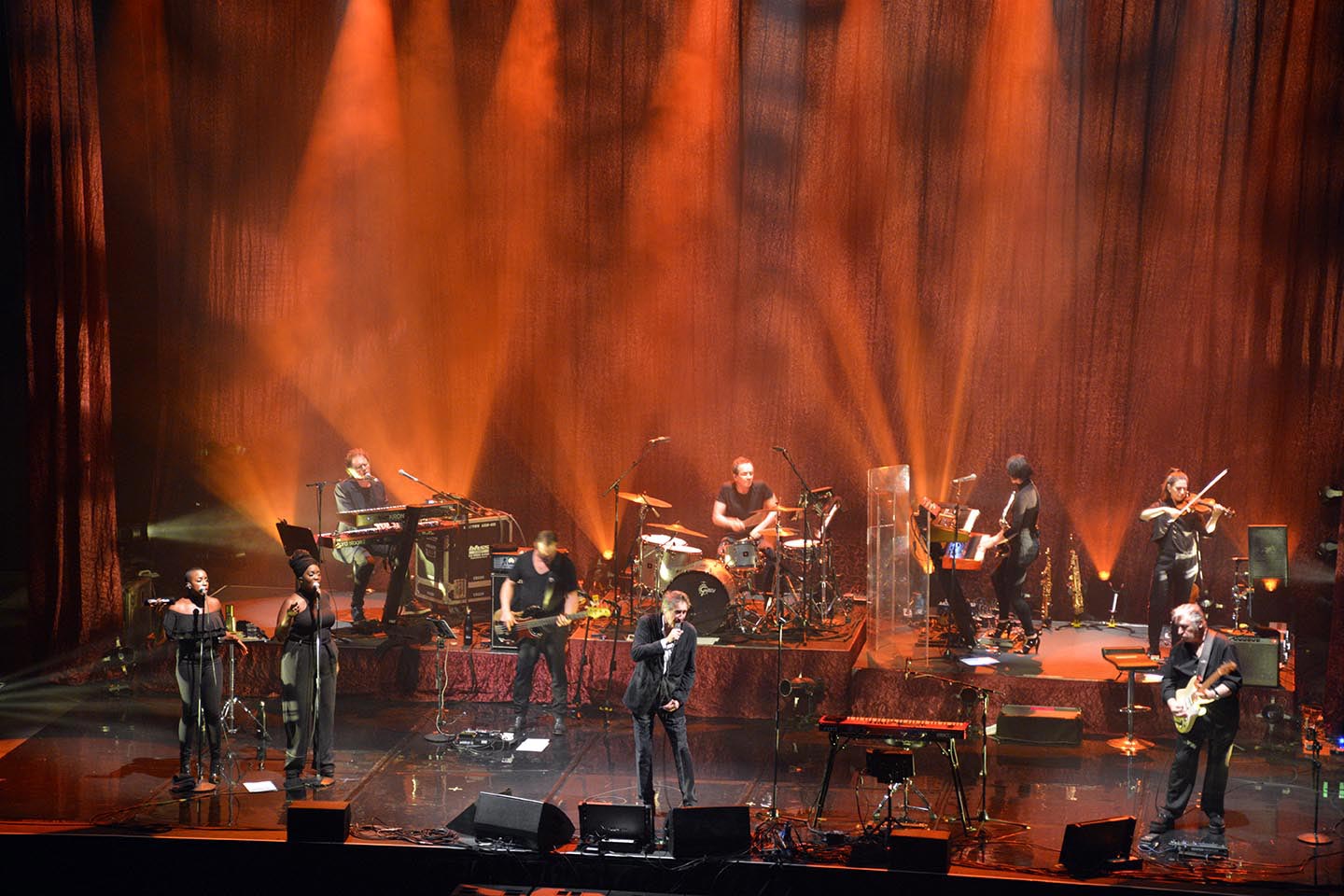
    Brian Ferry 2

    Bryan Ferry has a reputation as a very artistic performer who cares deeply about his music, constantly changing arrangements and songs.

    With an outstanding ear for the songs’ musical arrangements, both Bryan’s FOH and monitor mix require constant, active mixing throughout each song at a very detailed level.
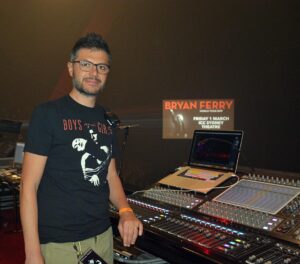
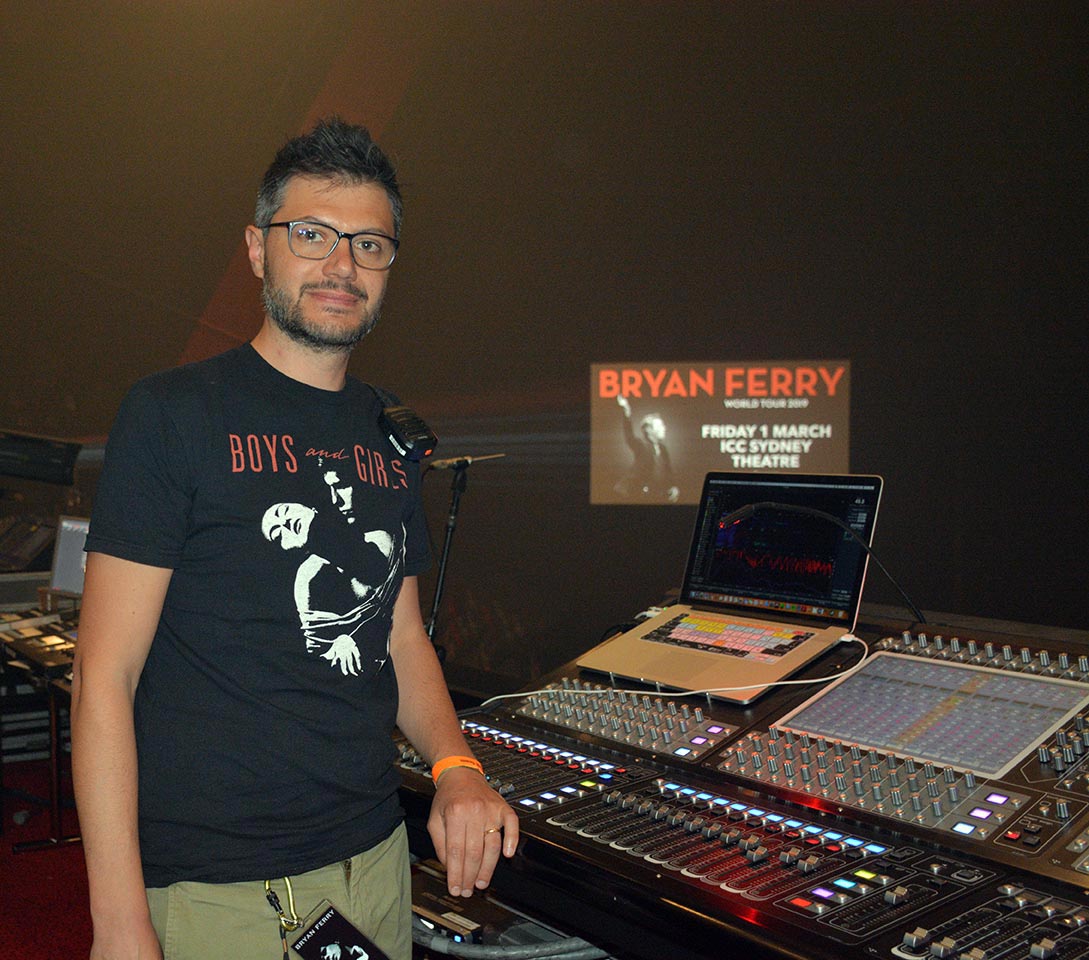
    Davide

    FOH engineer Davide Lombardi has worked with other iconic British singers such as Kate Bush, Ed Sheeran, Gary Barlow, Tom Jones and when the tour finishes, he hits the road with Dido who after 15 years has finally released another album.

    This tour has been going for a while but then again, Bryan never really stops,” remarked Davide. “He goes out every year but never for a long time, a maximum of four weeks at one time

    The tours utilized an L-Acoustics K1/K2 PA system with SB28s subs and a front face of ARCs and 108s, all controlled by Lake and LA network. At the ICC in Sydney the set up was 12 K1s and four K2s on the main hangs with side hangs of 12 K2s, four subs flown, four ARCs per side as outfills, two ARCs per side as infill and 218s as front fills.

    The venue here is very steep so we’ve had to fly quite high in order to cover the very top seats,” said Davide. “We spend a lot of time tuning, making sure that there is a good balance between delays and gain structure in order to get the image back to where Bryan is. Also, Bryan is not a powerful singer so the more coverage there is, the better it is to control his vocal.

    Out front Davide was mixing on a DiGiCo SD10 saying the way he mixes is pretty simple with little in the way of routing. He doesn’t use plugins and the only external effect he had was a Bricasti M7 reverb, which he loves, and a tc electronic D2 delay unit especially used for the saxophone to recreate an 80s sound. An SPX 2000 is used for effect in just one moment of one song.

    It’s really very simple,” added Davide. “Everything is routed into groups going to the matrix and then out of the matrix into the Lake and then out into the LA Network. I get a lot of precision from stage which is why it is simple. Before making changes on the console, we work a lot with the band adjusting levels with them when we can so we don’t change the sound too much. I try to leave it as natural and organic as possible.

    Davide’s biggest challenge is getting Bryan’s vocal above everything else as he is a gentle singer and talker, and can sometimes mumble!

    As well as Bryan, there are eight people onstage and with his music being very busy, there is not much space left for his vocal to cut through. However Davide says that is something Bryan seeks as he wants to express himself with his music rather than his voice. The result is a lot going on for Davide with a ‘proper’ live mix.

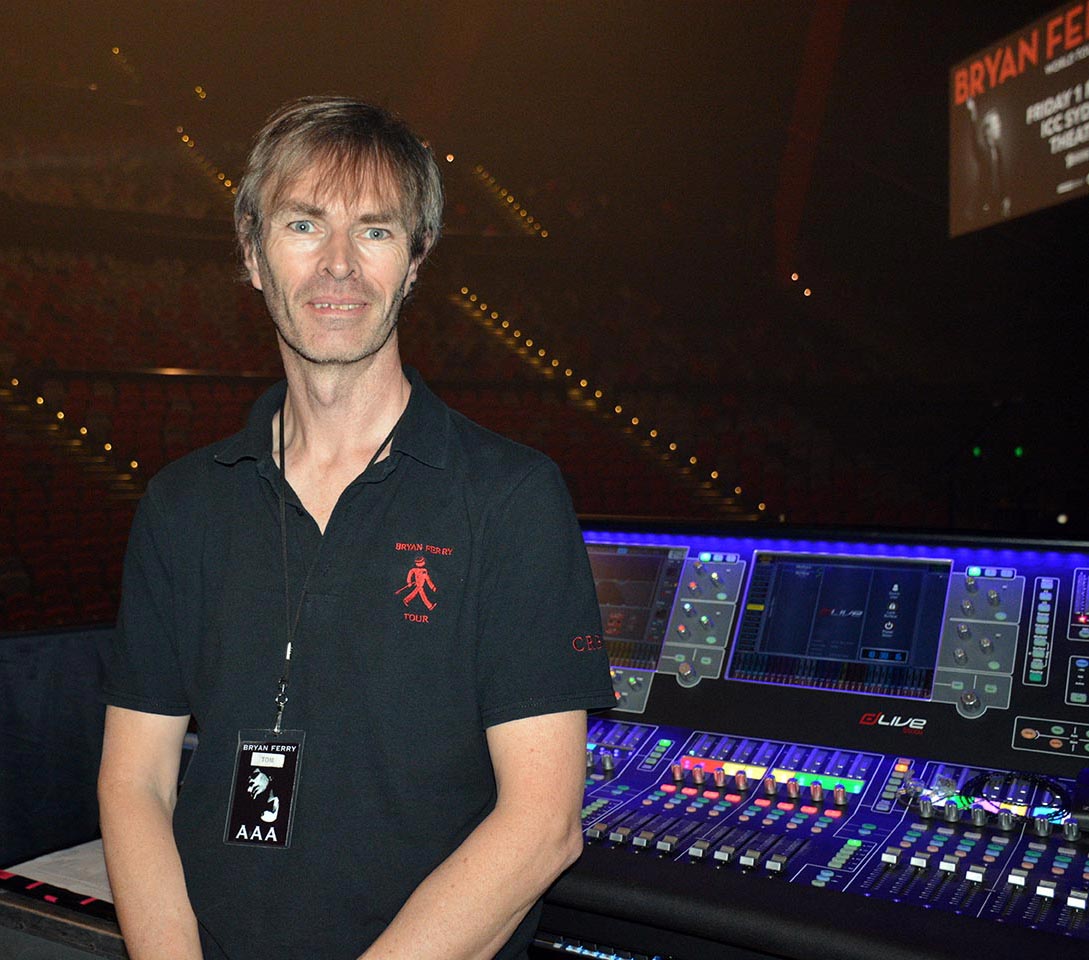
    There are constant changes and we can’t rest for one second,” he said. “There are layers and layers happening all the time.” Bryan uses an Audio Technica 6100 microphone, a dynamic mic that has condenser characteristics according to monitor engineer Tom Howat.

    It’s an interesting mic although you could potentially get a lot of spill in it so a lot of what we do is containment,” Tom commented. “It’s a good choice though because it’s not a condenser mic but you still get a quality output from it and Bryan really like it.

    Modeling amps are used for the guitars so there are no guitar amps onstage to help keep spill under control with Davide saying it sounds better.

    Sax mics are from SD Systems, again they are dynamic but have tripod prongs that clip onto the bell of the horn.
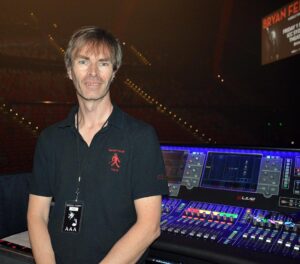
    TomThey give you a very nice rich sax tone,” said Tom. “We have DPA’s for the violin and the rest is pretty standard although the Shure SM57 on the washboard is a highlight of the show.

    Tom mixed monitors on an Allen and Heath dLive, his console of choice but fessed up to having a history with it as he was part of the development team!

    It’s a great sounding console, is very powerful and is good for IEMs,” he added. “We did some orchestra shows last year and I completely maxed it out, used the modularity of the system to expand with it which is all very cool.
    Everyone was on IEMS Sennheiser 2050s, with Tom having has 16 transmitters and only the drums were hard wired.

    Mixing monitors for Bryan is a very parallel equation to Davide – precision, accuracy, coping with what he’s hearing and wanting to hear,” said Tom. “And also like the FOH mix, you’re riding every solo and readjusting all the time. The band basically get my attention during the soundcheck and I’m pretty much pinned on Bryan through the show. It’s mix, mix, mix and without snapshots I’d be lost on this one. The musicians play different instruments so there’s a fair bit of rotation there. Arrangements are everything with Bryan and I have to mix monitors as if I’m mixing out front, you can’t leave it alone for a minute. With the vocal you’re riding that fader up and down, pulling it back every time he’s not singing – so the finger grips that fader all the time.

    Tom reveals that he has to watch Bryan closely taking cues from whatever he is looking at, maybe something has to go up or down depending upon the look on his face. Reading his body language is a key part of Tom’s job.

    Davide discovered that the ICC room had specific places that sounded quite different and he was interested to see how it changed once the audience were in the house.

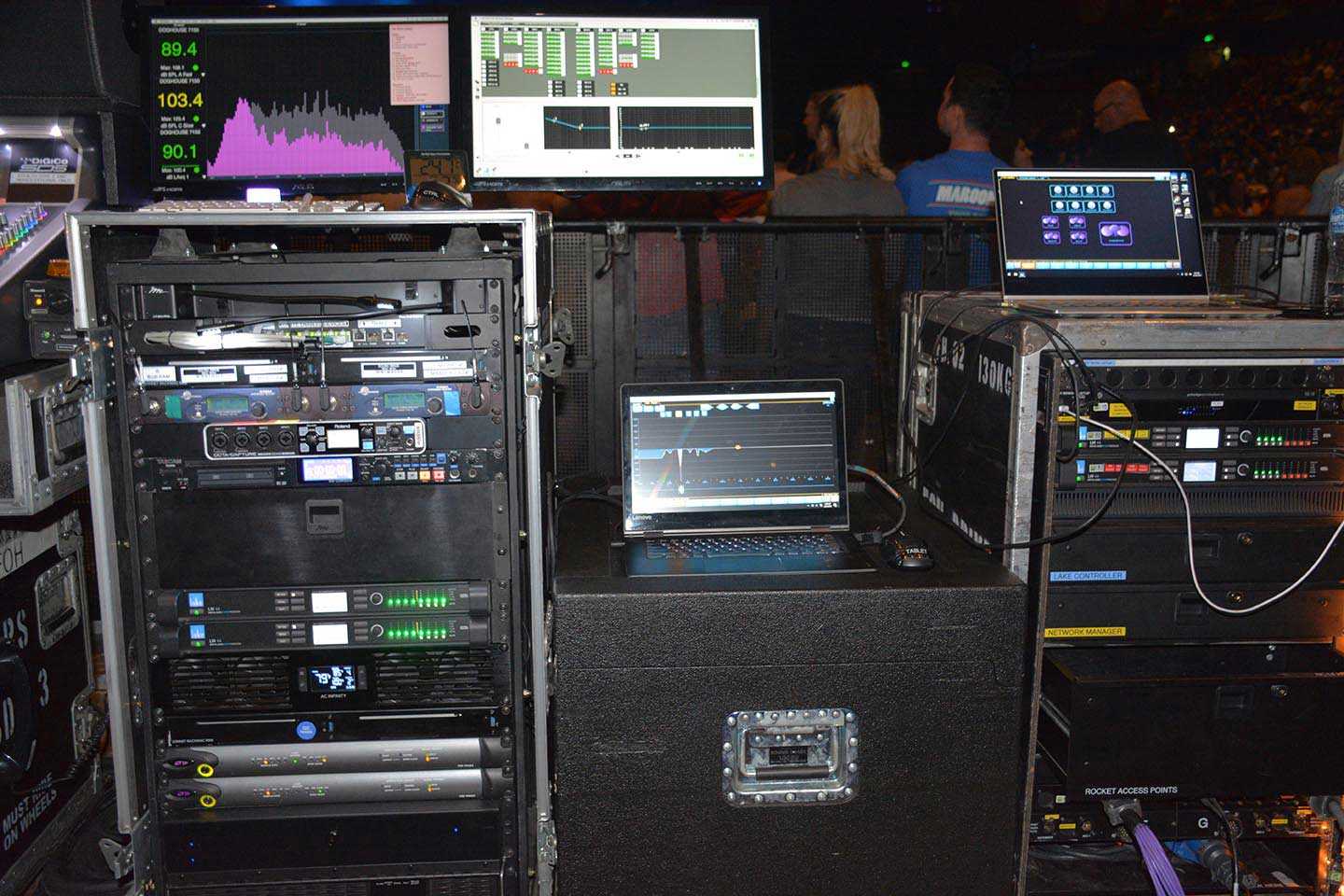
    The corridor by the FOH has a cancellation about the low end at 40 – 50 Hz so we’ve been measuring that with Smaart,” he said. “You can see when you move the microphone you see a big scoop coming on 50Hz. We’ve tried to fix it but you can’t, it’s a natural thing but hopefully it will be better when the audience are in.

    I always make sure that the mix is not exactly perfect at the FOH, walk around the venue a lot during soundcheck to make sure I find a good balance between everywhere. That takes a long time but it’s worth it.


    The music comes at them at such a complicated level it pays off to keep the technical elements as simple as possible whilst using the power of technology to simplify the process.

    Smaart, snapshots ….. all great examples of using technology to enable us to do what we need to do mix wise because that’s where it is all at for Bryan,” added Tom. “It may sound like it’s straightforward but it’s not, you bury the technology so the actual hands-on bit really counts. Its old school but using high tech.

    JPJ Audio supplied the gear and crew with Davide and Tom commenting on how well they work together as a team.

    This article first appeared in the print edition of CX Magazine April 2019. CX Magazine is Australia and New Zealand’s only publication dedicated to entertainment technology news and issues. Read all editions for free or search their archive www.cxnetwork.com.au
     

  • Maroon 5

    Maroon 5 2

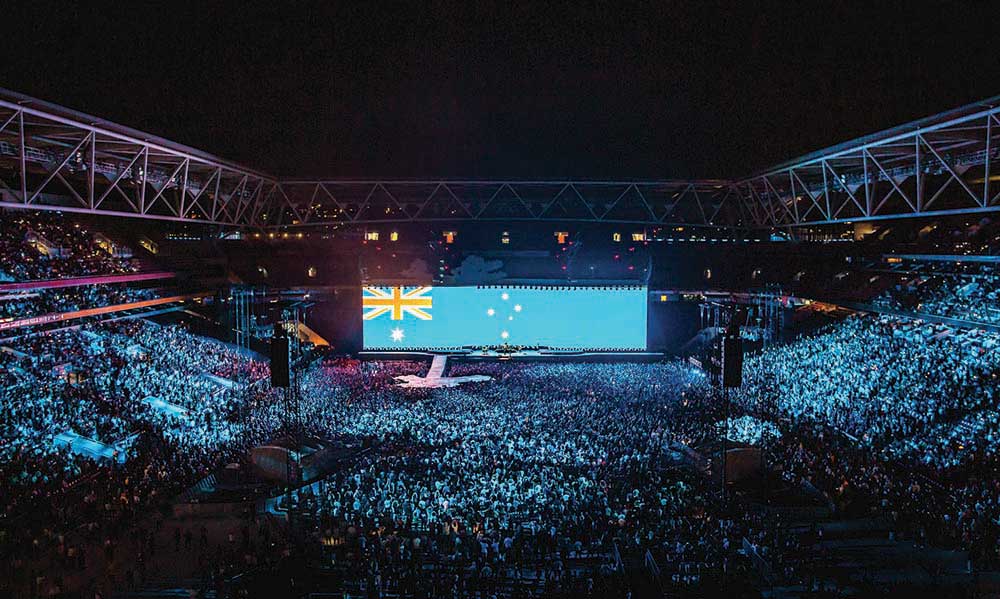
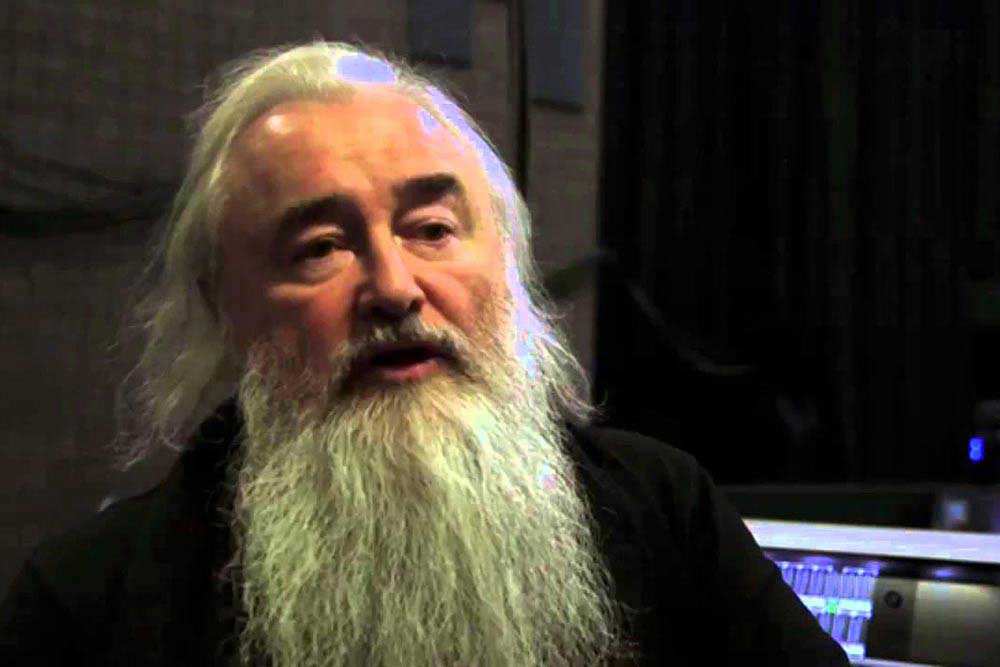
    Photo: Vince Casamatta and system engineer Mathew McQuaid

    Vince Casamatta learnt his trade mixing bands in small, Chicago dives eventually expanding to going on the road. At the same time he had his own studio and truthfully, he always wanted to be a studio mixer.

    But this is just what ended up working out!” he said. “I still occasionally mix an EP or album but mainly for indie artists.

    On the Maroon 5’s Red Pill Blues tour, Vince is the new guy although he has been with them for nearly a year.

    This is one of those camps where people have been around for a really long time,” he added. “I think a lot of people have many opinions on what Maroon 5 should sound like so initially it was challenging to navigate my way through that, but these guys were all very good at giving me space to do my own thing. Although Maroon 5 write a lot of pop-leaning songs, they are very much a rock band and want to be treated as such live.

    Maroon 5 7Vince was clearly enjoying mixing for a real rock band that can all play together without any backing tracks, saying these sort of acts were becoming less and less.

    It’s very much a rock mix that I want out of the gates to grab you and be surrounded in,” he elaborated. “I don’t want it to be a wall of sound that just hits you for an hour and a half. I don’t think anybody enjoys that. I try to find places to work with the dynamics of the musical arrangements and sometimes accentuate them so you can hit hard for a bit and then pull back. These guys are really aware of those things anyway with their set list choices and live arrangements, I’m just trying to present that the best way I can.

    As a fan of DiGiCo consoles, Vince opted for an SD5 favouring its’ work flow and complexity. As well as some outboard gear, he had a Waves SoundGrid server running up on the SD5, with anything that needs to be automated going on the server and anything that is static for the entire show in his outboard rack. The Waves plugins mainly group compression and parallel compression which gave the mix flavor and texture as the DiGiCo is such a neutral surface to begin with, according to Vince.

    The API 2500 is a great compressor and the SSL Quad compressor is always good to add parallel compression to drum busses,” added Vince. “I really like the API 560 EQ plugin on the kick and snare buss; as it’s a live drummer his dynamic changes throughout the set, and the API 560 allows me to re-tailor how the drums are sitting in the mix on the fly.

    On the road, you don’t know what kind of support you’re going to have so I like to keep things as simple as possible so if things go wrong, you can troubleshoot them easily,” he said.

    Maroon 5 6Outboard gear included a Bricasti M7 for Adam’s main effect reverb with Vince using Midi triggers from the snapshots to change patches in the Bricasti. A Tube-Tech CL 2A is used for a compressor on Adam’s vocal and spare vocal, whilst a Neve 5045 primary source enhancer saves Vince a few headaches as most of the show designs feature Adam in front of the PA for nearly the entire set. However in Australia the set was scaled back with a design that kept Adam behind the PA!

    He’s always in a different place with respect to the PA, L-Acoustics being so tonally linear as you walk through it is helpful but the Neve 5045 is super helpful,” explained Vince.

    Maroon 5 5PA was an L-Acoustics K1/K2, K1 main and sides with K2 below with the sub configuration often changing depending on the venue.

    We are flying K1 for main and side hangs with K2 below, so that we keep the coverage consistent close to the stage,” explained Vince. “Rear hangs are almost always K2 only. K1SB are always flown directly behind the main K1 hang for added low extension and punch. We also use a cardioid sub arc on the floor. All powered by LA12x wherever possible. One of our main concern in design is how to keep low end off the deck so the band aren’t rattling around up there. Mathew McQuaid is responsible for overseeing the entire design process and has done a great job of maximizing FOH coverage while nulling the low end on the deck.

    Systems engineer Mathew McQuaid used Soundvision, L-Acoustics’ proprietary acoustic prediction software, and Rational Acoustics Smaart 8 to align the system each night.

    There are a lot of good PAs on the market and you can have a great show with many of them,” said Vince. “This is the most vocal forward mix I have ever had and the L-Acoustics has made me feel like I’m not fighting myself as far as where the vocal sits in the mix. I want a really cool, rock-sounding mix but I don’t want to sacrifice the fact the vocals have to be over top, in fact the vocal presence has been pretty easy to dial in.

    The band are Shure endorsees with lead singer Adam Levine using the Shure Axient system and singing into a black SM58, a no frills approach that Vince admires and although Adam beats the mic and tosses it into the crowd every show, it always holds up.

    It’s the right approach to pick a microphone that is tried and true, meat and potatoes, nothing fancy as he basically uses it for everything but a hammer,” laughed Vince. “With this show, I have been less concerned with microphones than with other acts and I don’t really know why that is. I have the new D12 kick mic, a dynamic microphone that, when supplied with phantom power has a few different EQ curves. I have a 57 on snare top which sounds great, all no frills. If you have a good band with good tones and a great mixing console, a lot of it is just getting out of the way and letting it happen.

    The band changed a lot of the guitars to Fractals from Royer Ribbon mics, which Vince says sound way better and sit in the mix well taking up less headroom. With seven people on stage headroom becomes a real challenge quickly.

    Monitor engineer Bill Chrysler mixed on an Avid VENUE S6L-32D with the latest version of Waves SoundGrid. Most of the plugins he used were in the console, with the exception of Adam Levine’s vocal reverb, which is a Waves TrueVerb.

    Everyone has both IEMs and wedges, except the bass player who has no IEMs and Adam who only has IEMs.

    The wedges help to retain a bit of vibe onstage as stages become quieter and more isolated, it’s a way for the band to feel connected,” commented Vince.

    JPJ Audio supplied the tour.

    Maroon 5 4

    This article first appeared in the print edition of CX Magazine April 2019. CX Magazine is Australia and New Zealand’s only publication dedicated to entertainment technology news and issues. Read all editions for free or search their archive www.cxnetwork.com.au
  • Florence + The Machine

    Florence Machine 1

    Florence + The Machine returned to Australia in January for a string of national headline dates. Having released their fourth album, High As Hope, just last year, fans were clearly eager to catch these stunning tunes live, with almost every show on their Australian tour having sold out months in advance.

    FOH engineer Brad Madix is currently on his first tour cycle with the band having started rehearsals last March. Brad, an award-winning, Grammy-nominated live, broadcast and recording engineer, has had an illustrious career working with artists such as Linkin Park, Rush, Jack White, Beck, Van Halen, Shakira, Alanis Morissette, Jane’s Addiction, Shania Twain, Def Leppard, and many more international acts.

    Florence Machine 2

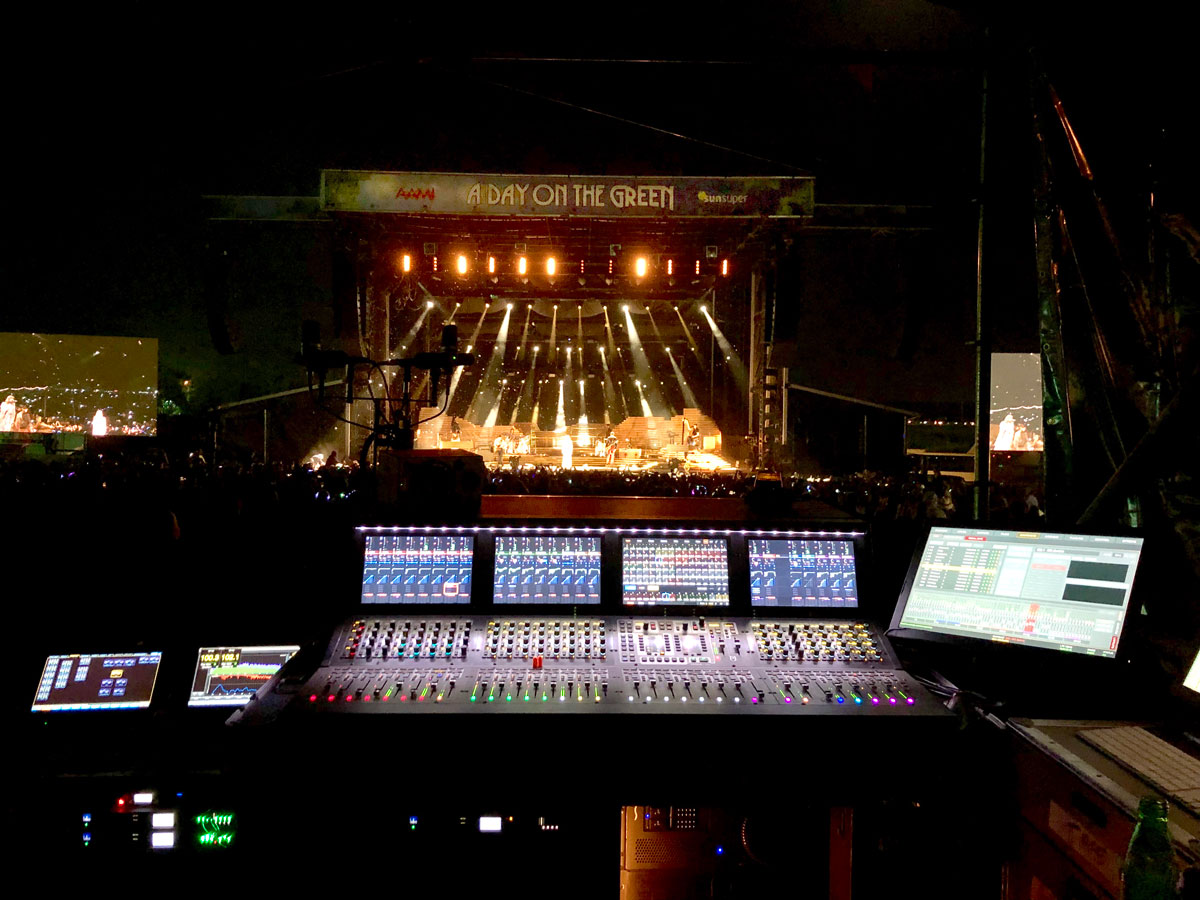
    JPJ Audio were the audio supplier with the tour utilizing a Clair Cohesion Series PA assuring uniform coverage in all venues regardless of acoustic challenges or sightlines. This was certainly put to the test in Australia with the show being held in arenas, outdoor venues, as part of a festival and also a Day on the Green.

    I would say a typical set up would be 16 x CO12 deep, left and right, and then six subs per side with 12 CO8s for outfill,” said Brad. “However, that changed day to day on this tour due to the variety of situations we were in.

    Brad describes the Clair Cohesion Series as simply a great sounding PA, from top to bottom, that provides really nice clarity and is easy to put up.

    I’m very happy with the sonic characteristics of the Cohesion Series,” he added. “Their sub system is particularly great, even though this is not a sub heavy band. I also have a great working relationship with Clair and continuity of people and equipment is important to me as we travel around the world.

    Brad was mixing on an Avid VENUE S6L with no outboard gear and only the plugins that come with the console in use. He was recording on a Diablo Digital x MacPro Server Pro Tools recorder.

    I use the Pro Compressor plugin a lot as well as the BF76 and for effects I use Mod Delay III and ReVibe II and that’s pretty much it,” said Brad. “I try to keep it simple. Florence is an excellent singer but can be tricky to mix because her voice is extremely dynamic. The main thing I have to do is compress her in a way that it doesn’t sound compressed whilst keeping the level in a certain ballpark. I use two instantiations of Pro Compressor, one is a really hard compressor but it is blended back and second one is a DeEsser because that can also be tricky with her. Effects on her include a warm, dark reverb (ReVibe II) and a little delay which we actually feed back into the reverb instead of the PA resulting in a long tail reverb.

    Brad remarked that his main challenge is getting a lot of dynamic range to fit into a large scale performance. In Sydney, Florence + The Machine played to 28,000 people in The Domain and everyone needed to hear everything. No mean task, but as every performer is a great musician and singer, Brad could really focus on the levels of Florence’s vocals and the quality of the vocal sound.

    All performers were on Sennheiser IEMs mixed on a DiGiCo SD5 by Annette Guilfoyle.

    JPJ were great and it’s weird to say this but it was seamless, you didn’t really notice the change from venue to venue as everything was handled with no hiccups,” added Brad. “The guys were really friendly too so I was very happy.
    Gallery

    All Photos ©Brad Madix


  • David Byrne’s American Utopia

    David Byrne band

    The most talked about and critically acclaimed concert this year has to be David Byrne’s American Utopia, which had the critics raving.

    Not only was it a visual feast, it also sounded pretty damn good, thanks to FOH engineer Pete Keppler (who has mixed tours for music’s biggest icons, from David Bowie to ZZ Top) and JPJ Audio.

    JPJ Audio’s Clair Cohesion system was out with the tour using an almost identical set up to the rest of the world tour.

    We’re using all CO-12s here in Australia”, commented Pete, “as opposed to the Co-12/Co-10 rig we were using in the USA. I had never brought Clair on a tour until I worked with Katy Perry starting in 2010, and she was a Clair account. Her production manager told me ‘you can use any sound company you want, as long as it’s Clair!’ And I’ve hardly used any other company since!

    When the Cohesion series became available, I was blown away at how well it performs, and how easy a system it is to set up and rig. I myself was one member of a group of engineers invited out to Clair a few years back for some lengthy questioning about line arrays, hardware, electronics and all kinds of stuff, and the information gathered was used to help design and create the Cohesion system.

    At Sydney’s ICC Theatre there were 16 x CO-12 per side on the front hangs and 12 x CO-12 per side on the side hangs. Because of the simplicity of the stage setup, Pete was not allowed to have any of the usual front-fill on the downstage edge, so a stack of (4) CO-8s was put on each of the two downstage corners, aimed in at the center 3-5 rows of audience.

    I use them as near-fill mostly to cover the very front rows in the center where the main PA doesn’t quite reach,” added Pete. “Also, I have 6 drummers on stage and no other instruments with any acoustic output, so the mix I send to the CO-8s is separate and has very little drums in it, and the CO-8s really cover that space and fill in the rest” And as for far-field coverage. “We’ve found with the CO-12 that the smaller angles (1 and 2 degrees) will exponentially increase the high-frequency throw. We did some outdoor shows where the Co-12s covered 400 feet with no trouble at all. Arrayed properly physically, this PA will save you a lot of work.

    In keeping with the clean stage design, the entire show is wireless and Pete says this show would not have been possible without the Shure Axient D, saying it’s hands-down the best RF system he has ever heard. “We did a shoot-out last year against a wired mic and an analogue RF system and I swear I could not tell the difference between this and the wired microphone,” he said.

    Pete was running roughly 44 inputs of wireless from drums and vocals, another twenty or so inputs from keyboard interfaces, guitar amp modelers, etc. and the IEMs use 16 outs of Shure PSM1000. It’s an RF challenge for sure, but Clair’s Jamie Nelson ensured smooth sailing. “She’s our secret weapon,” says Pete, “Especially at festivals when the RF coordinator you were promised never shows up!

    FOH Pete uses a DiGiCo SD10 console, a surface he says he knows like the back of his hand. His one piece of outboard gear was a Lexicon PCM41 for use on just a few songs. “I’m a minimalist, and I like a small footprint.

    To cut down ambience and spill from all the live percussion into the vocal mics, Pete uses the Waves F6 Dynamic EQ plugin.
    I’m using the six bands of the F6 to really make the most of all the gain I have available on the vocals,” he explained. “I’m not a fan of permanent EQ on many sound sources, particularly vocals. I have the F6 plugin inserted via MultiRack on all the vocals, and I externally key one band of the F6 to act as a high-frequency downward expander, in addition to using several of the other bands as normal dynamic EQ.

    As the musicians rapidly change instruments throughout the show, the microphone systems have to be robust. The vocal mics are all DPA 4088s, DPA 4099 on most of the drums, Audix D6 on bass drums, Shure Beta 98s, Sennheiser e904s and Audio-Technica AE2300 for snares and high hats.

    The setup at monitor world is a DiGiCo SD5, and SD rack, an SD Mini Rack, and two Soundcraft real-time rack units, in addition to all the RF transmitters and receivers. In Australia, Dan Matthews ran monitors as the tour’s original monitor engineer, John Chadwick, took a dive off the stage and injured himself.

    Pete remarked that the other key piece of gear used was his ears and that he doesn’t look at sound if he can possibly avoid it! “Some folks spend their time focusing on what they’re seeing on metres and other visual indications, but I’m old school that way,” he laughed.

    David Byrne Crew
    Tony Szabo, Pete Keppler, Tim Jones

    To the audience, this show appears to be very simple but no one sees what is behind the success of the show – a very significant amount of technology. Pete commented that JPJ have been great and that his techs, Alex McCormack and Tim Jones, did an amazing job.


  • Cher – Here We Go Again Tour

    Cher 2018

    The Here We Go Again Tour is the seventh solo concert tour by Cher in support of her twenty-sixth studio album Dancing Queen. The Australasian tour was a brand new production and as Cher shares the same management as Pink, some of Pink’s crew stayed on for the tour.

    JPJ Audio supplied an audio package and crew for the tour including an L-Acoustics K1/K2 PA system.

    I do like the L-Acoustics K1/K2 PA and although there are many good PAs on the market, I believe it to be the best sounding,” commented Cher’s audio engineer Tony Blanc. “The setup on this tour is pretty generic from the board out, it’s exactly as L-Acoustics recommends; the cable lengths, the hangs and the combination of the K1s, K2s and the KS28 subs. It’s configured off LA Manager and I’m fortunate to have Johnny Keirle with me and he is probably the best system tech in the business. He knows how to tweak the PA. He sets the PA everyday depending on the parameters of the room, the sizes, the elevation of the seats and the throw. I am in the driving seat and it feels like a Ferrari.

    Tony reports that the K1/K2 combination allows him to precisely ensure that all the seats have the same energy. Quantities of PA varied a little at each venue depending upon the ceiling height and how far round the seats had been sold. However, the specified system had 24 x K1, 36 x K2, 24 x KS28 and 9 x Kara.

    For FOH control Tony ran a DiGiCo SD7 console which he said is worth twice as much as his original house!

    It’s an amazing console,” he said. “Before I started with Cher, I had three or four years on budget tours and I got quite used to Waves as a source. I had it with this console but after a day, I turned it off as it just changed the way the console felt. The only auxiliary gear I have are six channels of Summit DCL200 compressors to warm things up and a Lake EQ inserted on Cher’s vocal subgroup. I also have a couple of Bricasti M7 reverbs.

    With a fifty year career, a Cher show covers many different genres of music including ballads, sixties pop, rock and disco, all of which keeps Tony on his toes.

    Monitors were run by Martin Pare also on a DiGiCo SD7 console with a TC Electronic M6000 MKII system. All of the band, and Cher herself, wore Shure PSM 1000 IEM systems with L-Acoustic ARC sidefills to give the dancers some audio to dance to.

    Cher’s customized, handheld microphones were Sennheiser SKM5200s. Guitars and keyboards are all direct outputs. The kick drum had a syn901, plus the Audix D5, the snare an e905, toms e904 and cymbals ATM450s.

    Tony made special mention of the two JPJ crew out on tour with him – Kellie McKee and Joel ‘Cellphone’ Pearson – praising their work effort.
    Cher 2018

    Stage is covered by Hilario Gonzalez, a Solotech audio crew chief tech who works on the Vegas show, and his main concern being prepping Cher.
    Cher 2018


  • The Presets

    The Presets 1

    Legendary Australian electronic duo The Presets have been back on the road promoting their Hi Viz album and JPJ Audio were with them all the way.

    Having used an Avid Profile console for many years, FOH engineer Craig Gordon was keen to take an Avid Venue S6L console, with Waves card, on this tour and now he doesn’t want anything else!

    I love the Venue S6L and will find it hard to go back to a Profile,” he admitted. “I did a show last night with The Presets using a Profile and it was definitely not as good! The S6L certainly sounds better and there are way more options to customise the surface to how you want to use it. You can move all the groups and channels to wherever you want and set layouts, which you couldn’t do on the old console. You have outputs and auxes all on the same page, wherever you want to put them – and I really missed that last night on the Profile.

    Craig says that mixing for The Presets is fairly straightforward, as they have good backing tracks and decent sound coming to him.

    The Presets 2
    We had to do a few little things with Kim’s toms because he has really dead sounding disco toms but we figured it out with a few plugins,” added Craig.

    Julian had his own effects for his vocal onstage to which Craig sometimes added some distortion or reverb just to beef up what he is already being sent. The majority of the effects were Midi timecoded so through the songs they change to different presets which is all done onstage.

    I mainly use the dynamic stuff in the rack and a few plugins onboard like a C6 but not too many,” said Craig. The outboard rack is pretty good with Alan Smart Research C2 stereo comps and Puigchild compressors. I still like to have the knobs and visual more than the plugins.”

    The tour utilised inhouse PA systems but carried extra d&b B22 subs to reinforce the low end which worked well and was particularly useful in the smaller venues. The exception was Melbourne’s Forum Theatre where JPJ provided an L-Acoustics V-DOSC system.

    Microphones were a Shure package as the band have been Shure endorsees for a long time. Vocals were Shure BETA 58s on UR radios, a standard Shure drum package of BETA 52s, KSM overheads and KSM 32s.

    Cam Elias ran monitors on an Avid Profile using Shure PSM1000 IEMs.

    JPJ Crew: Stacey Handley, Tim Lonergan