Blog

  • An interview with Joe O’Herlihy, U2’s Sound Engineer

    U2 2020 8
    Photo © Dara Munnis

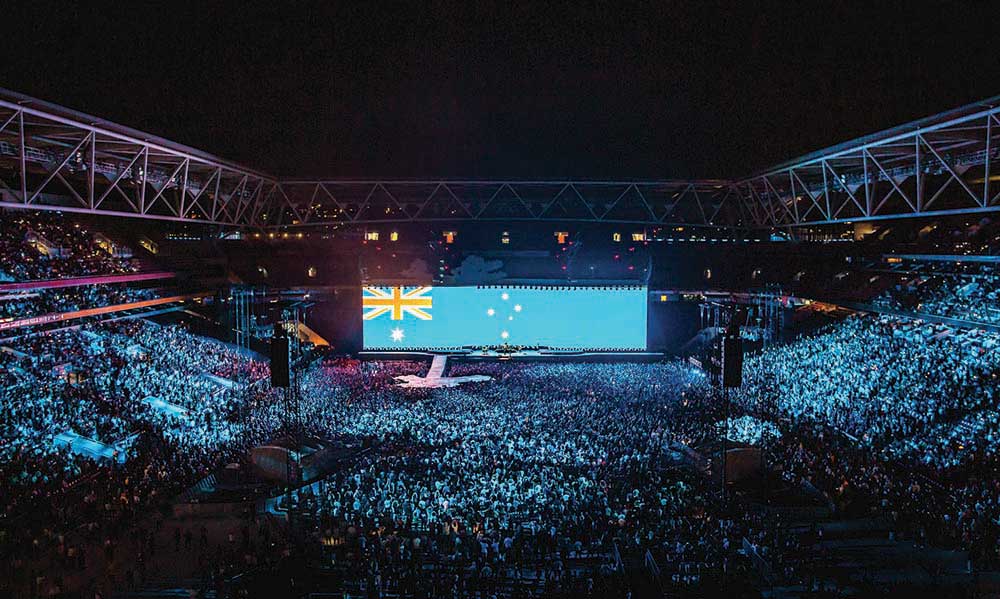
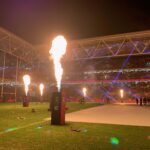
    U2’s The Joshua Tree tour began in 2017 and has since played to over 2.5 million fans. After a bit of a hiatus, when they slipped in a totally different tour, the tour was resurrected for Australia and New Zealand.

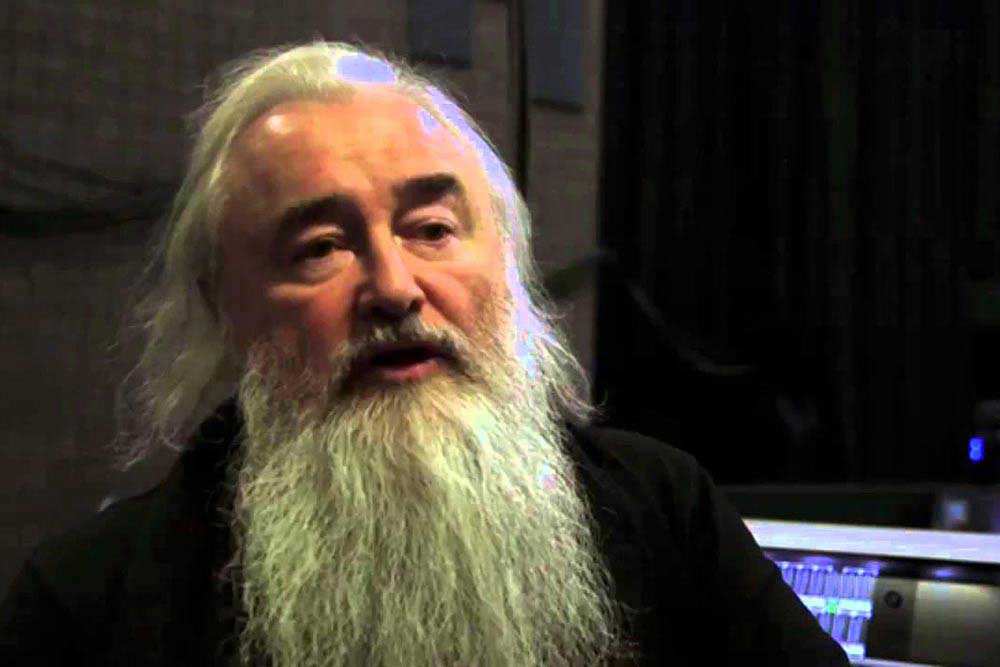
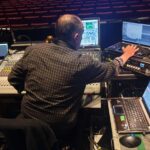
    Sound engineer Joe O’Herlihy has been with the band for decades and Cat Strom travelled to Brisbane for a chat. The PA is a Clair CO12 out of our Sydney office, all the crew and control gear was supplied by Clair Global.

    U2 2020 8
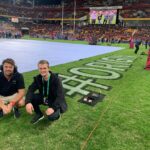
    Sound engineer Joe O’Herlihy

    After the first two shows in Auckland where Joe had to deal with 43 kilometres an hour winds gusting from the stage, Brisbane’s still and balmy 34°C was a blessed relief.

    I was looking all night long for my wind knob to dial it down but I couldn’t find it,” said Joe tongue in cheek. “It would be a sound engineer’s dream if someone could invent one!


    The sound system hasn’t changed dramatically since 2017 although there has been plenty of software updates that obviously improve the efficiency of all the technology.

    U2 2020 3
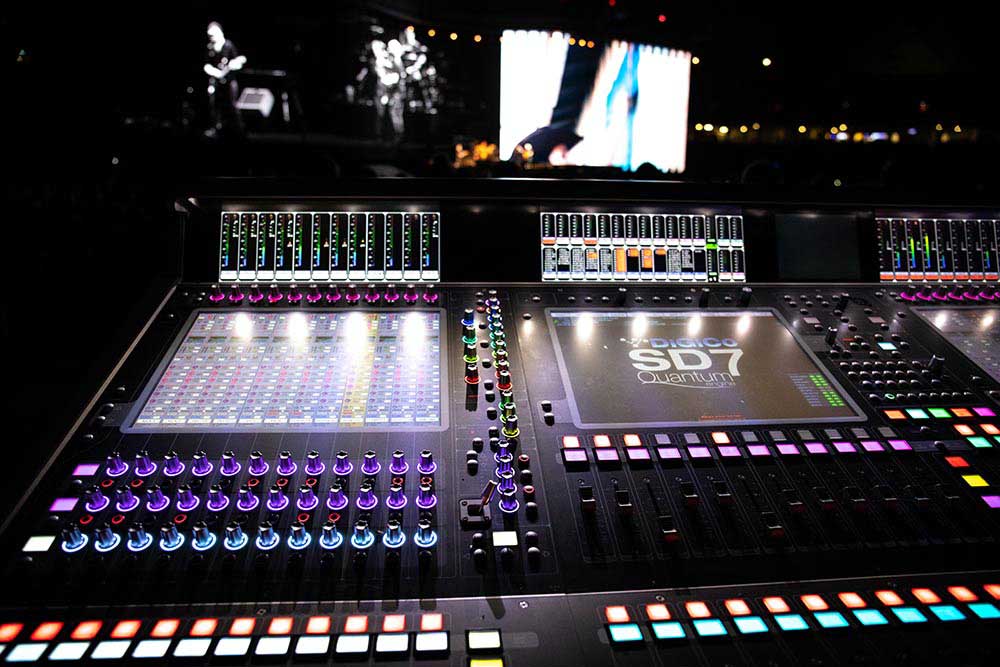
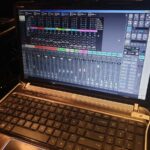
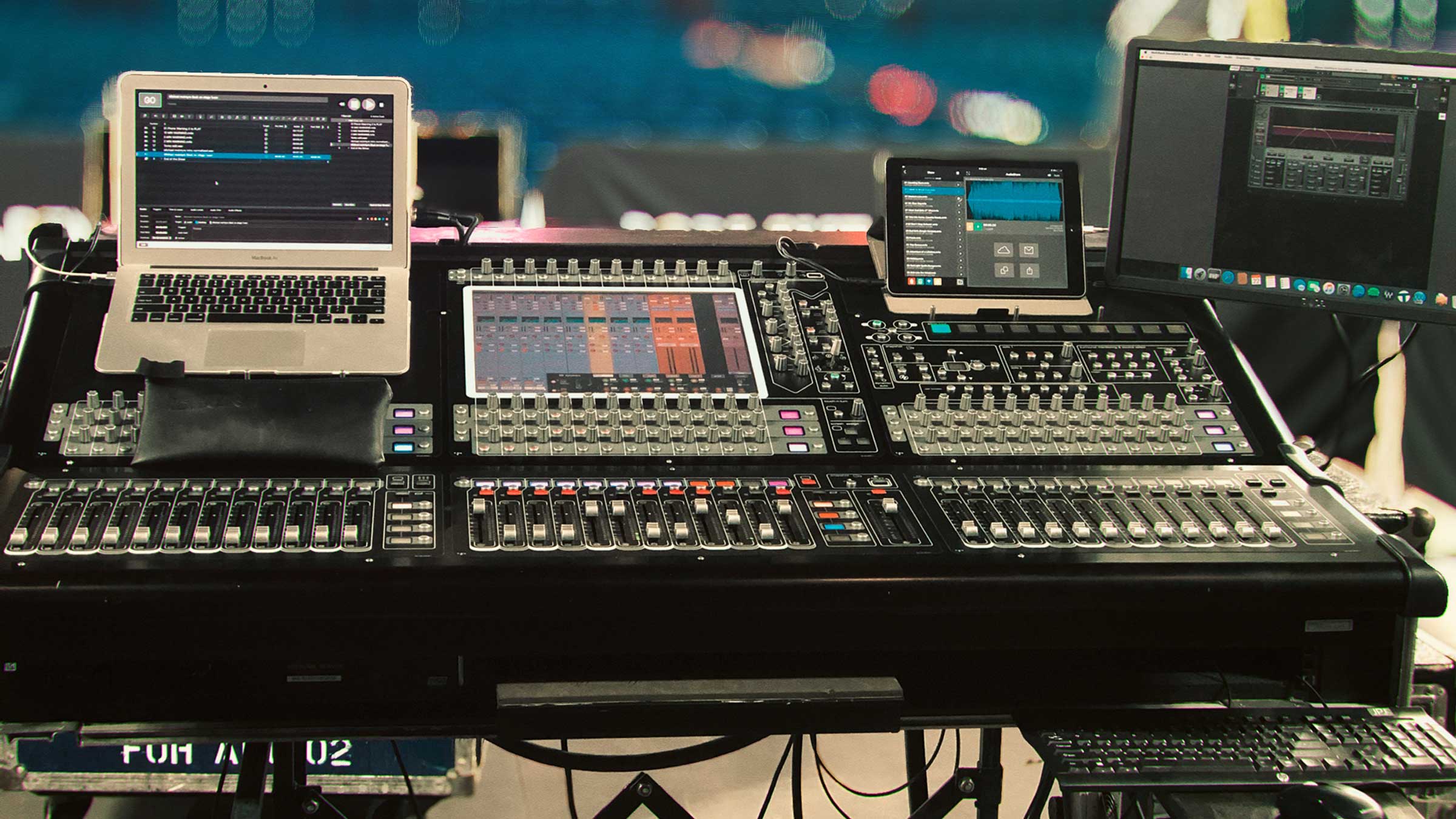
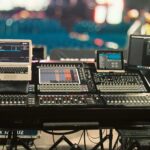
    Digico SD7

    We now have the DiGiCo SD7 Quantum consoles and I believe we have the biggest selection of DiGiCo SD7s on any tour,” added Joe. “We’ve got eight of them if you include the rehearsal room at the moment. With the software update to use the Quantum engines, they sound very transparent and very much more efficient with this upgrade than on previous occasions. It’s nice to have gear that is improving all the time like the SD7.

    Although the onboard selection has been improved enormously on the SD7, Joe still uses units that he has relied on for the past forty years with the band. For guitars, he has eight Summit Audio DCL-200 tube compressors for each of the eight different amplifiers that The Edge uses in a combination of what is affectionately known as The Edge Orchestra.

    For Bono’s main vocal, Joe uses a Manley Voxbox, three so there’s one for each of the three different vocal mics he uses. A couple of Sweet compressors are used on Edge’s vocal and he uses a headset for maneuverability.

    The treatments and effects are standard Lexicon 480L as the reverb of choice for all of the vocals and believe it or not, PCM70s dating back to prehistoric times,” said Joe. “They’re classic drum verbs and are really, really good selection plus I’ve also got a couple of harmonizers. They’re all uniquely part of their songs now and I have tried out all of the various plugins but the older, vintage products have such a unique sound. However, you have to cross your fingers that they’ll work every time the back of the truck opens!


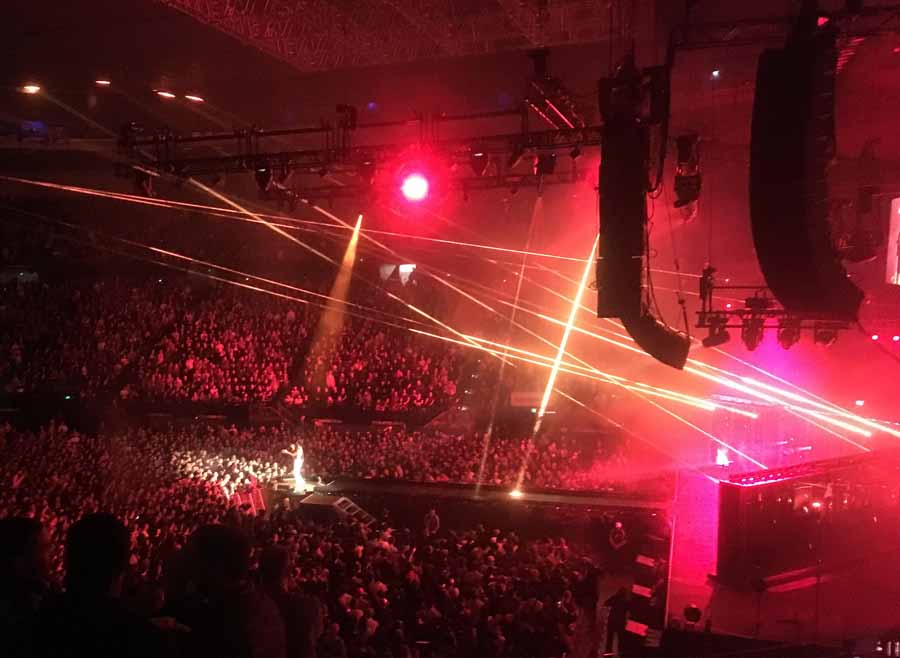
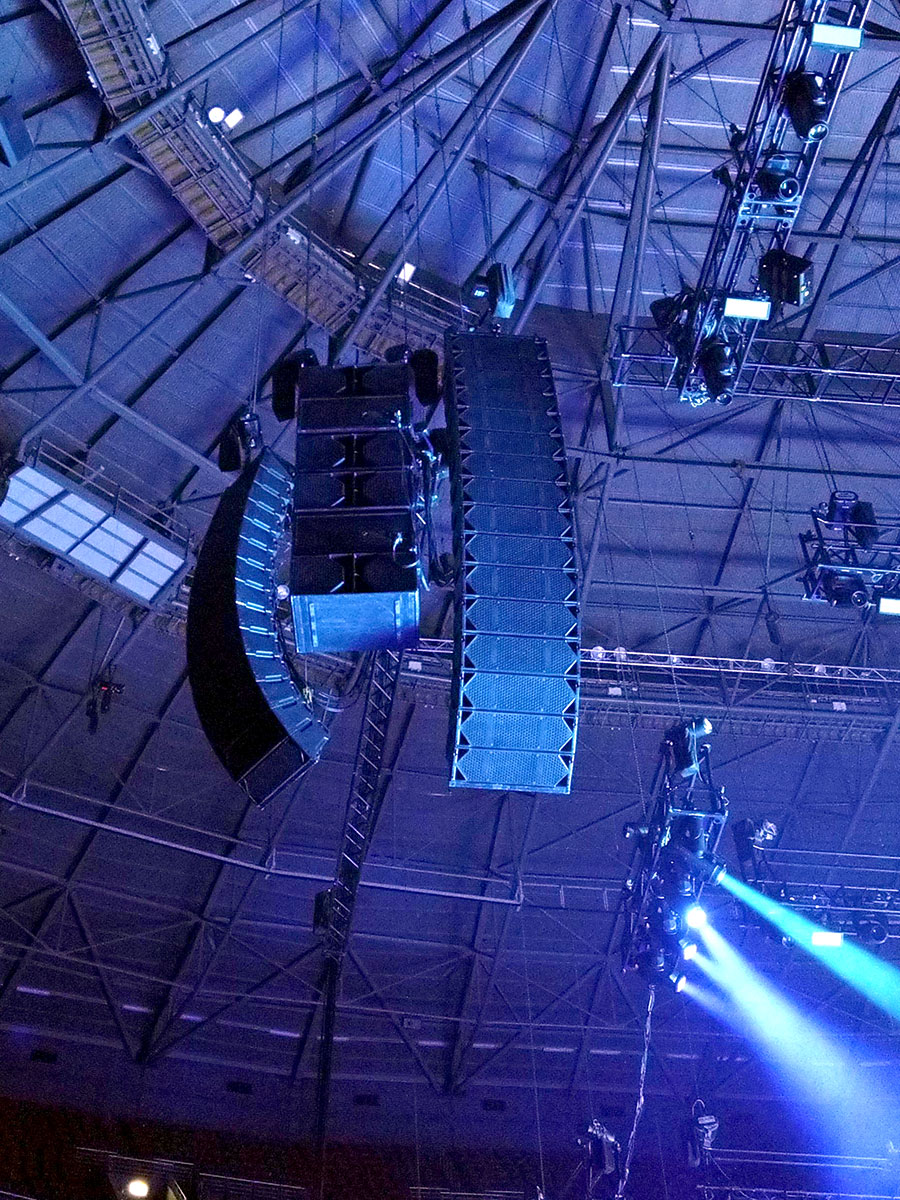
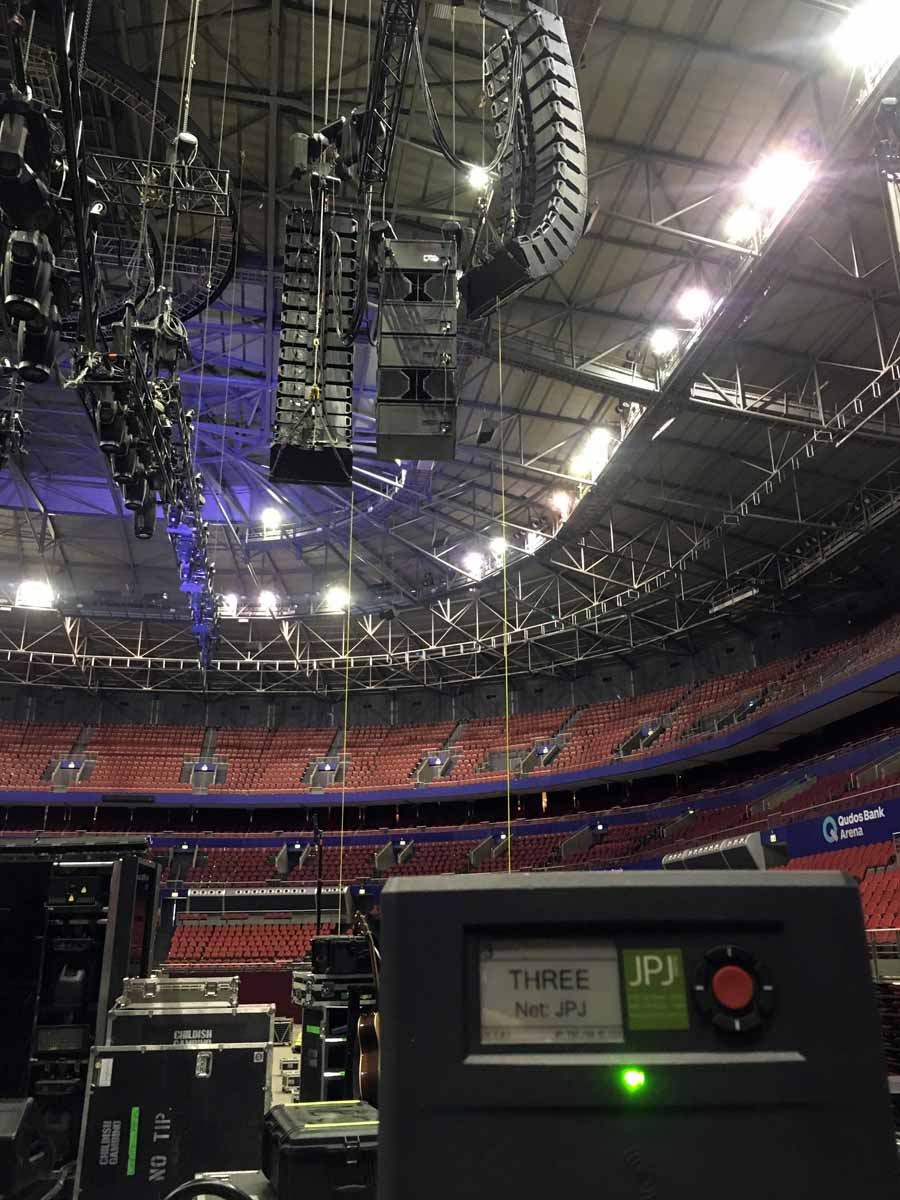
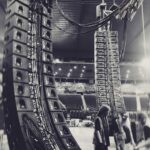
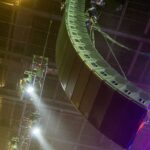
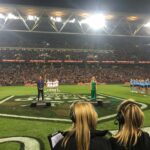
    The band has been a Clair Global client for 36 years so it was no surprise to see a Cohesion CO-12 system consisting of four sets of line arrays suspended from cantilever cranes and trimmed at 30 metres, carefully positioned so as not to obstruct the giant screen.

    The curvature of the system is designed and configured to get right up into the stands and areas that physically are very difficult to reach. Behind the mix position which is 36m away from the stage, are four delay positions placed in an arc shape to ensure sound reaches the back of the stadium.


  • Guy Sebastian

    Guy Sebastian 7

    There’s no denying that Guy Sebastian is a very talented performer with an amazing vocal range and the ability to play a wide variety of instruments. The audience at Sydney’s Star Events Centre were pumped before he took to the stage and the vibe was electrifying from start to finish.

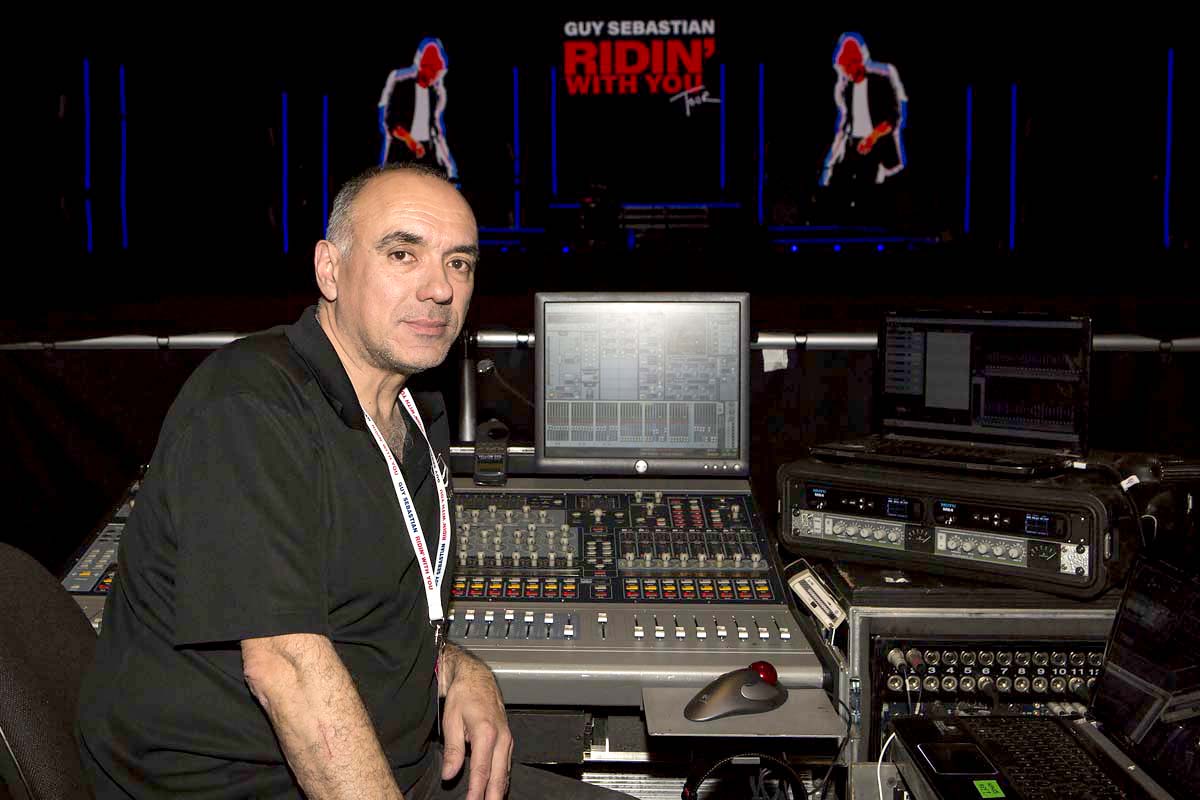
    FOH engineer George Gorga also looks after monitors which isn’t a mammoth task for him as the band control their own monitor mix on their phones via an app – a process George describes as fantastic.

    Guy owns his own a Midas M32C Digital Rackmount Mixer with a DL32 32-input / 16-output Stage Box and he really wanted to use them to try get some consistency, mainly for the one-off corporate shows that we do,” explained George. “We decided to try it on this tour so at the beginning of rehearsals I set all the gains, EQs and reverb effects which took about ½ an hour, after that I let the musicians build their own in-ear mixes. I didn’t hear from the band for the entire four days of rehearsals as they happily controlled their own mixes on their phones. In fact, during the tour I’ve very rarely heard anything from them about monitors.

    George remarked that the band love this set up as they are in control of their own destiny although all they can really control with the app are the faders of their own mix with George doing anything else required. Each singer also has their own effects unit so they’re not interfering with each other.

    A Nowsonic 2.4Ghz /5Ghz Stage Router is used on stage which George says delivers excellent coverage.


    I run more than 32 input channels at FOH but everything the band needs for monitors fits into the M32 channel count,” explained George. “I also have an AUX feed from the FOH console running back into the MIDAS Talkback input for any extra lines that may pop up. This set up may not work for every act but it really suits this one.

    George has been mixing for Guy since the beginning of the year, mainly corporate and promo gigs, but this is the first concert tour he has done with him. He was running his weapon of choice at FOH – an Avid Profile – saying that although he occasionally uses an Avid S6L, the Profile is always reliable and does what he needs it to do. Plus he can get one pretty much anywhere in the world. He added that there are no great mysteries to mixing this show.

    It’s a stock standard console with just a couple of Waves plugins; the C4 Multiband Compressor, the SSL Buss Compressor and the TrueVerb Reverb that I run on Guy’s vocal, ” added George. “The rest is all standard plugins. I have a Smart Research C2 Compressor as an external unit inserted on the main stereo buss, something I take everywhere and find it hard to mix without it these days. There’s also MADI card in the FOH rack as we multitrack record every show.

    The tour travelled an audio control package from JPJ Audio but utilised in-house PAs with George commenting that all of the venues they played had decent speaker systems. Extra gear was added locally when required, mainly subs and maybe some extra front fills.


    Guy, who has an endorsement with Sennheiser, used an EM 2050 two channel wireless receiver, two SKM 2000 handheld wireless transmitters, along with two KK 205 Neumann Condenser Microphone capsules.

    I’m a real Shure person and I hadn’t really worked with this setup before,” said George. “However, it just seems to suit his voice really well and sounds amazing”. The backing singers are on Shure Beta 58s with UR radios and everyone is on Sennheiser SR2000 IEMs of which we have eight sends.” Guy also uses a Sennheiser EW500 G4 radio system for his acoustic guitar.

    On stage are a pair of L-Acoustics 112P wedges for Guy, one 108P on Guy’s piano riser when it is rolled in plus a d&b Q-SUB for the drums – again all run off the Midas app. George can control them from his computer at FOH if needed, all on WiFi but he runs a Cat5 cable too as a backup.

    This article first appeared in the print edition of CX Magazine November 2019. CX Magazine is Australia and New Zealand’s only publication dedicated to entertainment technology news and issues. Read all editions for free or search their archive www.cxnetwork.com.au


  • Dope Lemon

    Dope Lemon 6

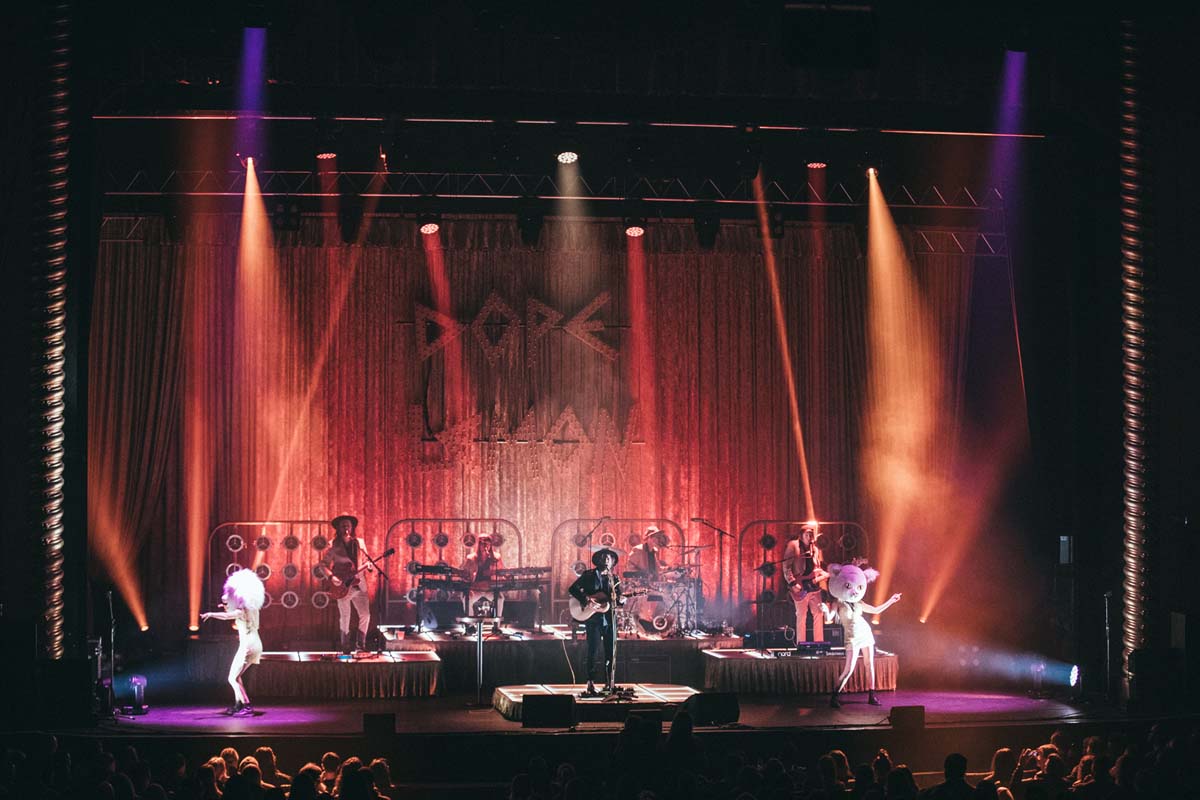
    Dope Lemon returned to the stage for their first headline tour in three years and audiences were invited to step into the real world of Angus Stone – a dream zone layered with melty moments, mischief and romance.

    At FOH, behind an Avid S6L console, was Adam Rhodes who has worked with Angus for the past 11 years. He describes mixing for Dope Lemon as quite a challenge with all of the vocals going through a TC Helicon Voice live distorted compression effect with slap delay at all times.

    It makes the gain before feedback issue much harder than usual,” added Adam. “It’s a balancing act between keeping the energy level of the band up whilst trying to ensure the vocals are intelligible and on top of the mix – particularly when it’s a distorted vocal and both Angus and Louis are playing distorted guitars, Brad has his big muff pedal on the bass and its one big wall of distortion. The traditional sound guy in me struggles with that!

    Adam doesn’t use any Waves with the Avid S6L preferring to use solely what comes in the console package. He uses the Bomb Factory 1176, Classic Bundle and Digirack compressors and the standard Revibe and Reverb One reverbs that come with the console.

    I’m enjoying the Pro Multiband compressor too,” he added. “The main reason I don’t use anything external or use any third party products is that when you’re touring around, there’s very little support for it. If I’m going into a festival situation and they don’t have that equipment, I don’t want to be having to load and install things to make my show work in the 20 minutes I have to get everything running.

    When it comes to reverbs, delays and effects, Adam says that he has always sculpted and created his own sounds rather than use presets from the pull-down lists.

    I’ll always create my own patches and all this is easily done on the consoles proprietary system,” he said. “I don’t use any feedback on the plugins, I do it all on the console. I do it old school where I feed the delay back on itself and if I want it to be a little crunchy, I’ll put a Sansamp in front of it or whatever I need to do to make the sounds I want to create.

    Adam admits he sees other engineers use plugins and achieve the same results but he suspects a lot of people just flick through presets until they find one they like. Adam will have a sound in mind and then work out how to make it.

    I’m never really happy with presets anyway so if I’m going to change them, I might as well do it from scratch,” he continued. “Plus Angus is quite particular about those sounds.


    JPJ Audio supplied the touring control package and inhouse PA systems were utilized with Adam commenting that he loves the Nexo Alpha at The Tivoli as well as the d&b J Series at The Palais.

    The Nexo GEO-D at The Enmore is a challenge to deal with particularly with my gain issues,” Adam elaborated. “It was one of the early attempts at cardioid PAs and without a proscenium arch I get a lot of mid-range honk out of the side of the boxes, heading straight towards Angus’ microphone and I struggle to get Angus’ vocals up against that.

    Everyone was on Shure PSM1000 IEMs and there were wedges on the back of the keyboard riser to provide stage vibe for Angus who doesn’t like the fact that the keyboards are DI’ed and there’s no sound coming out of them on stage. When he pulls an IEM out, he wants to be able to hear it acoustically on stage and whilst all the guitars and bass have output through their amplifiers, the keyboard is silent which leaves Angus feeling disconnected. The drummer doesn’t use a drum sub so Angus has a d&b V Sub right behind him as he likes that drum sub feel onstage.

    Most microphones are fairly standard Shure models; 57s on guitar amps and snares, Beta 98s on toms and congas, KSM32s as overheads, however it’s the KSM8 that excites Adam. All vocals use a KMS8 microphone with Angus recently acquiring two new nickel versions for this tour. Adam says that the KSM8 has changed his life with both Angus as a solo artist and Angus & Julia Stone.

    I could wax lyrical about that microphone for hours if you want!” he laughed. “The amount of gain before feedback I can get out of it is incredible plus the lack of proximately effect is fabulous. It’s the microphone I’ve always wanted.

    Eric Coelho mixed monitors on an Avid Profile monitor console.

    This article first appeared in the print edition of CX Magazine September 2019. CX Magazine is Australia and New Zealand’s only publication dedicated to entertainment technology news and issues. Read all editions for free or search their archive www.cxnetwork.com.au


  • Clair Cohesion Series Debuts at Muriel’s Wedding

    Muriels Wedding 1

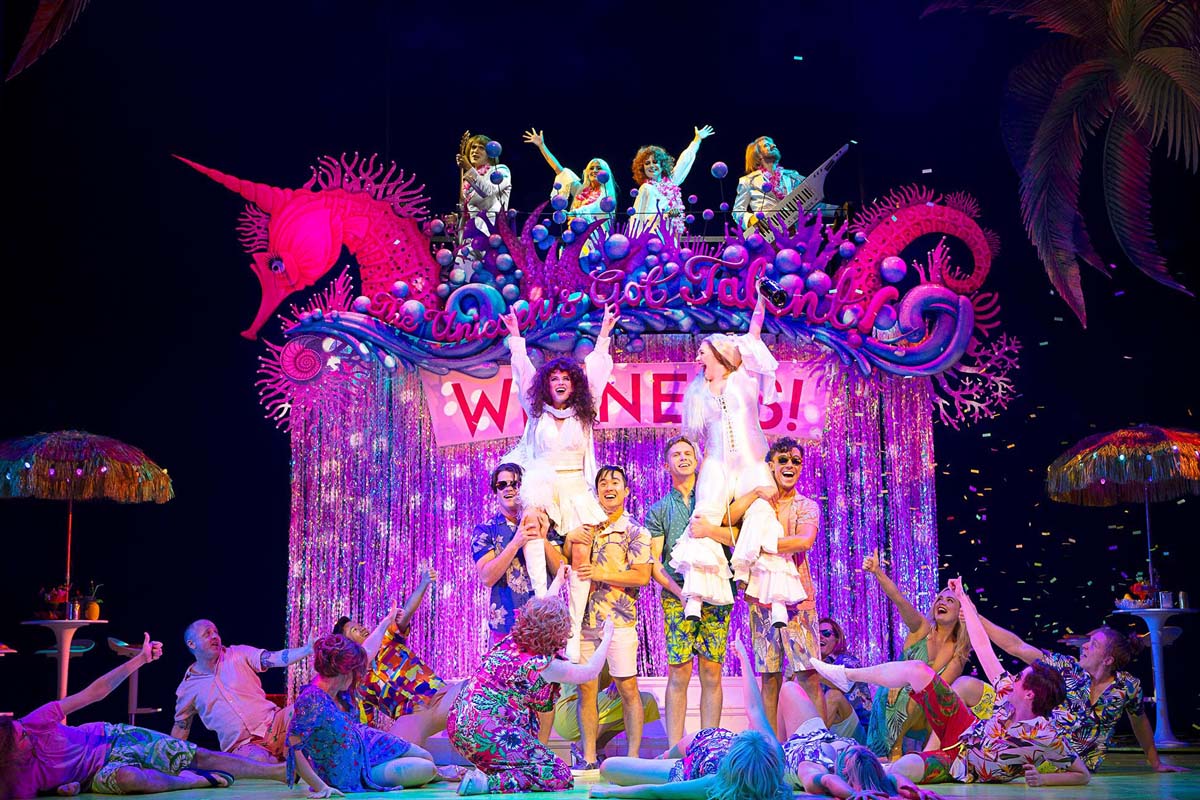
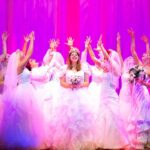
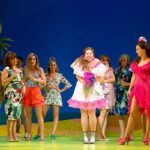
    After a first sold-out season at the Roslyn Packer Theatre, Muriel’s Wedding has returned with a Melbourne run finished and Sydney currently packing in the audiences. Next stop is Brisbane for the highly rated production that has grown and changed a little since the 2017 premiere.

    Again JPJ Audio are supplying the audio equipment with Michael Waters once again in charge of the sound design, which is quite distinct this time around. Michael won the 2018 Helpmann Best Sound Design for the original production of Muriel’s Wedding.

    Conceptually it’s similar but in terms of delivering the audio, it’s quite different,” Michael clarified. “We have a Clair PA and I believe it is the first time in the world that a Clair Cohesion CO-8 system has been used for theatre.

    Designed for a variety of uses, CO-8 combines very high output, flexible coverage, and premium sound quality into an extremely compact package. The CO-8’s diminutive size allows for a high degree of flexibility when integrating into virtually any application. Sydney’s Lyric Theatre saw 36 x CO-8 line array speakers utilized, along with four CP-218 subs, and Michael was thrilled by their performance.

    The CO-8 is such a punchy little box, slightly smaller than an L-Acoustics KARA or dV-DOSC, but they’ve got a really good bottom-end and low mid-section,” he added. “In fact it’s so good, I don’t need additional subs! The CP-218 subs are just so powerful I only need four of them; two on the floor and two in the air and the result is phenomenal. It’s a small yet beefy PA that is extremely efficient.

    This show has a wide dynamic range, ranging from ballads to pop/rock songs with a little rap here and there with severe bass drops, and Michael commented that the CO-8 system lends itself well to Kate Miller-Heidke’s and Keir Nuttall’s pop music. Having said that, Michael confirmed that he would be happy to use the CO-8 for most styles of musical theatre.

    The Cohesion Series has interchangeable Hornserts which allow a range of different dispersion flares for the horns,” explained Michael. “So within the arrays (left, right and centre cluster) there’s a range between 80° to 160° which allows incredible coverage right across the room. More to the point, it delivers better localization to the cast so that your ears aren’t leaping from one cluster to another. The CO-8 really does deliver seamless coverage.

    Delay speakers in the Lyric included 50 x L-Acoustics 5XT with eight more for front fill and a further 32 for surrounds. A couple of Cohesion Series CP-6 self-powered point source loudspeakers and CP-118 subwooofers are used as SFX speakers. L’Acoustics 108P’s are used for Outfills and Michael describes them as the best sounding and most versatile loudspeakers on the market.

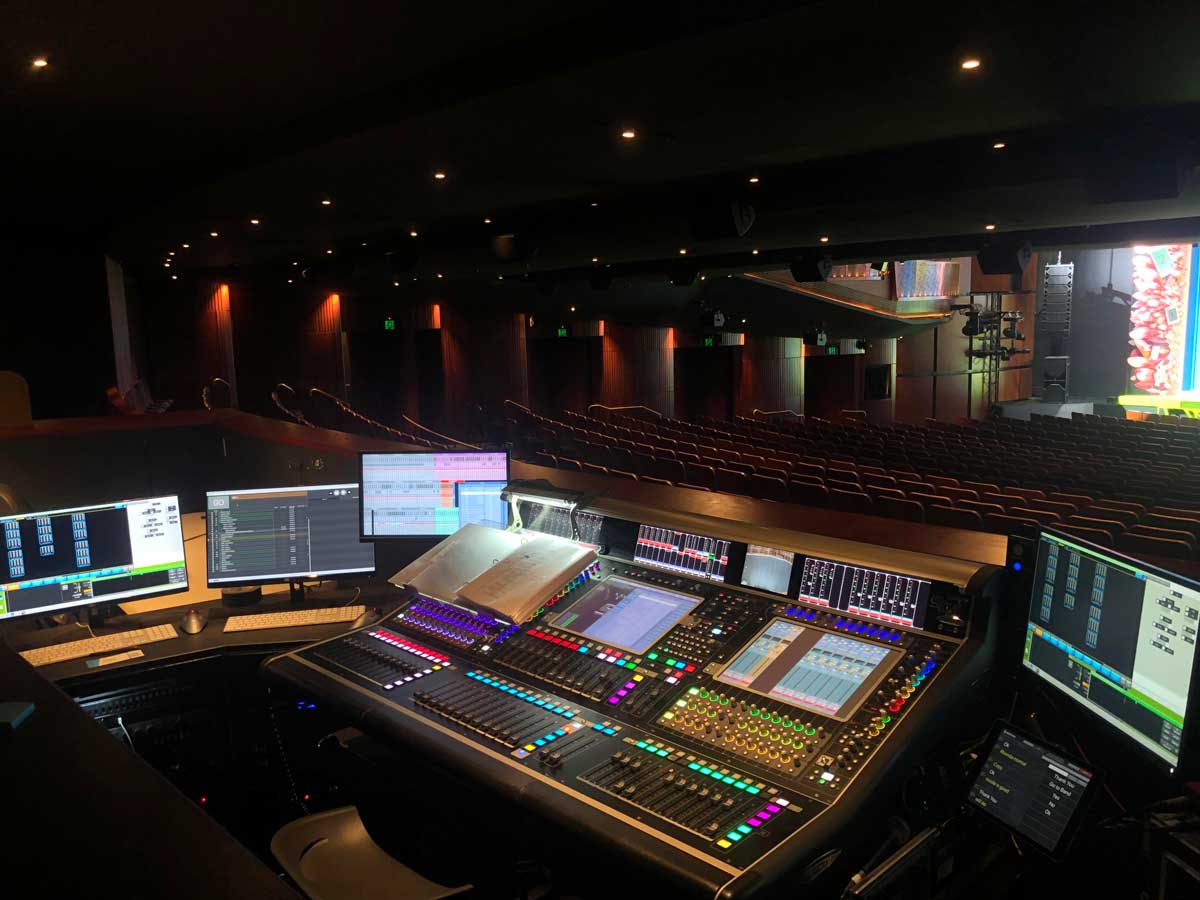
    Muriels Wedding 16Out front, Brendon Gardner runs a DiGiCo SD7T with Michael commenting that they have added more instrument channels, mainly in the keyboard department resulting in eight stereo pairs of keyboard alone across three players and synth bass, played by the bass guitarist. In fact, Keyboard #3 is played by Guitarist #2 …. not confusing for anyone!

    It’s a large show in terms of input tallies with 105 inputs for a cast of 28 and a nine-piece band, indeed up to nearly 150 channels including the Roland M48 mix returns,” he confirmed. “The only outboard device is the TC Electronics Reverb 4000 on the principal vocals with all other effects onboard. The dynamics and equalisers on the DiGiCo range are great. All matrixing is done onboard also, eliminating external matrix devices. Armed with an iPad I can tweak the mixes within snapshots, and system settings all over the theatre easily.

    Also at FOH is a QLab playback rack for sound effects.
    The cast utilised DPA d:screet 4061 miniature microphones with one DPA d:fine 4066 omnidirectional headset mic for one scene where it’s rather loud and Michael needs to get the capsule closer to the mouth for gain reasons.

    The band have the usual suspects as well as some interesting choices; Shure Beta 52, Beta 91 and Beta 57 for kick drum, Sennheiser e904s for toms, Earthworks SR30s on the overheads, AKG414s, KM84s, Beta 52a on percussion and Shure KSM313 dual-voice ribbon mics on the vibes. Added to that are Neumann KM184 over the strings and a Schertler P-Dyn48 on the double bass.

    I have the DPA 4099 for the acoustic guitars which sound beautiful,” said Michael. “The guitar players have the Helix Amp Modelers and when the 4099 ran through them, I was amazed at how warm and lovely they actually sound through the Helix. The guitarists control their own patches, so they control the muting of the mic, as a result we don’t have to fiddle around on the console’s snapshots or have external mute switches.

    The Lyric Theatre is a big house for any story, but Muriel’s Wedding fills the space with clear vocals and punchy songs, thanks to Michael Waters and JPJ Audio.

    Gallery


  • Childish Gambino

    Childish Gambino 1

    With shows that are as immersive, interactive, and mesmerising as they are entertaining, Childish Gambino lights up the stage like very few artists can.

    In Australia to headline Splendour in the Grass, Childish Gambino played a handful of arena shows for those not lucky enough to get to Byron Bay.

    FOH Engineer Kevin Brown has been fortunate to work with some very talented artists over the years, which include Toni Braxton, American Authors, Chris Brown, OutKast, Joi, Nicki Minaj, and Cody Simpson.

    He has been with Childish Gambino for only four months after he was approached by Tim Colvard, the artist’s previous FOH guy, to take over after the first weekend of Coachella.

    Kevin was mixing on a DiGiCo SD7, saying he has tried to use the SD Platform exclusively for quite a few years. “At the time it was the only desk that didn’t make me feel restricted by its workflow,” he added.

    The SD7 has a very powerful engine and you can do almost anything, whenever you want. That type of flexibility is paramount in allowing us to be creative as mixers.

    Kevin was using a Neve 1073 and Avalon 737 for the main vocal, remarking that the 1073 is a great mic pre, and if you combine that with the smooth EQ of the Avalon, you start off in a great space for your vocal. For effects processing he was using an Eventide H3000 along with various UAD and Waves plugins for reverbs, delays and some chorusing.

    Kevin describes Childish Gambino as a solid performer and dynamic with the microphone; there are times when he projects and others where he forces you to listen.

    It’s all about dynamics, the ups and down are what create the journey,” he added.

    This is a very exciting mix, especially from a mixer’s position. There is six-piece band on stage that consists of drums, bass, two guitars, keys, and percussion.
    On top of that, you have playback tracks and five choir members. This puts us in the ballpark of 110 channels. There are so many layers that allow you to create a dynamic mix with lots of depth.

    Childish Gambino 8

    JPJ Audio provided gear and crew for the Australian leg of the tour and Kevin found himself using a Clair Brothers CO12 PA system for the first time. The system comprised of 16 CO-12 in the main with six CP-218 subs flown. For side hangs there were 14 CO-12 plus eight CO-8 for front fills and 16 CP-218s on the ground.

    The first word that comes to my mind is powerful!” commented Kevin.

    In the air the PA looked smaller than some other systems, but they sound big, and the subs sound huge. I was really impressed. It’s not every day you get that type of energy moving from an active speaker.

    Kevin remarked that there was nothing special going on with microphones. There are a few Shure 57s, 58s, 98s, and AKG 414s on stage whilst Childish Gambino is on a Shure Axient Digital 58.
    As Kevin concludes, the main ingredient is the group of talented individuals on stage. It starts at the source!

    Childish Gambino_5A touring comms package included a Riedel Artist comms system, 2300 Series Smart Panels with David Clark headsets, and Bolero wireless comms for the stage, all interfaced into Big Picture’s comms system for seamless integration with cameras and directors.

    Tour radios were also supplied by JPJ Audio with D2N also supplying a Hytera radio solution for the tour.

    Charlie Izzo, who has mixed monitors for Childish Gambino the past 18 months, says everyone in the band has really good ears and expects a higher level of fidelity in their mixes. He ran a Solid State Logic (SSL) L500, with a Lexicon Pro 480L and a Bricasti M7 outboard, and Shure PSM 1000s for IEM.“I just really like the sound of SSL’s live consoles,” he added.

    The preamps, EQs and summing have a real analogue feel to them. I use a Waves package as the flexibility and quality of Waves plugins really makes a huge difference for me.

    Childish Gambino_7Charlie utilised an ELI Distressor to control vocal dynamics and a Lexicon 480L for the vocal reverb, saying it has been a standard in recording studios for years for a reason. “In the IEMs it really shines,” he said.

    I also have a Bricasti M7 for verb. It is a really solid reverb unit that produces very clean, rich verbs. I use the internal SSL buss compressor. There are so many companies that emulate it with plugins, but having it straight from the source is spot on.

    I use the Shure PSM1000’s because they simply sound great. They have a super quiet noise floor for IEM packs and they really translate what I’m doing on the console well.

    Charlie commented that it really is a pleasure to mix for Childish Gambino, adding that aside from everyone being incredibly talented musicians and performers, they are also really great people to work with.

    Photo Credits: ©Troy Constable


    This article first appeared in the print edition of CX Magazine September 2019. CX Magazine is Australia and New Zealand’s only publication dedicated to entertainment technology news and issues. Read all editions for free or search their archive www.cxnetwork.com.au


  • Fortitude Music Hall, Brisbane

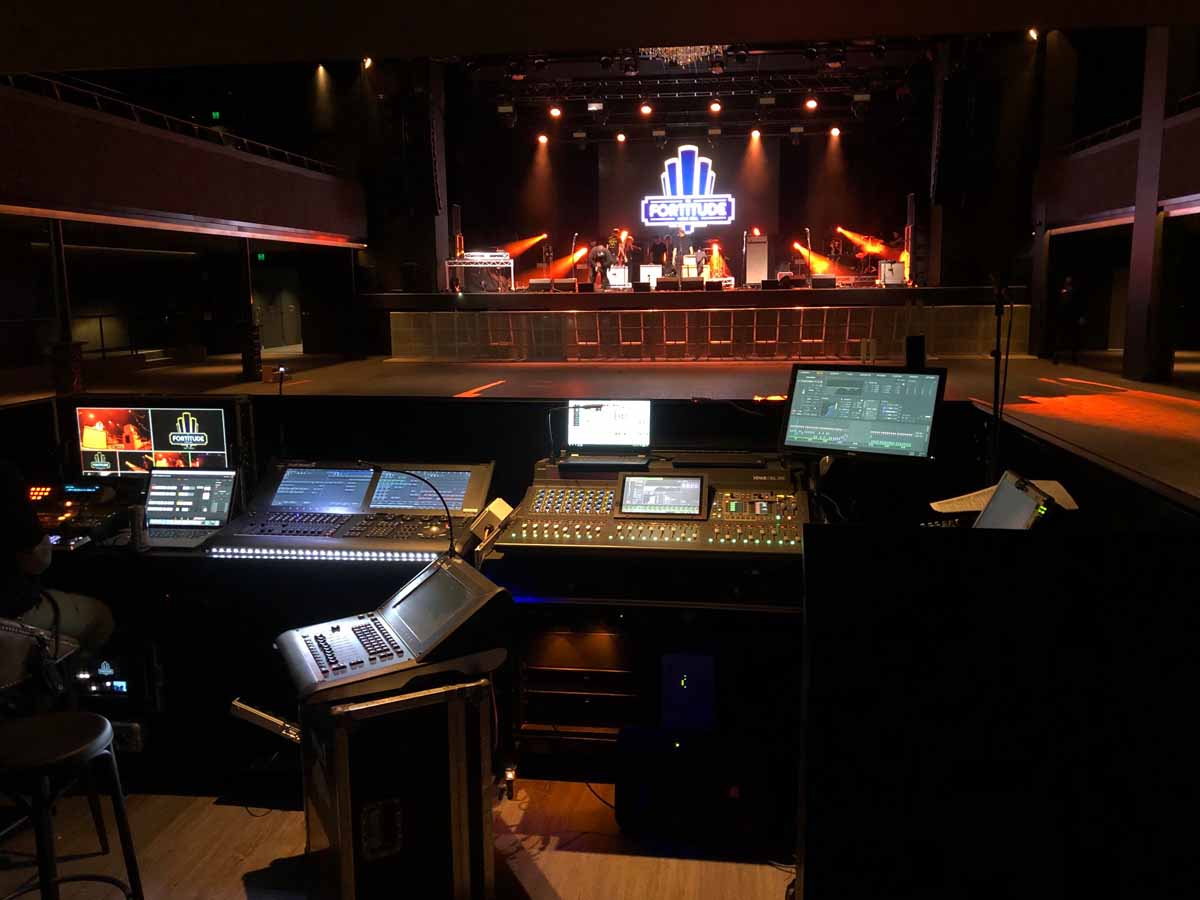
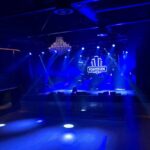
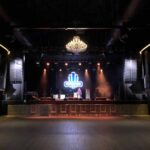
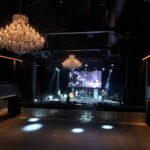
    Fortitude Brisbane 3

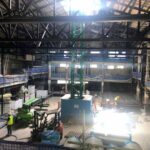
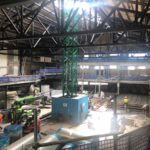
    Brisbane’s new Fortitude Music Hall is the largest ballroom/theatre styled venue in Australia, with a 3,000 person standing capacity and a 1,100 seated capacity. The venue is inspired by some of the world’s most loved live music venues, from classic art deco theatres to larger clubs, while still paying homage to the iconic venues of Brisbane’s past. The Fortitude Music Halls’ prime location in the heart of Brisbane’s entertainment precinct and state of the art production make the venue a truly world class performance space.

    John ‘JC’ Collins, one-time Powderfinger bassist, is co-owner and manager of Fortitude Music Hall in partnership with Paul Piticco and Jess Ducrou of Secret Sounds Group, construction giant Hutchinson Builders and Live Nation.

    The important element of the Music Hall, set in the middle of Brunswick Mall, is that it offers different sized spaces. The 3300-capacity room can be transformed into 1200 and 2000, with a smaller upstairs bar-style for 300.

    Fortitude Brisbane 6The venue owners contacted JPJ Audio to design and install an audio system that would reflect their considerable investment in the venue. In recent times, JPJ has been installing elite, high end systems into venues as a pay as you go option which helps them sell the room and also saves touring acts production costs. It also makes tight touring schedules a bit easier as there are so many overnight shows these days.

    JPJ is a leader in this area and currently have similar installations in the Palais Theatre, State Theatre, Horden Pavilion, Luna Park, Festival Hall and The Forum Theatre. Bruce Johnston, one of JPJ Audio’s Directors based in Melbourne, headed the project drawing on JPJ’s extensive network of experienced audio specialists around the country.

    For the Fortitude Music Hall, we decided on an L-Acoustics K2 speaker system with an L-Acoustic monitor system, as that would give us a bit of consistency with all the amplifiers and drive and thus some good redundancy,” explained Bruce. “In the console department we have gone with an Avid S6L 24C out front and a DiGiCo SD10 for monitors as this gives the venue both options and the ability to flip them end-to-end. We see that a lot in touring. We have also run multiple multicore options to cater for all consoles. Both consoles come with Waves servers.

    When designing the system, Bruce asked Bob Daniels from JPJ’s Sydney office to plot and plan the room in order to try cover as much as the room as possible. The venue has viewing areas throughout and this had to be taken into account.

    The main system is 16 x K2 (eight per side flown) with 12 x SB28 subs in pods of two running across the front of the stage. Downstairs there are two zones per side of two ARCS Focus, totaling eight, and four X8 live monitor enclosures for front lip-fills. Upstairs, to supplement the main hangs, there are three ARCs per side to service the outer corners and throw up the sides until the K2 takes over. At the rear of the room under the balcony are some more X8s filling in.

    Fortitude Brisbane 7The venue built sub containment compartments in brick so JPJ could evenly run the subs across the front to reduce the sub-low getting back under the stage and this has worked really well.
    We did have rigging challenges to get around some air conditioning ducting,” added Bruce. “However the overall result has been very good and we have now had a few shows through with some great comments on the system. Over the next few months we will do some tweaking and go from there.

    JPJ supplied a variety of microphones to cater to all requirements including Shure B58A, B57A, SM57, B52A, B91A and Sennheiser 904 and 901s.

    Bruce commented that Jay Van Lieshout from JPJ in Brisbane managed the installation and with his team, did an outstanding job.

    We wanted to give the Brisbane shop ownership of the install and be a part of the process,” he said. “They were there day after day as the room changed and evolved. Brendan Keane spent time aligning the system with a great result. It’s a very seamless sound walking around the venue.

    JPJ Team:

    Jacob Elmer, Dan Charlton, Clint Crawford, Brendan Keane, Justin Ryan, Mathew Morrison, Regan Downs, Andrew Werlick.

    Gallery


  • Michael McIntyre’s Big World Tour

    McIntyre 7

    A couple of months ago, Britain’s biggest comedian, Michael McIntyre, returned to Australia with his highly anticipated Michael McIntyre’s Big World Tour.

    FOH engineer James ‘Oysters’ Kilpatrick was given a short and to the point brief by the artist’s team: perfect high quality audio delivered to every single seat and with that they sent him a Dropbox link to pre-show music, announcements and a pre-programmed cue list!

    Basically it was a case of when in doubt, point a cabinet at it,” said Oysters. “I think it’s really a hangover from people not taking a minimal input show seriously. We play houses to nearly 15,000 people, ticket prices aren’t cheap and people expect to be entertained. So I’m with them – do it well, do it right the first time.

    Oysters has a bit of a formula going when it comes to mixing for comedy shows saying he aims for the highest sample rate he can get and staying digital AES for as much of the signal chain as possible.

    To my ears it has greater intelligibility for speech and stays smoother, soft and clear,” he added. “I use a DiGiCo SD10 as it has heaps of outputs plus it holds an iPad and a MacBook. It also runs Waves 10 which has a few plugins I rely on for comedy.

    Along with the SD10 with redundant Waves server and Waves computer running live vocal rider, Oysters also had a C6 and the X Feedback plugin saying it is great for mic rejection.

    Oysters also ensures there are heaps of speakers saying it’s all about coverage and that takes boxes pointing at people. It may sound simplistic but when you get into Qudos Bank Arena, it’s a great big daunting space to cover with low level speech.


    JPJ Audio supplied the Australian tour including Oysters’ favourite PA setup of L-Acoustics K1 and d&b GSL.

    They both throw a soft spoken word a really long way and it lands coherently and legible, no mean feat in a large cavernous space,” he explained. “We typically fly high with a large amount of boxes (12-18 depending on venue) and try to bend the bottom part so it hits just past the front fill but not onto the stage – something the GSL was made to do.

    Oysters concluded that most of his comedy shows have been designed and conceived at JPJ Audio, with rigging plots and cabinet numbers all done well in advance. He notes that the expertise they bring to the table is invaluable and an essential factor in a show’s success.


  • JPJ Audio further their services for the NRL

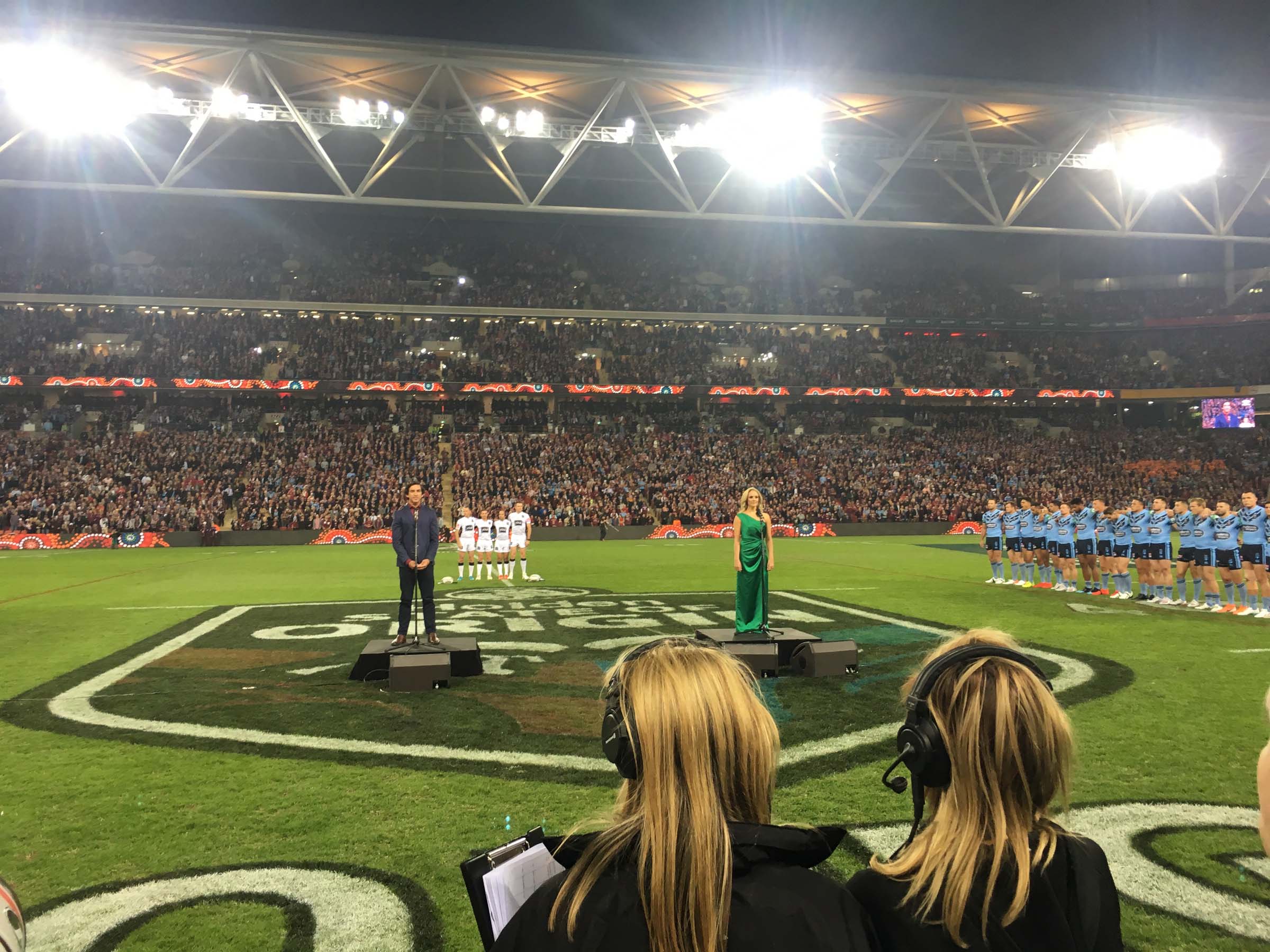
    NRL 2019 9

    JPJ Audio have had a long affiliation with the NRL and supplying an audio solution for all their major events.

    Wednesday night saw the first of the State of Origin 2019 games and the new role JPJ now play in helping the NRL deliver major events.

    As well as all things audio for game day and pre show entertainment, JPJ now supply the signal distribution backbone for all game day and pre show elements as well as all the coms required for this major event.

    Account Manager and System Engineer for the event Wayne Mulder says, “This has been months in the planning, and I’m over the moon with the result achieved by JPJ and the crew. I really enjoy working with the team from the NRL and delivering great results like this for a valued client. It was a big change from just looking after the audio element, but I was ready for the challenge, and I couldn’t have done it without the JPJ crew behind me.

    Gallery – click to enlarge


    JPJ engaged the services of D2N Communications to supply the Hytera 2way Radio solution required for the event, and future games, and it was great working with Managing Director Jason Owen on this event. JPJ use D2N for all our radio needs and can’t thank Jason enough for his support on this.

    George Gorga the Audio Director for the NRL mixes the music element for broadcast and pre show element for the stadium and his console of choice an AVID Venue Profile.

    For Brisbane, JPJ installed an L-Acoustics KUDO ground PA system to supplement the in house PA. Stage monitors were L-Acoustics 115xt HiQ’s, all radio mics for the show are from the Shure Axient series and IEMs used were Shure PSM 1000s. There was a mixture of Shure and Sennheiser microphones depending on the band’s spec.

    Gallery – click to enlarge


    For coms and signal JPJ used their Artist system running 2300 series panels on an AES67 network and rolled out 24 wireless Bolero packs for all the NRL crew on the field. MediorNet was used to move audio and vision around the stadium and interface with OB as required as well as a large amount of Vlans on a Cisco Catalyst network for all the different production suppliers to use as required.

    JPJ look forward to working with the NRL on all future events coming up this season and the future.

    JPJ Touring Crew for all NRL events this year: Chris Skin, Nathan Todd, Jason Owen
    JPJ Local Crew Brisbane: Murray Lewis, Matt Loncar, Dan Charlton, Regan Downes.


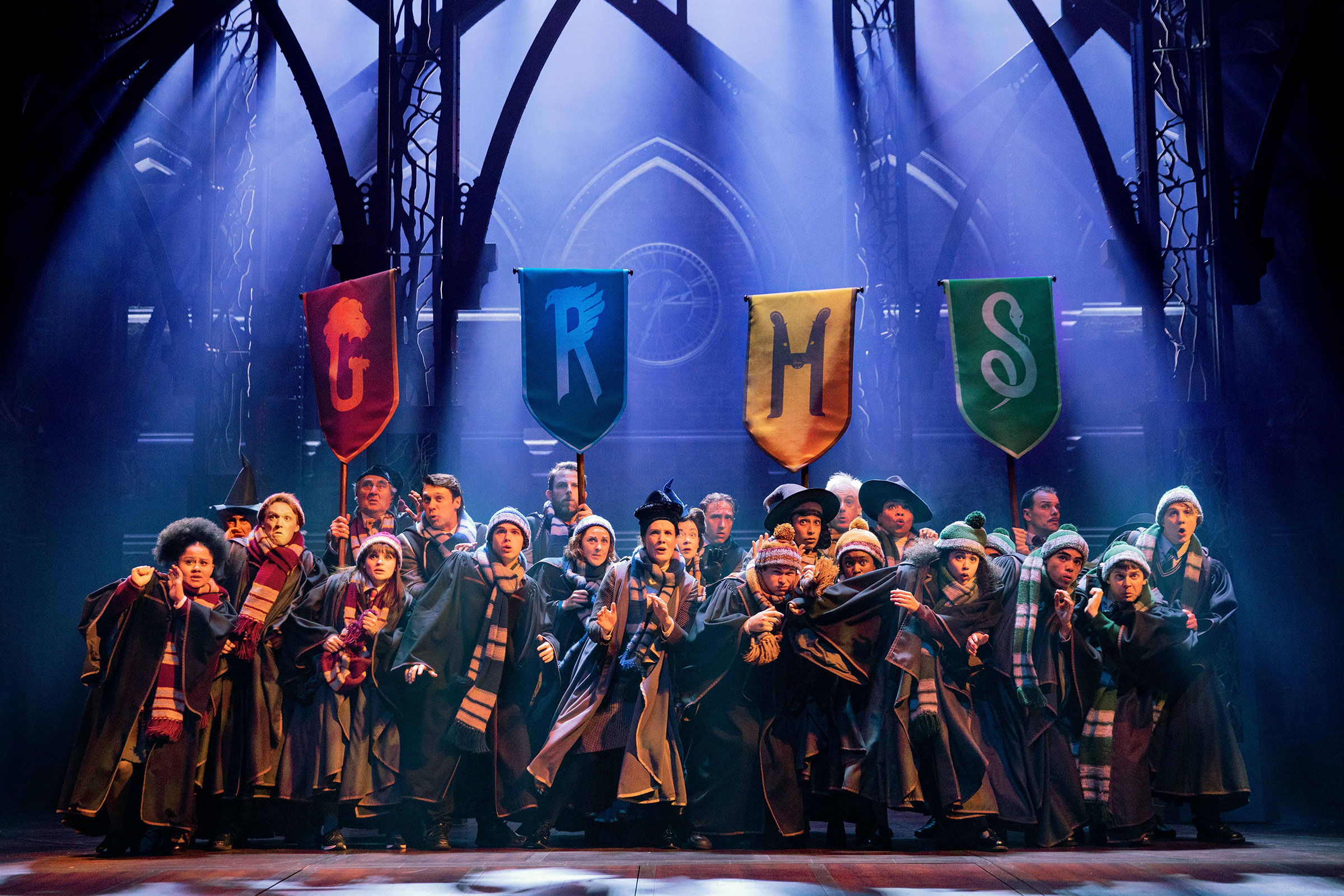
  • Harry Potter and the Cursed Child

    Harry Potter 3

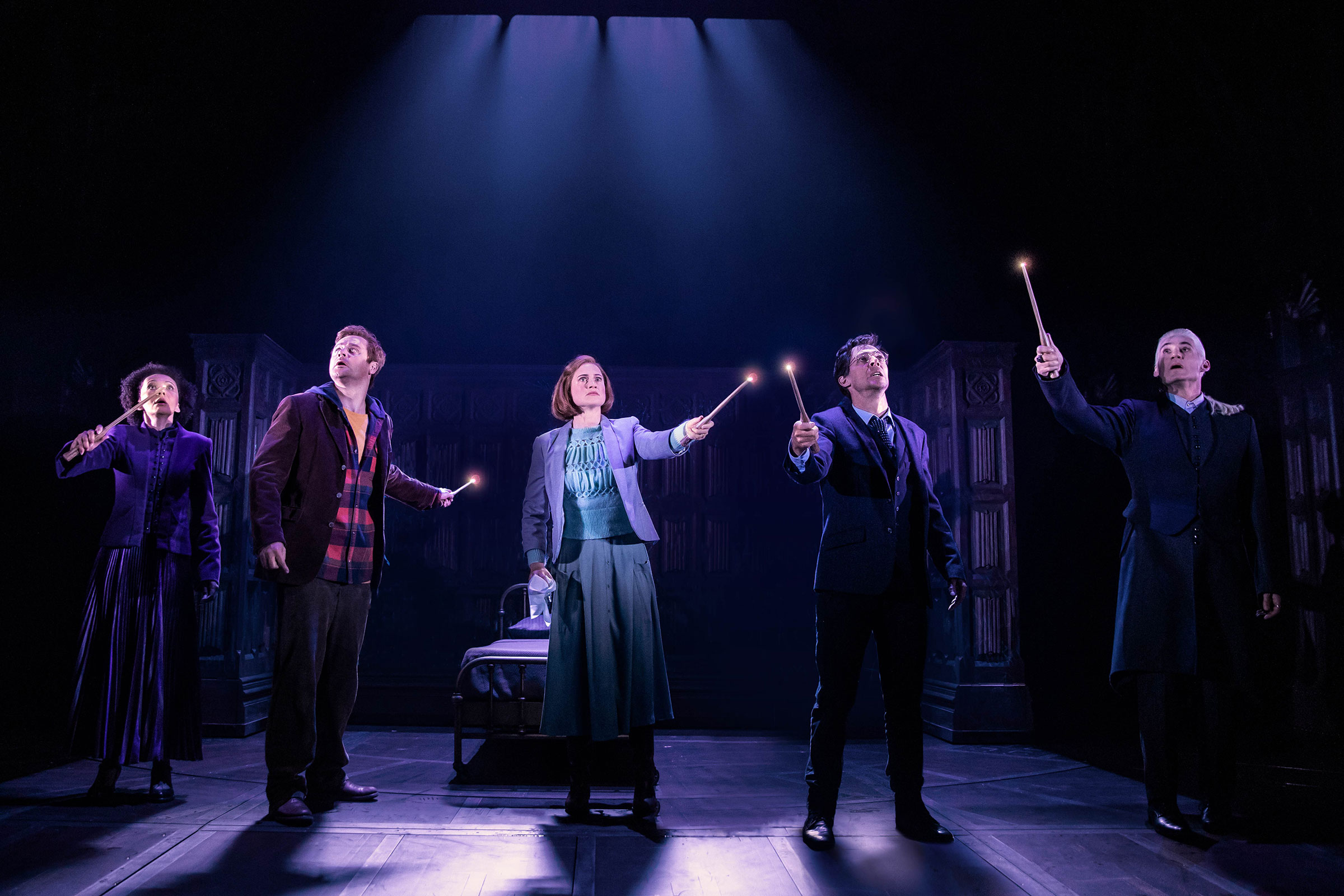
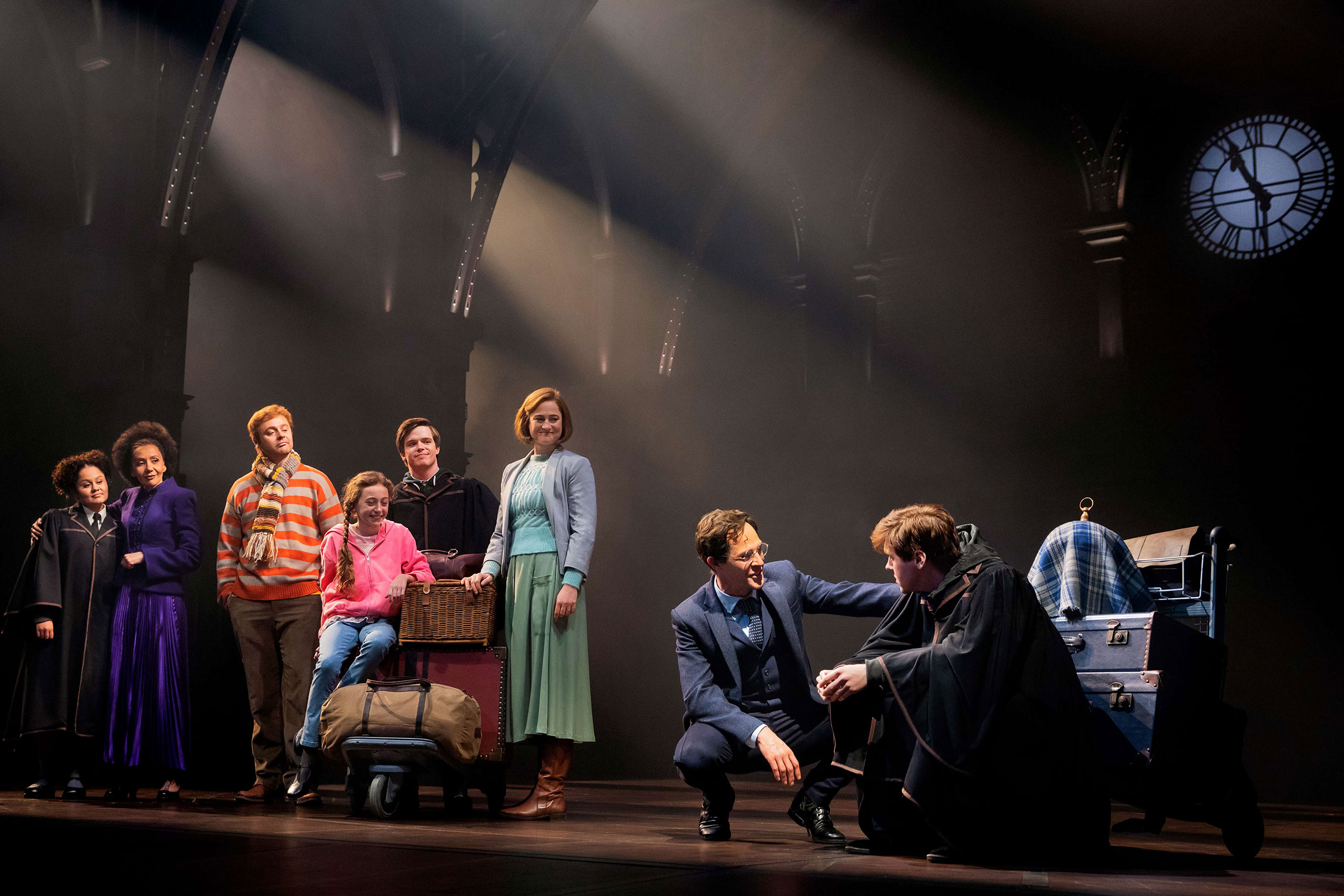
    Based on an original new story by J.K. Rowling, Jack Thorne and John Tiffany, Harry Potter and the Cursed Child is the eighth story in the Harry Potter series and the first official Harry Potter story to be presented on stage, and is one play presented in two parts, which are intended to be seen in order on the same day (matinee and evening) or on two consecutive evenings.

    After its success in London and New York, the play opened at Melbourne’s Princess Theatre with JPJ Audio the nominated audio supplier.

    Sound designer Gareth Fry, who has scooped numerous awards for his work on the play including winning an Olivier Award, a Tony Award, a Drama Desk Award, and an Outer Critics Circle Award, flew in to ensure a smooth transition. Gareth has worked with director (and co-author) John Tiffany since 2006 saying they have a shared vocabulary for talking about things, shared reference points, and an understanding of each other’s tastes for things.

    Harry Potter 7
    As the play is set in a fantasy wizard world where nothing is naturalistic, generating the sound effects was a major undertaking for Gareth who strived to ensure the magic appeared very real.
    With a normal play you can use a sound effects library or go out into the world to record it,” he explained. “As so much of this is spells and mystical creatures, all of that has to be created from scratch from the imagination. It’s a massively ambitious show in scale and storytelling, and we’ve had to create hundreds of sounds as well as developing a language to do that.

    Rather than prepare most sound effects beforehand, Gareth and his associate Pete Malkin were in rehearsals full-time from day one, creating the effects in Logic and Ableton Live in response to what was being generated.

    A lot of it was made in situ with the performers and creative team to make it really gel together,” added Gareth. “Quite often if you make something in the studio and then bring it to the rehearsal room, it doesn’t match.

    The PA at The Princess Theatre is all d&b audiotechnik, almost exclusively the Y-Series which Gareth says is a lovely sounding box, well suited to this scale of theatre.

    It’s a very large speaker system, particularly for a play, there are hundreds of speakers all over the place,” he said.

    A TiMax Tracker is deployed to make vocal mics precisely follow the movement of actors. “Each performer wears a tag that the computer tracks so the TiMax system can pan their voice around the sound system so it sounds more like their amplified voice is coming from where the actual performer is,” Gareth elaborated.

    Harry Potter 1
    The show is so complex that two sound operators are required at FOH. One operator is kept busy mixing the mics and vocal effects on a DiGiCo SD10T, whilst the other person triggers the sound effects and music on QLab and Ableton Live , through a Yamaha CL5.

    There are a lot of sound effects, and a lot of Imogen Heap’s pre-recorded music that moves between underscoring and the foreground,” remarked Gareth. “We’re using Apple MainStage software for all the different vocal effects, as well as a Lexicon PCM96.

    A few of the radio mics had to be mounted in unusual places in strange costumes and so the aptly named DPA d:screet microphones were chosen as Gareth says they sound great, are very tough and are small enough to hide on cast members. As the show has progressed around the world, the microphones have kept pace with newer models being implemented so that by the time it opened in Melbourne, the new DPA d:screet 6000 Series was utilised.

    They are effectively invisible,” stated Gareth. “The actors prefer wearing them too, because they are less obtrusive. They sound great and they are incredibly water resistant.

    Gareth describes the transfer to The Princess Theatre as incredibly smooth saying the JPJ team were amazing. “I couldn’t have asked for it to go any smoother!” he declared.

    All Photos: ©Matt Murphy


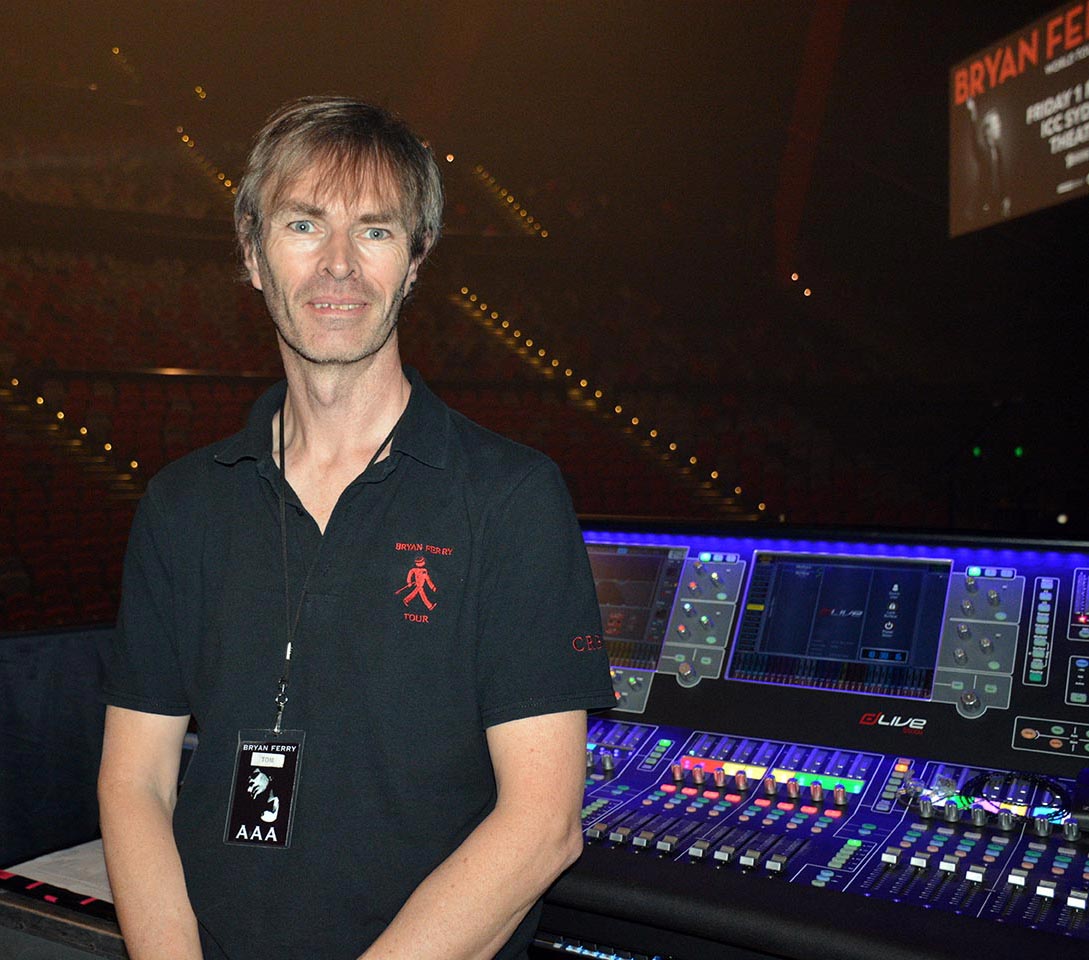
  • Bryan Ferry

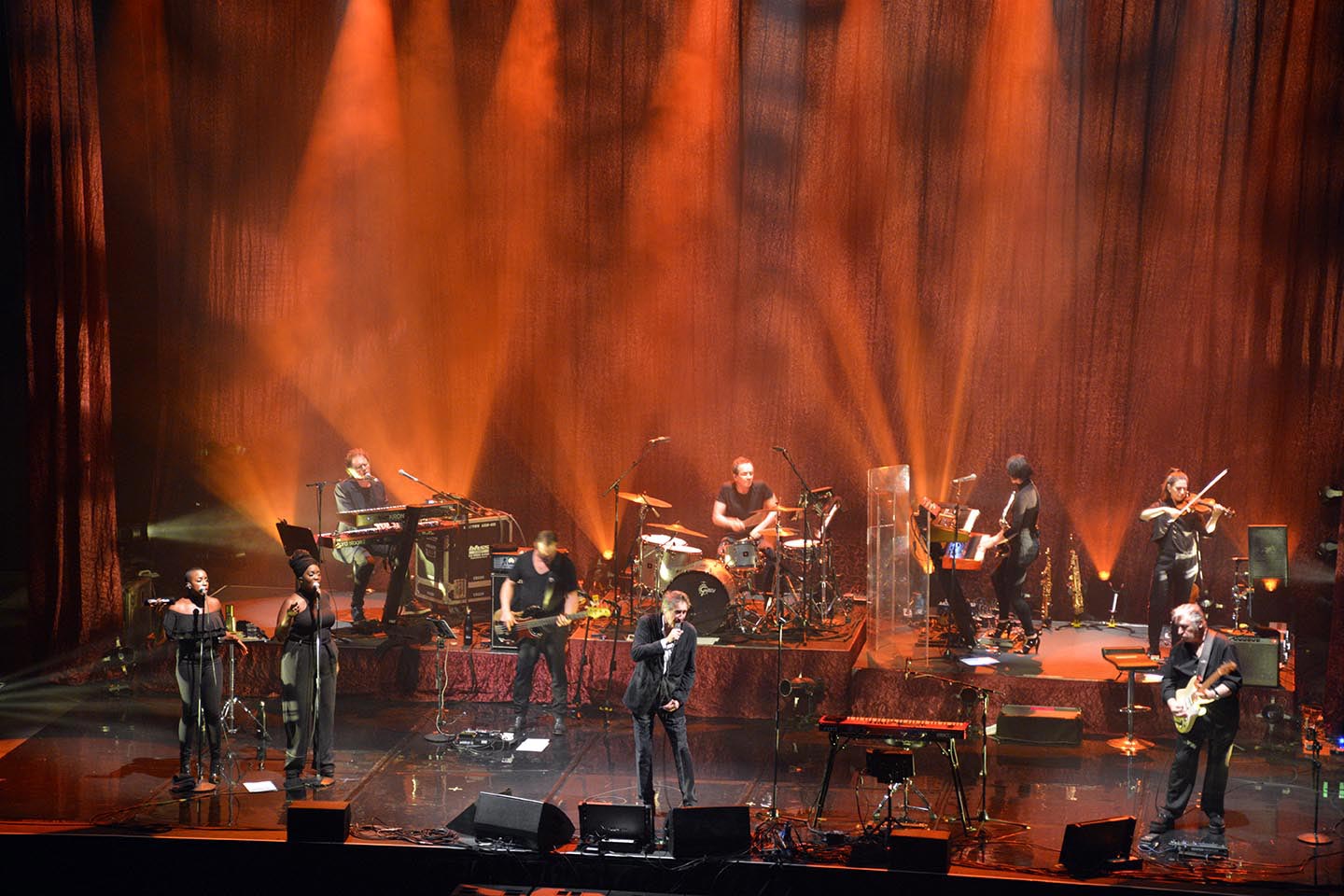
    Brian Ferry 2

    Bryan Ferry has a reputation as a very artistic performer who cares deeply about his music, constantly changing arrangements and songs.

    With an outstanding ear for the songs’ musical arrangements, both Bryan’s FOH and monitor mix require constant, active mixing throughout each song at a very detailed level.
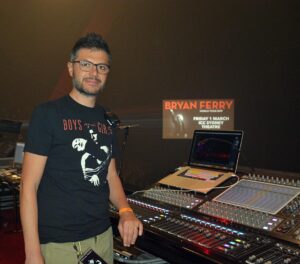
    Davide

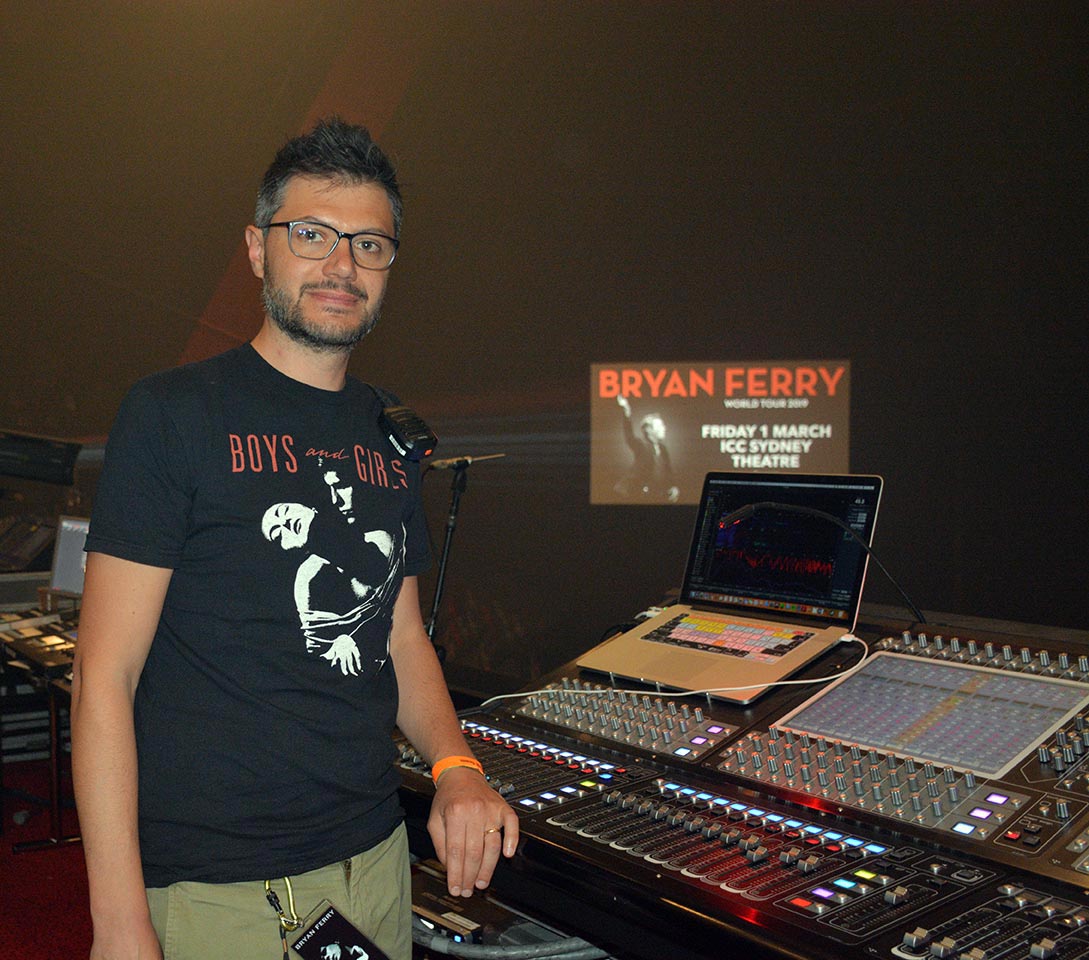
    FOH engineer Davide Lombardi has worked with other iconic British singers such as Kate Bush, Ed Sheeran, Gary Barlow, Tom Jones and when the tour finishes, he hits the road with Dido who after 15 years has finally released another album.

    This tour has been going for a while but then again, Bryan never really stops,” remarked Davide. “He goes out every year but never for a long time, a maximum of four weeks at one time

    The tours utilized an L-Acoustics K1/K2 PA system with SB28s subs and a front face of ARCs and 108s, all controlled by Lake and LA network. At the ICC in Sydney the set up was 12 K1s and four K2s on the main hangs with side hangs of 12 K2s, four subs flown, four ARCs per side as outfills, two ARCs per side as infill and 218s as front fills.

    The venue here is very steep so we’ve had to fly quite high in order to cover the very top seats,” said Davide. “We spend a lot of time tuning, making sure that there is a good balance between delays and gain structure in order to get the image back to where Bryan is. Also, Bryan is not a powerful singer so the more coverage there is, the better it is to control his vocal.

    Out front Davide was mixing on a DiGiCo SD10 saying the way he mixes is pretty simple with little in the way of routing. He doesn’t use plugins and the only external effect he had was a Bricasti M7 reverb, which he loves, and a tc electronic D2 delay unit especially used for the saxophone to recreate an 80s sound. An SPX 2000 is used for effect in just one moment of one song.

    It’s really very simple,” added Davide. “Everything is routed into groups going to the matrix and then out of the matrix into the Lake and then out into the LA Network. I get a lot of precision from stage which is why it is simple. Before making changes on the console, we work a lot with the band adjusting levels with them when we can so we don’t change the sound too much. I try to leave it as natural and organic as possible.

    Davide’s biggest challenge is getting Bryan’s vocal above everything else as he is a gentle singer and talker, and can sometimes mumble!

    As well as Bryan, there are eight people onstage and with his music being very busy, there is not much space left for his vocal to cut through. However Davide says that is something Bryan seeks as he wants to express himself with his music rather than his voice. The result is a lot going on for Davide with a ‘proper’ live mix.

    There are constant changes and we can’t rest for one second,” he said. “There are layers and layers happening all the time.” Bryan uses an Audio Technica 6100 microphone, a dynamic mic that has condenser characteristics according to monitor engineer Tom Howat.

    It’s an interesting mic although you could potentially get a lot of spill in it so a lot of what we do is containment,” Tom commented. “It’s a good choice though because it’s not a condenser mic but you still get a quality output from it and Bryan really like it.

    Modeling amps are used for the guitars so there are no guitar amps onstage to help keep spill under control with Davide saying it sounds better.

    Sax mics are from SD Systems, again they are dynamic but have tripod prongs that clip onto the bell of the horn.
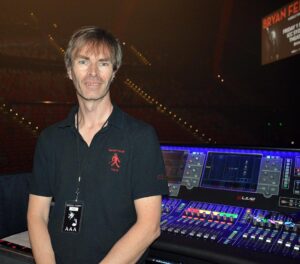
    TomThey give you a very nice rich sax tone,” said Tom. “We have DPA’s for the violin and the rest is pretty standard although the Shure SM57 on the washboard is a highlight of the show.
    Tom mixed monitors on an Allen and Heath dLive, his console of choice but fessed up to having a history with it as he was part of the development team!

    It’s a great sounding console, is very powerful and is good for IEMs,” he added. “We did some orchestra shows last year and I completely maxed it out, used the modularity of the system to expand with it which is all very cool.
    Everyone was on IEMS Sennheiser 2050s, with Tom having has 16 transmitters and only the drums were hard wired.

    Mixing monitors for Bryan is a very parallel equation to Davide – precision, accuracy, coping with what he’s hearing and wanting to hear,” said Tom. “And also like the FOH mix, you’re riding every solo and readjusting all the time. The band basically get my attention during the soundcheck and I’m pretty much pinned on Bryan through the show. It’s mix, mix, mix and without snapshots I’d be lost on this one. The musicians play different instruments so there’s a fair bit of rotation there. Arrangements are everything with Bryan and I have to mix monitors as if I’m mixing out front, you can’t leave it alone for a minute. With the vocal you’re riding that fader up and down, pulling it back every time he’s not singing – so the finger grips that fader all the time.

    Tom reveals that he has to watch Bryan closely taking cues from whatever he is looking at, maybe something has to go up or down depending upon the look on his face. Reading his body language is a key part of Tom’s job.

    Davide discovered that the ICC room had specific places that sounded quite different and he was interested to see how it changed once the audience were in the house.

    The corridor by the FOH has a cancellation about the low end at 40 – 50 Hz so we’ve been measuring that with Smaart,” he said. “You can see when you move the microphone you see a big scoop coming on 50Hz. We’ve tried to fix it but you can’t, it’s a natural thing but hopefully it will be better when the audience are in.

    I always make sure that the mix is not exactly perfect at the FOH, walk around the venue a lot during soundcheck to make sure I find a good balance between everywhere. That takes a long time but it’s worth it.


    The music comes at them at such a complicated level it pays off to keep the technical elements as simple as possible whilst using the power of technology to simplify the process.

    Smaart, snapshots ….. all great examples of using technology to enable us to do what we need to do mix wise because that’s where it is all at for Bryan,” added Tom. “It may sound like it’s straightforward but it’s not, you bury the technology so the actual hands-on bit really counts. Its old school but using high tech.

    JPJ Audio supplied the gear and crew with Davide and Tom commenting on how well they work together as a team.

    This article first appeared in the print edition of CX Magazine April 2019. CX Magazine is Australia and New Zealand’s only publication dedicated to entertainment technology news and issues. Read all editions for free or search their archive www.cxnetwork.com.au