Blog

  • Byron Bay Bluesfest 2018

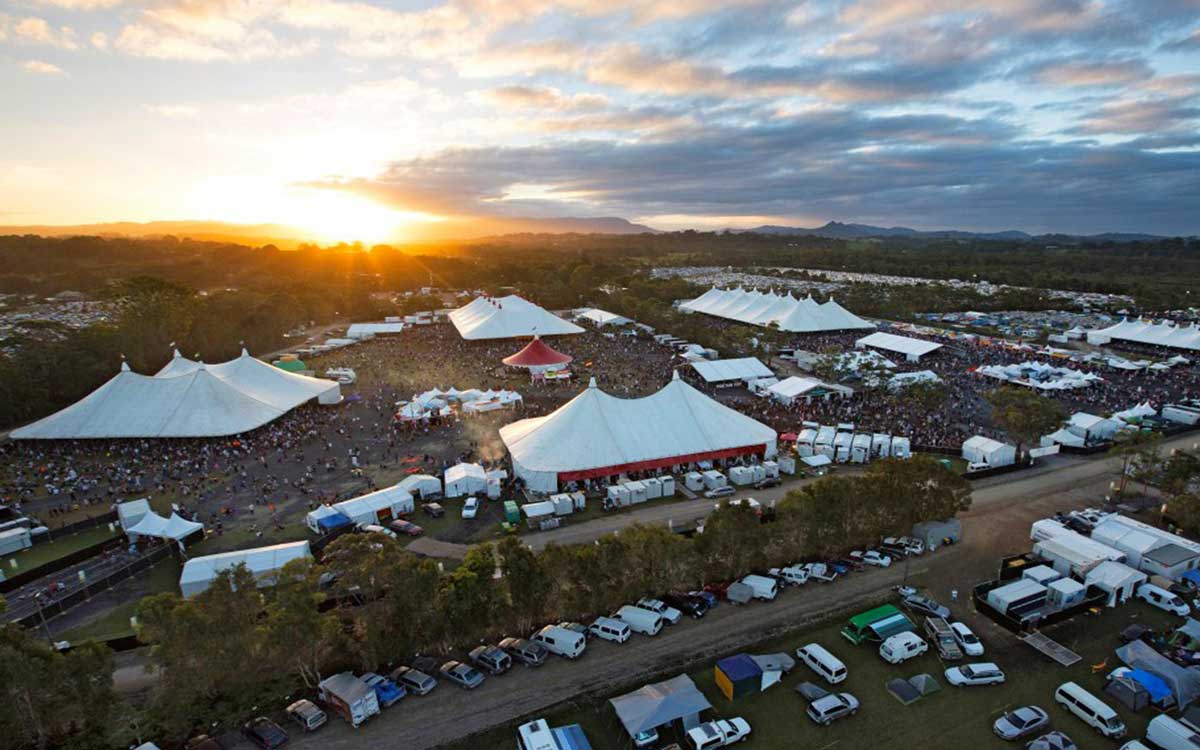
    Bluesfest 2018 Site

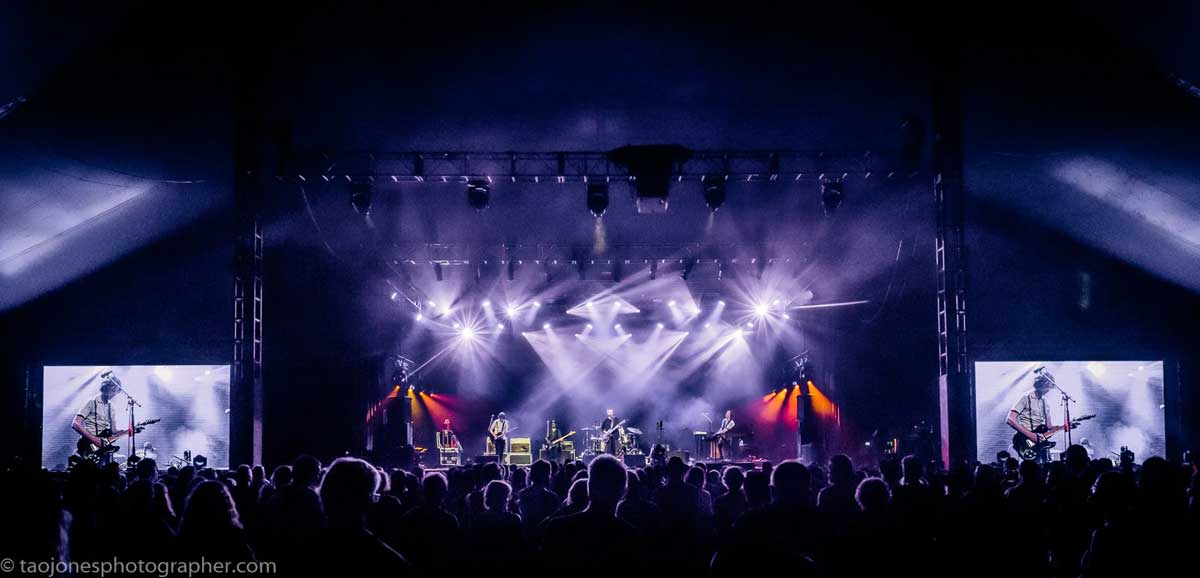
    Byron Bay Bluesfest 2018 was on again this past Easter long weekend with a legendary scope of local and global musicians across the five stages including Tash Sultana, Ms. Lauryn Hill, John Butler Trio and Lionel Richie.

    As in previous years, JPJ Audio provided a complete audio solution for the three main stages Mojo, Crossroads and Jambalaya. Mojo and Jambalaya had L-Acoustics K2 PA’s whilst Jambalaya had an L-Acoustics Kudo system.

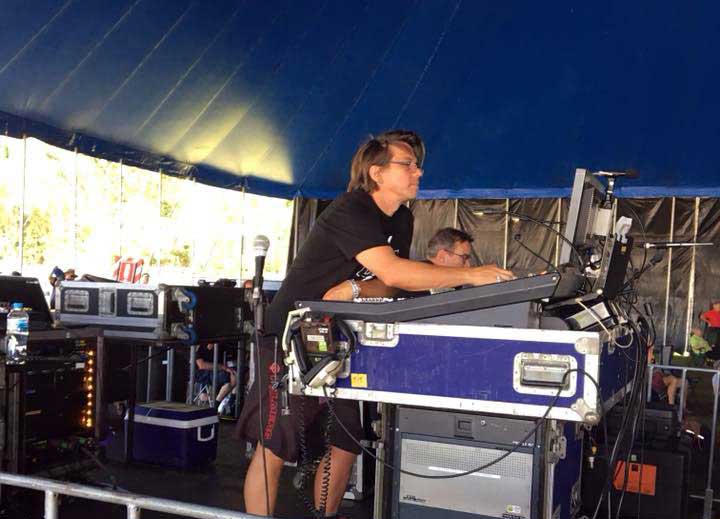
    Mojo and Crossroads are almost identical tents and the PA’s we set up are identical too,” said Tristan Farrow, monitor engineer for the Mojo stage. “We have a systems guy who makes sure they mirror each other and there’s some consistency between the two. Jambalaya is a different beast altogether as they don’t have the A/B system of control that the Crossroads and Mojo have, they just have the one set of control consoles, one FOH console and one monitor console.

    The week before the festival load in, JPJ begin prepping the gear in their warehouse but planning starts a month before when information from the bands starts coming through.
    The two main stages have an A and B system so there are two FOH consoles and two monitor consoles which means upstage line checks can be done with one whilst the FOH engineer can be loading show files on the other.

    It helps the half hour changeover time between acts to run smoothly,” added Tristan. “Of course in this day and age everyone wants to have their own equipment and that’s one of the main challenge faced every year by the JPJ crew. Some bring the whole package and some a little bit of their package, or they want us to provide a console for their sole use on the site.

    Bluesfest 2018 StageHowever most acts don’t require much special attention, they just need to be shown where the power is so they can set up and have the talented JPJ crew on hand to facilitate whatever they need.

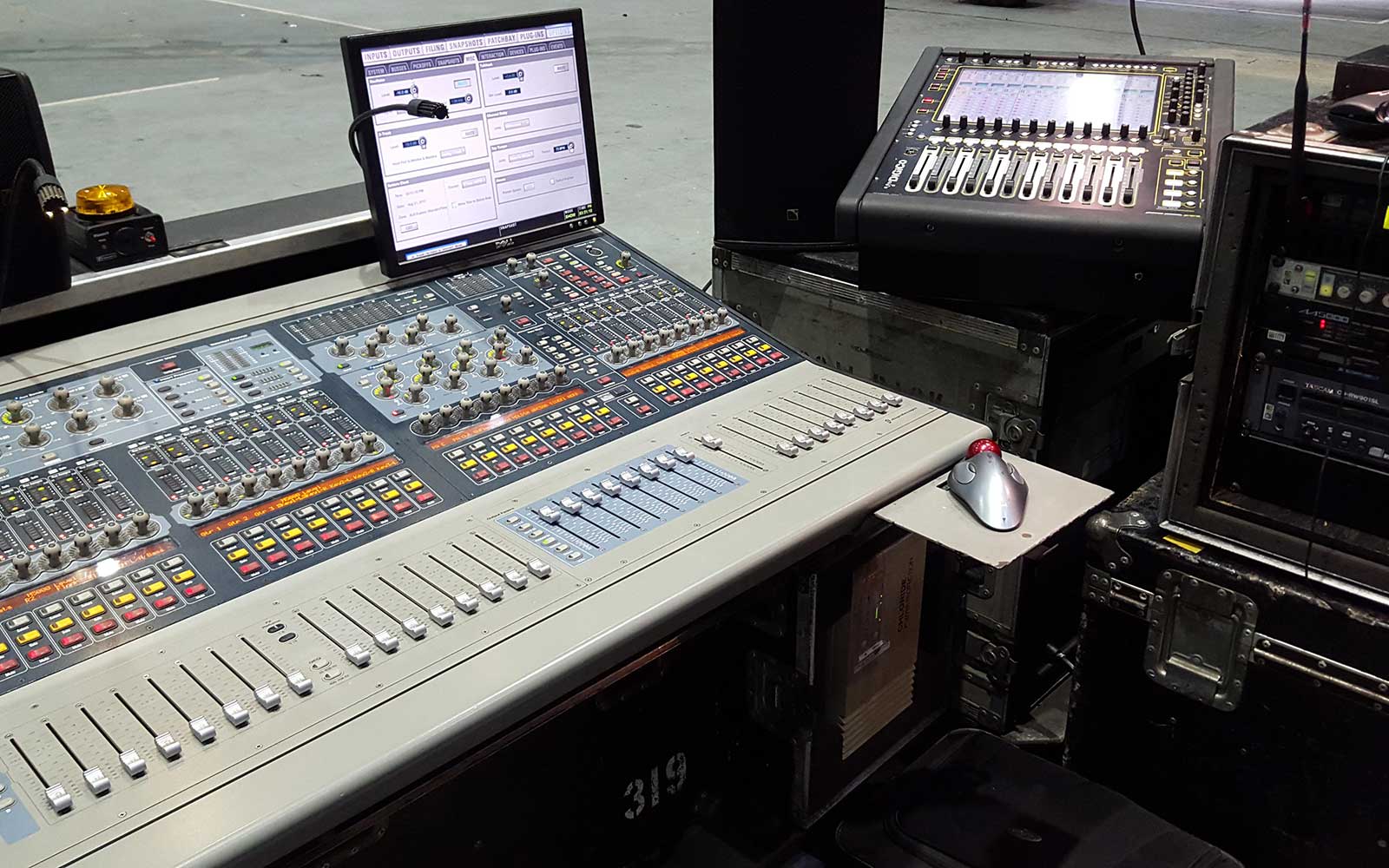
    Festival consoles this year were all Avid Profiles for FOH and Yamaha PM5D’s for monitors, on top of those there where a few floating DiGiCo SD7, DigiCo SD10, and Avid S6L consoles.
    The venues may be tents but Tristan says that they can achieve spectacular results with the L-Acoustics K2 system.

    The K2 is great for this as it has a generous dispersion and the noise limits on the site allow us to have a good rocking band mix,” said Tristan. “The aim is to have every engineer walk away smiling thinking that was a great show. And there’s no reason not to be able to achieve that at Bluesfest.

    Mojo crew


      FOH Garry Hall
      Monitors Tristan Farrow
      Stage Kellie Mckee
      Stage Nathan O’Shea


      Crossroads Crew


      FOH Alex McCormack
      Monitors Matt Debien
      Stage Joel Larson
      Stage Marlon Dunn
      (Missing was Blues fest regular Brendan Kean due to illness, 1st one he’s missed)


      Jambalaya Crew


      Stage Ryan Fallis
      Stage Will Krienke
      (Bluesfest employees for FOH and Monitors)
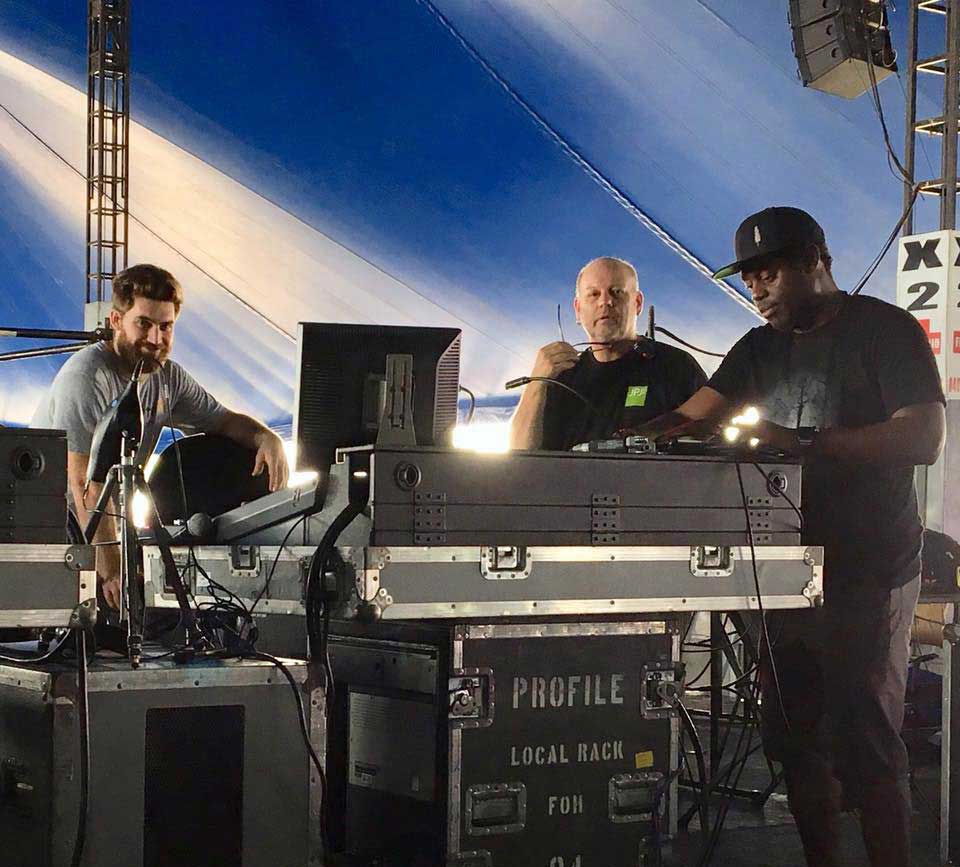
      Bluesfest 2018 Crew 2
      Bluesfest 2018 Crew 4
      Bluesfest 2018 Crew 5


  • Robbie Williams World Tour 2018

    Robie Williams 2018

    Global pop phenomenon, Robbie Williams toured his mammoth Heavy Entertainment Show World Tour around the country with JPJ Audio once again supporting audio needs.

    JPJ Audio supplied an L-Acoustics K1/K2 PA and amplifiers for the tour as well as PA’s for the A Day On The Green shows.

    We have fourteen L-Acoustics K1 with four K2 downs on the main hangs with the same number on the side hangs,” commented Josh Lloyd, system tech for the tour. “We also have twelve K2 to cover anywhere up to 240° upstage as well as flown K1 SBs subs in the air, twelve aside. There’s a ribbon of sixteen SB28’s underneath the stage as an arc. Then there’s an end fire array, left and right, of six SB28’s plus an assortment of Kara and Arc2’s as fill boxes.

    The whole system is run on the new LA12X amplifiers which Josh says have made an improvement in how the system sounds, as well as providing the incredibly helpful Load Checker feature that measures the attached loudspeakers to help make sure that everything is working correctly.

    With the LA12X we use the load check function which verifies the cabinets and checks the drivers are intact,” he added. “In terms of aligning and tuning the system, I use Smaart with a wireless control so I can walk the arena. We do all the control inside LA Manager, although we have Lakes we don’t use them for that but for transmitting the audio over the network with Dante as an audio over IP.
    FOH engineer Simon Hodge isn’t fazed dealing with Robbie spending much of his time out front of the PA.

    We have a great PA which makes it about as good as it can be in terms of gain before feedback,” he said. “We’re very happy with the system and the way it is lined up makes a big difference. Also, we did a shootout between lots of vocal mics and we recorded the results of him singing with them. The Sennheiser Diigital 6000 system with the MD9235-J capsule gave the greatest rejection of background noise and therefore feedback.

    The continuing reduction in RF spectrum also prompted a look at Sennheiser’s new Digital 6000 system which has helped the show as it has so much RF. According to Josh, the vocal sounds a lot more open and natural and the bleed from other sources down the mics is far cleaner and less problematic.

    Simon runs a DiGiCo SD7 and with so many people onstage, he uses a lot of channels saying the show is not exactly automated although he does a fair amount of clever stuff running things to time code to make his life easier.

    The show is still mostly mixed manually but we still spit out timecode which goes on to lighting and other departments,” he added. “We also multitrack everything at FOH so in rehearsals we can playback multi tracks that then goes off to other departments so they can rehearse without the band but still do all of the show cues.

    Out front Simon also had four Bricasti M7’s with a controller which Simon describes as lovely and again it’s all automated in with the timecode cues. He also has a Transient Designer on the drum skins and an old fashioned Klark Tecnik Gate on the kicks and snares.
    I find that the Gate in any digital console is not quite up to the standard of an analogue one,” said Simon.

    After many years working with Robbie, Simon knows his voice extremely well and knows how it changes through the evening. As a result, there are quite a few tweaks that he does to his voice through the show.

    It’s got to the point now that I can feel when he’s about to adlib and anticipate him,” said Simon.

    Everyone onstage, including the dancers, use Sennheiser 2050 wireless IEMs with monitor engineer Pete McGlynn also on an SD7.

    We’re gain sharing significantly which a lot of people don’t do but we know each other well enough to trust each other on the gains,” explained Simon. “So we’re acting as though we are one console so we’re connected together by fibre but there’s only one set of inputs.

    Both SD7s use Gain Tracking and are on an optical loop, with two SD-Racks handling all the inputs from stage, an SD-Mini Rack handles all the Sennheiser Digital 6000 wireless microphones, which are fed in via AES/EBU, and a second SD-Mini Rack handles inserts and PA outputs at front of house. The optical loop is used not only to gain share, but to distribute comms and the comprehensive talkback system between front of house and the stage.

    Around 96 inputs come from the stage, plus a large amount of inputs for band talkback and comms, which allow the band to communicate with the techs and Pete at monitors,” said Josh. “On top of this, we have triggers on the drums just to key the Gates on the console. Before you know it, the racks are all full.

    For outputs, there are 24 channels of Sennheiser 2050 wireless in ear monitors, an Aviom personal mixing system for the drummer, a couple of hard wired mixes, various tech mixes and routing, which mean the monitor desk is also fully loaded.

    JPJ provided the following crew for the two A Day On The Green shows headlined by Robbie: Conor Dunne, Lachlan Cresswell, Jesse Mahoney, Kane Phillips, and Stacey Handley. In Sydney Bianca Martin looked after delays.

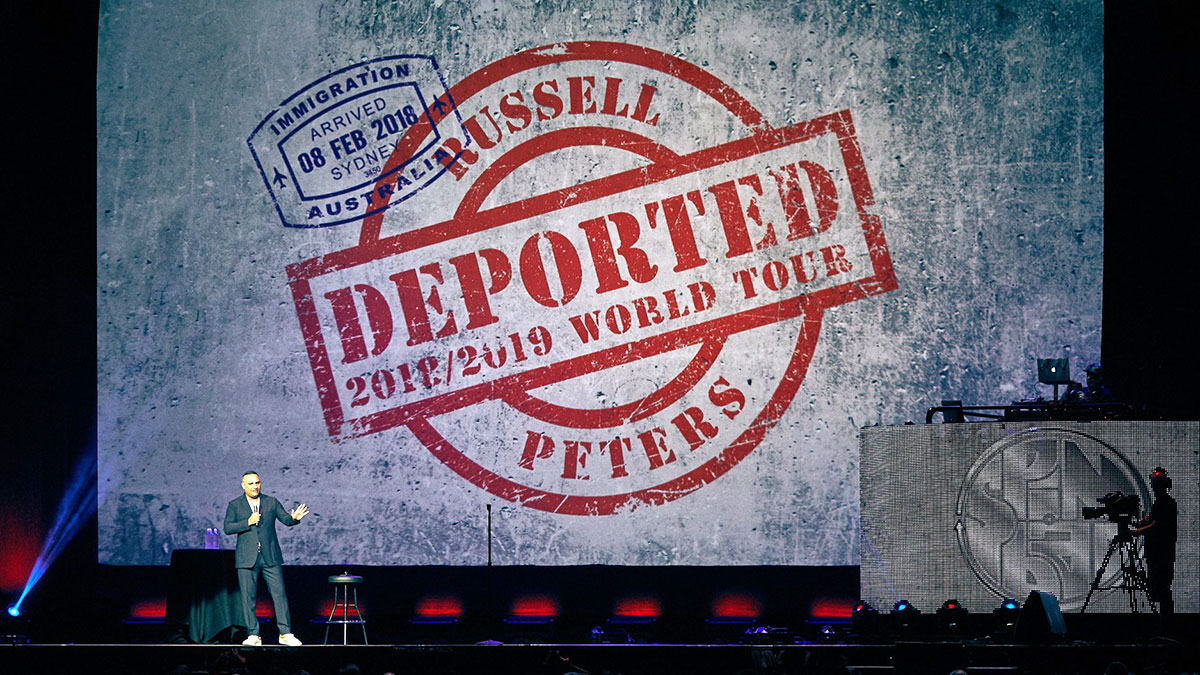
  • Russell Peters Qudos Arena Sydney

    Russell Peters 1

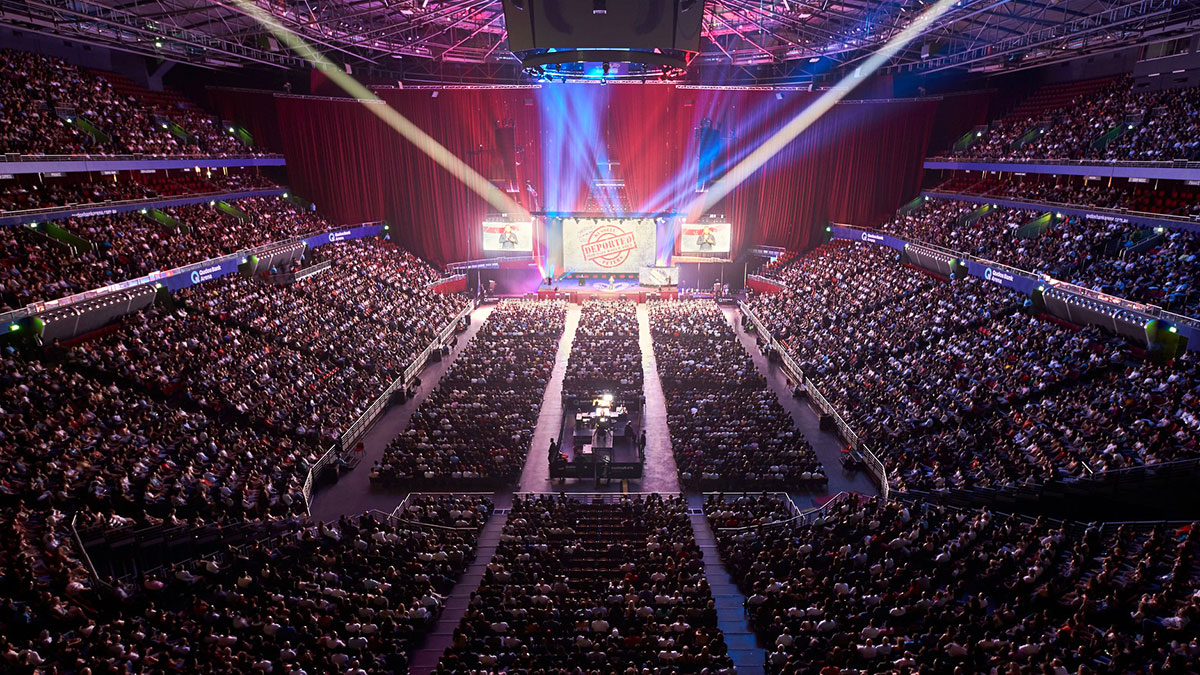
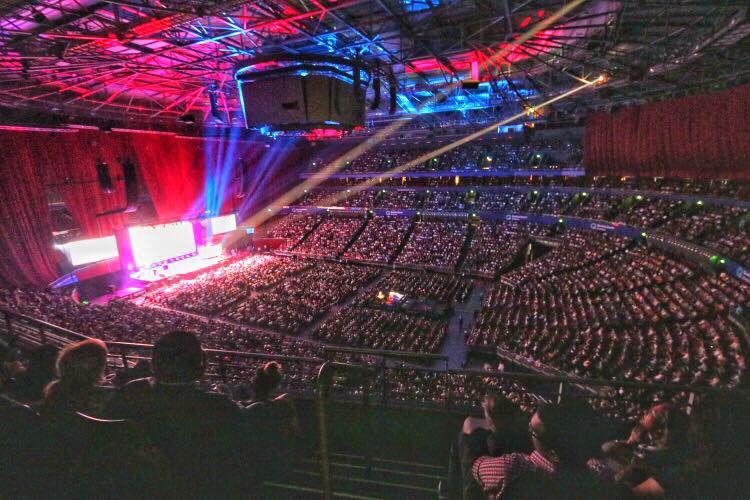
    The audio system JPJ Audio supplied for Russell Peters is amongst the largest we would routinely put in to Qudos Arena. In fact there were more speaker cabinets than we would hang for an average rock concert in the same space!

    This is because comedy relies on high intelligibility in the vocal range. If the audience can’t hear every joke, in every seat, they are not going to enjoy the show. If the audience can’t hear, they won’t laugh at the jokes, and this will impact the comedian’s performance (especially if the front rows can’t hear!!!).

    Russell Peters 2This clear audio is achieved through acoustic modelling of the venue prior to arrival, careful placement of the PA hangs, and having enough speaker boxes to achieve the required SPL. This is all sound checked by walking around the edge of every seating block in the venue, with a handheld radio mic and making adjustments to the different PA zones. This verifies that every seat in the house can hear every joke.


    Russell Peters 3The main hangs were two hangs of 12 x L-Acoustics K1 and 6 x L-Acoustics K2 with two hangs of 12 x L-Acoustics K2 for side hangs. Frontfill was 6 x single L-Acoustics Kara, outfill was 4 x L-Acoustics Arcs and subs were 12 x L-Acoustics SB28 Subwoofer Enclosures. All powered by L-Acoustics LA-8 and LA-12 amplifiers.

    A Dante drive system using Dolby LM44’s was utilized and this involved running a completely digital signal path from the FOH console all the way to the amplifiers via AES and Dante signal processing.

    A seamless back-up analogue audio fallback is also in every system using DANTE. Back-up systems and engineer comfort are critical to industry acceptance, so are always at the forefront of all JPJ Audio designed systems.

    FOH engineer for the tour was James Kilpatrick on an Avid Profile with Waves 9. James used a C6 multiband compressor to keep the speech clear at low level and cut the horn band back when shouting. He also had a vocal rider live in reverse to keep the mic level low in between pauses in speech to reduce room tone in the microphone.

    Russell Peters 4

    Crew:

    FOH systems engineer: Tim Seconi
    FOH systems technician: Bianca Martin
    Monitors systems engineer: Kellie McKee
    PA technician: Ben Northmore
    Special Guest Appearance Multicores and front fill trainee: Mats Frankl


  • Priscilla Queen of the Desert

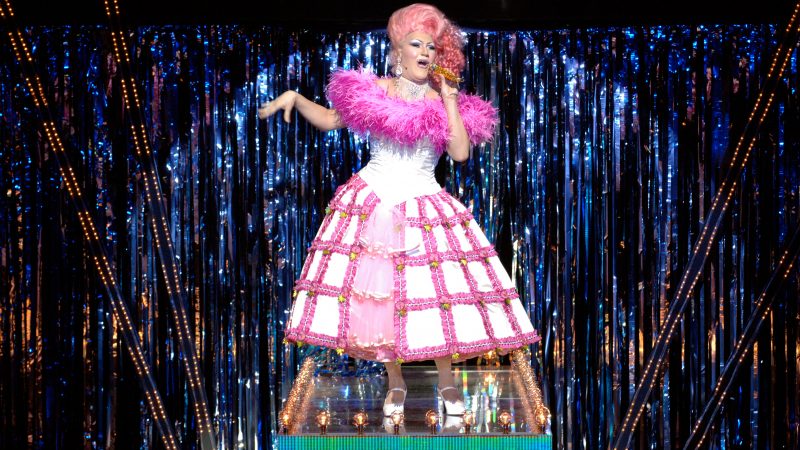
    Priscilla 1

    Ten years on and Michael Waters tells a different story

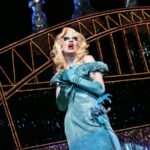
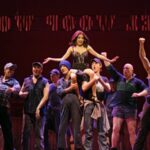
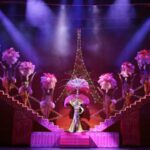
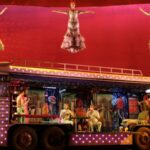
    After winning a glittering array of international awards on Broadway, the West End, Europe and Asia, Simon Phillips’ spectacular production Priscilla Queen of the Desert has returned to Australia for its 10th anniversary celebration tour.

    Opening at Melbourne’s Regent Theatre, the show is set to tour the country over the coming months with all audio supplied by JPJ Audio.

    Sound designer Michael Waters created the original production over a decade ago and since then he says that the evolution of digital technology is clearly the biggest change.

    We started with a digital platform of a Yamaha PM5d but since then I’ve moved onto a DiGiCo system which makes everything a lot more flexible,” he commented. “It sounds great and combined with the Aviom system, it makes it all streamlined. The progression of the networked L-Acoustics amplifiers has made a big difference too. Ten years ago we were using Crown 5002 amplifiers which sounded awesome but everything eventually had to move into the digital realm. Having the flexibility of networked processors, coupled with remote control accessibility via my iPad, means I can wander the building and mix off my iPad. We didn’t have that technology at our disposal back then!

    The Stealth Core 2 infrastructure with the DiGiCo means there is a lot more processing available on their consoles. With the SD10 that Michael uses, he goes direct from the DiGiCo system, from the SD rack straight into the LA8 amplifiers – basically cutting out a drive system.

    A lot of the system processing is done on the console itself, which in turn is controlled by the iPad,” he added. “I have complete flexibility in control of the sound system including the mix itself just from the one app. There is also processing going on with the LA8s and that’s also controlled from the iPad via Network Manager.

    Priscilla 8Michael is still using an L-Acoustics dV-Dosc PA system, describing it as fantastic, with the configuration used at Melbourne’s Regent Theatre very similar to the original. The only difference is the addition of a KARA centre cluster and several more delay subs to ensure the disco beats are everywhere and with even coverage in the huge barn that is the Regent.

    There are quite a lot of L-Acoustics subs in the system – DV-subs on each of the four L/R arrays, SB28’s on the aprons, SB18’s on the Delay Cluster and then spread out in the stalls,” said Michael. “In the dress circle there are Meyer 650P’s and then a pair of L-Acoustics SB118 subs above the mix position in the roof. That way we can keep the vibe jumping along all the way to the back!

    Microphones are still DPA 4066, double mic’ed with a DPA 4061 for the three Queens and also the three Divas who fly through the air. All DPA’s are run on Shure UR-4D wireless systems and Shure Micro Belt packs.

    I had to go with the DPA 4066 because of the amount of head dresses that all require quick changes,” explained Michael. “If we were to use lapel mics on the forehead, they would just get ripped off. The DPA 4066 also allows for a higher SPL which is good as there are so many disco come rock numbers in the show. The only exception is the young boy who uses a DPA 4061 because his contribution is only in quiet scenes.

    Microphones for the band include Shure Beta 52, Beta 91 for the kick, Beta 57 and Beyerdynamic Opus 87 for the toms, and a smattering of Audio Technica AT4050’s, Firefly DI on the bass and a couple of Coles 4038 ribbon mics on trumpet and saxophone, which sound very warm and smooth in the high end.

    Gallery


  • Paul McCartney 2017

    Paul McCartney 2017

    Two-time Rock and Roll Hall of Fame inductee, 21-time Grammy Award winner and recipient of The Most Excellent Order of the British Empire Sir Paul McCartney brought his acclaimed long-running One On One Tour to Australia this December, his first Australian tour since 1993’s The New World Tour more than 24 years ago.

    The show featured nearly three hours’ worth of the greatest moments from the last 50 years of music, dozens of songs that have formed the soundtracks of our lives. FOH engineer Paul Boothroyd – known more commonly in the industry as Pab – has been with Sir Paul for a fair portion of this journey.

    I first started working for him in 1989,” said Pab. “As well as being on stage for three hours, he also does a one hour sound check every day. With line checks and system checks as well, I’m probably behind the console twiddling knobs for five hours so it’s quite an extensive day technically.

    That FOH console was an Avid Venue S6L which Pab has used ever since it was released and he describes it as one of the best consoles on the market. Pab’s S6L carries dialed-in snapshots for more than 100 songs.

    It’s very powerful and has massive capability,” remarked Pab. “My vocal chain for Paul is fairly straightforward; I’m using a Sonnox Oxford EQ and Avid Pro compressor. For effects there are some general reverbs (short, medium and large), a little bit of delay ADT and that’s it. There’s no playback or inputs from anywhere else, it’s all live.

    Plug-ins that are used sparingly include Smack!, ReVibe II, ReVibe I on drums and Mod Delay III.

    JPJ Audio supplied the crew and gear for the tour including their Clair Brothers’ Cohesion Series for PA. At the Sydney show indoors at Qudos Bank Arena, Pab had sixteen CO12 L+R, fourteen CO12 LL+RR, twelve CO12 LLL+RRR, six CP218 Subs flown per side, three CP218 Subs per side ground stacked and twelve CO8 for front fill.

    It’s absolutely the PA of choice for me,” said Pab. “I find it very flexible, light, and simple to manage. It delivers great results and is very accurate.

    The stage is fairly loud with only Wixy (musical director/multi-instrumentalist Paul “Wix” Wickens) wearing IEMs. The rest of the band opts for Clair R4 sidefills with ML18 subs and SRM wedges. Monitor engineer John “Grubby” Callis uses an analog Midas Heritage H3000.
    It’s very old-school rock and roll,” says Pab. “It’s loud sidefills and wedges up there because he likes to rock out.

    Microphones were a mixed bag with Pabs never swayed by fashion or freebies preferring to apply the correct microphone to suit the job.

    I like Audix on the drums and Shure for the vocals,” he added. “Paul’s very happy with the SM58A because he’s used to it – there may be a better microphone to suit his vocals these days but he is very used to what he has had for the past thirty years. So why change?

    Having not toured Australia for a good few years, Pab says he was very pleased to be greeted with such a professional JPJ team, a very happy team who just dealt with anything that was asked.

    Thanks JPJ for the fun and hard work, greatly appreciated,” he added.

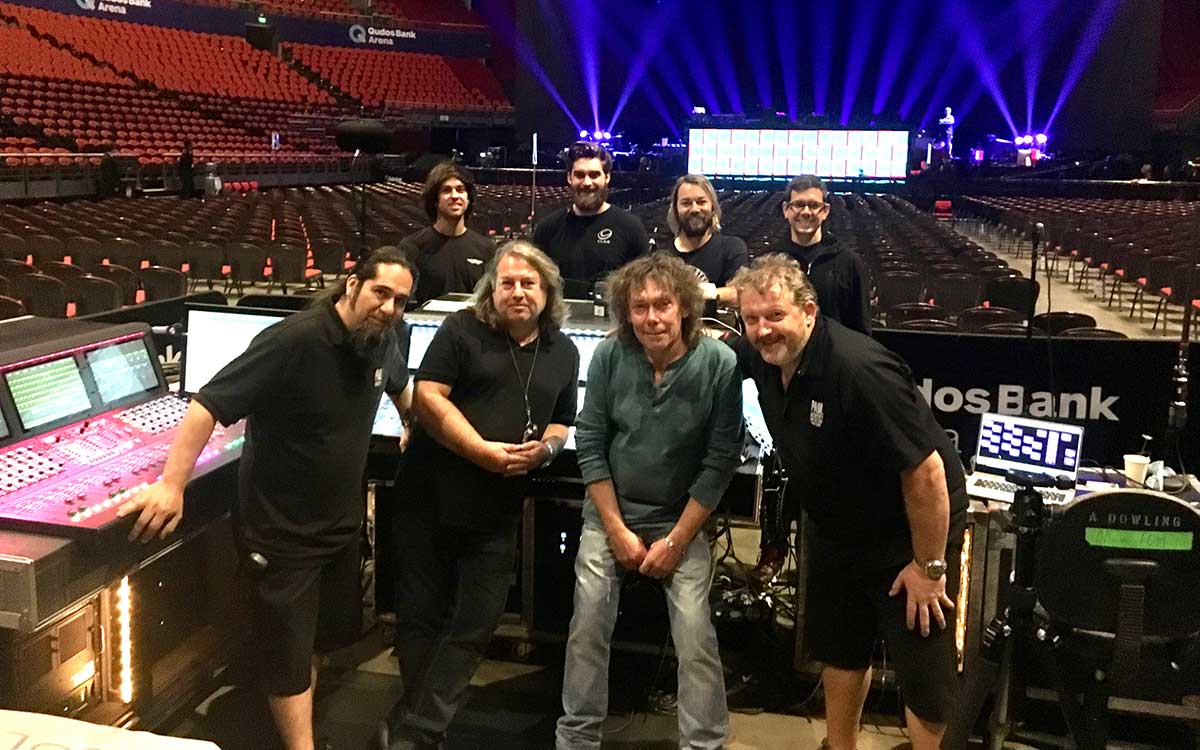
    One On One Tour Crew

    Paul McCartney crew
    Back row: Joel Larson, Alex McCormack, Tim Seconi, and Andrew Dowling SE from Clair Global
    Front row: Tech Sean Baca, FOH engineer Paul ‘Pab’ Boothroyd, monitor engineer John ‘Grubby’ Callis, and monitors system engineer Paul Swan.


  • SIA Nostalgic for the Present tour

    SIA 2017 1

    SIA’s Nostalgic for the Present tour delivered three stadium shows: Sydney, Melbourne and Auckland.

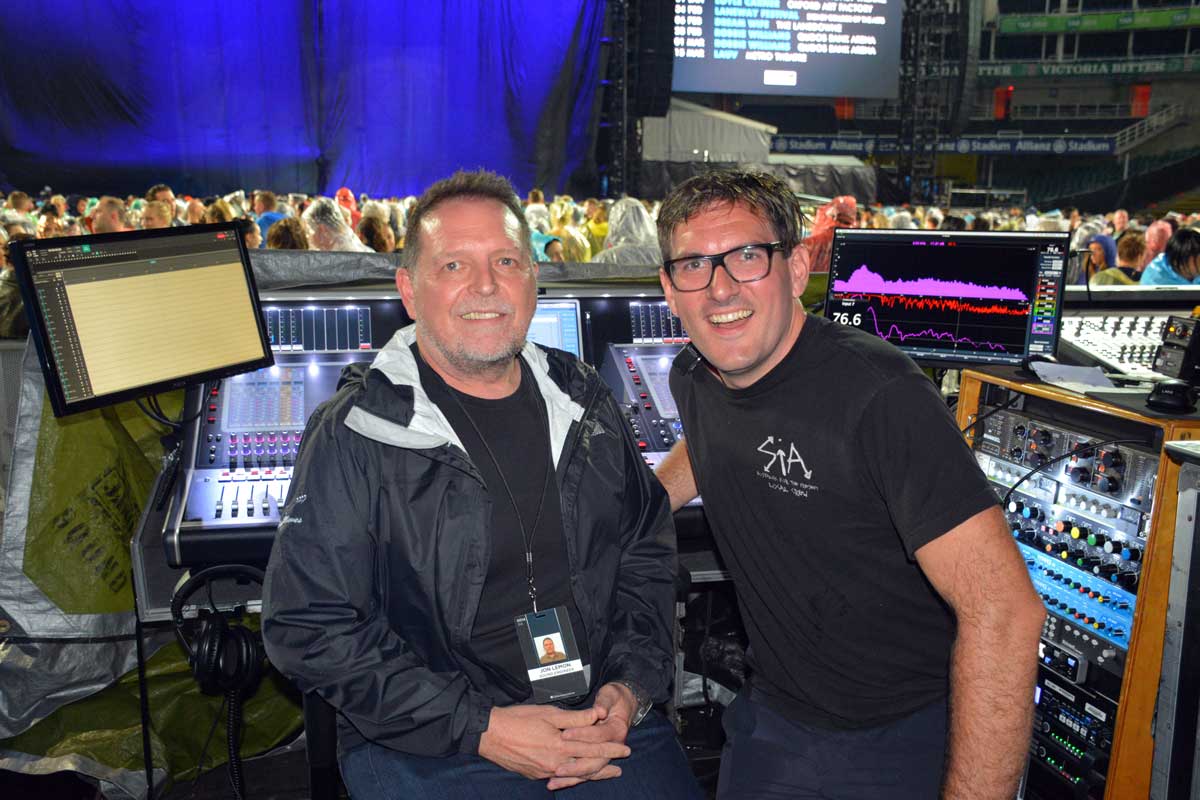
    FOH engineer Jon Lemon has known SIA for most of her life and has been doing gigs for her on and off since 2002. When he wasn’t out on tour with the big name acts he works for, he would do the clubs and small theatres with her. Today SIA is an international music star and Jon is still there at FOH, albeit mixing in a stadium rather than a club.

    It’s a very organized show,” said Jon. “The biggest challenge was putting it all together in the first place as it’s mostly playback in terms of the music. The brief I had was to make it feel like it was live but also sound like the record with SIA then singing live on top of it.
    I see it a lot with hip hop and rap where it’s just the artist and a DJ with minimum amount of stems and the engineer has just got nowhere to go and nuance it like the record. The environment changes the audio all the time, it might be a gig sucking out all the percussive stuff or over emphasizing the bass and you need control over all of those things.

    A DiGiCo guy through and through, Jon was using an SD5 with a couple of Waves Servers on it plus a little bit of outboard; Waves MaxxBass, a few Maag EQ4’s and Smart C2 compressors to keep it all in control and even the sound out. “SIA has a big voice so I use Waves Renaissance compressors as well as their 1176 limiters on her vocals as she is so dynamic,” said Jon. “It’s pretty dialed in and quite simple because we did a lot of the work beforehand, in this modern way of doing things.

    Jon has around fifty inputs on his DiGiCo SD5, all split up and presented like it’s a live band playing – with more consistency than usual and less egos!

    A lot of people may think it’s complicated but I don’t because I have been so close to the music and the process of it,” elaborated Jon. “I know how she sings and I know how to ride it around to keep it level. As everything is so consistent we have a pretty good result most of the time. A lot of modern music is about the system engineer and how the company sets up the system. When I first started out, I was doing it all but realized a few years back that the complexities of these big venues, with networking, delays, and timing, is best left to someone else so I can concentrate on the art part of it. Of course, I oversee it all and will walk the room …. but on this tour I have one of the best L-Acoustics system engineer and designers in the business which makes my life easier.


    That system tech is Vic Wagner who, alongside JPJ Audio’s Mats Frankl, ensured the L-Acoustics K1 / K2 PA was tuned, timed and ready for action. Multiple delay towers and rings were required to cover the stadium as much as possible, delivering maximum SPL possible without upsetting the EPA people.

    Jon reports that he had complete faith in his support team of Mats Frankl, JPJ Audio’s Bob Daniels and Vic Wagner commenting that the entire JPJ crew impressed him.

    The L-Acoustics K1 is a really reliable PA and sounds great,” added Jon. “We had two main hangs, subs across the front, sides a mixture of K1 and K2 and then four K2 delay towers. It all worked perfectly.

    SIA has always used a trusty Shure SM58 microphone and according to Jon, she always will.

    I’d like to change it but she is so used to using the SM58 dynamically its part of the way she sings,” he explained. “That’s why I use the Maag EQ4’s as analogue inserts because they have the airband on them which means you can actually make an SM58 sound like an expensive microphone!

    Jon remarked that he had a great JPJ crew on the tour and, seeing as he worked for JPJ when it was Jands Production Services many moons ago and he knows so many staff, he sees working with JPJ as a family event …..in fact he wouldn’t even consider using anyone else in Australia.

    Jon will be touring Australia with Roger Waters early next year and again he will reunite with JPJ Audio.

  • AFL 2017 Grand Final

    AFL Grand Final 2017

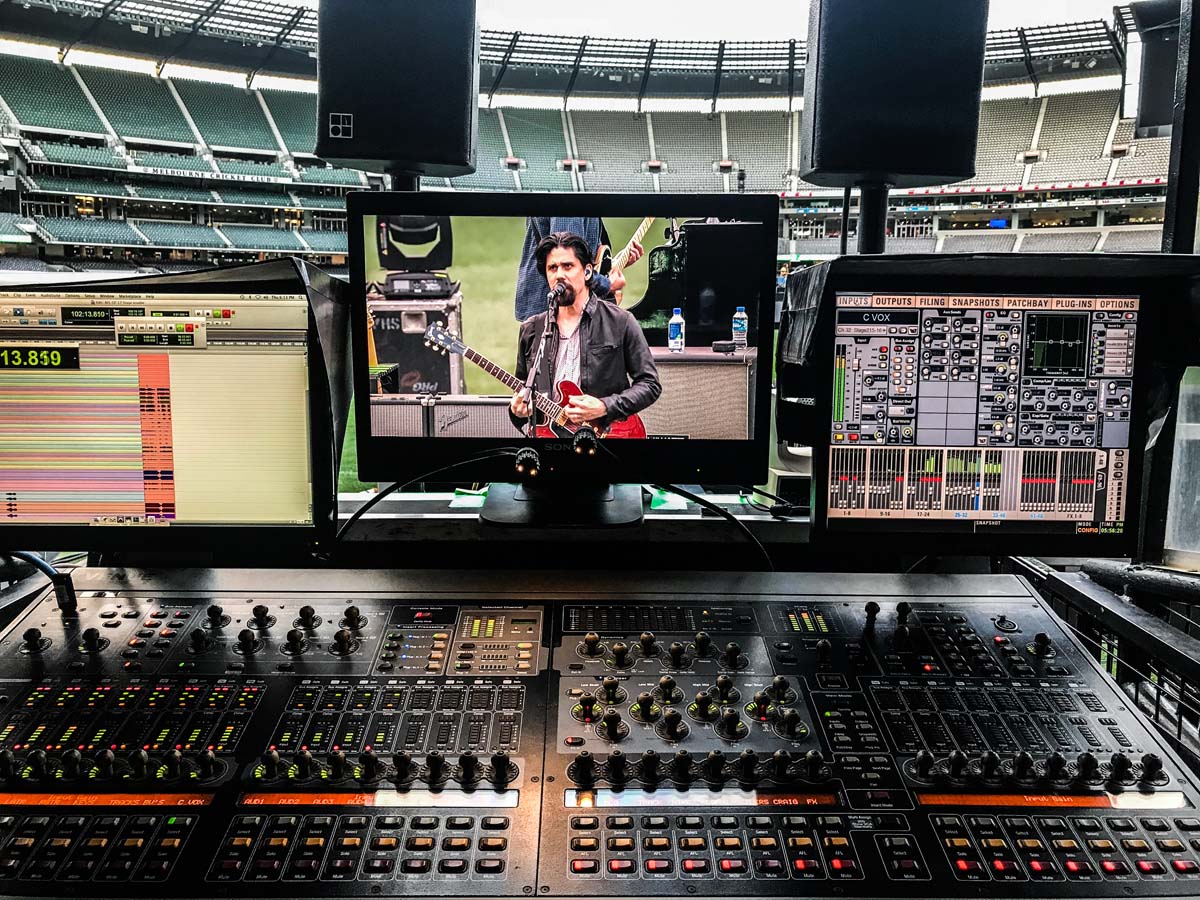
    JPJ Audio took over designing and operating the audio system for the AFL Grand Final entertainment six years ago and it’s been smooth sailing ever since. This year The Killers absolutely nailed it with an incredible performance that won them universal praise.

    For sound designer James ‘Oysters’ Kilpatrick the biggest hurdle is the sheer size of the playing field, which is around 500 metres in circumference, and the fact that everything has to be set up in matter of minutes. Of course, it also has to be taken down in an equally short amount of time.

    We do a rehearsal during the week where it all has to be wheeled out and struck down afterwards, and then we do a soundcheck and out it all goes again,” said Oysters. “We also have a large amount of outputs as we’re driving the TV OB for the music, sending a mix with ambient mics to Triple M plus feeding the ground and the media. It takes us about a week to wire and thoroughly check all of the outputs as there are so many including various mix minus feeds.

    Oysters ran an Avid Profile mainly because he wanted stability and the Waves Plugins to run without the complication of a server but also because of its’ small footprint as space is premium. He also required a console that was capable of running ProTools whilst at the same time, could add markers for memories via snapshots, as the rehearsals are recorded on the Thursday and on the Friday there are more rehearsals running everything off the ProTools to the broadcast truck. The reliability of the Avid Profile was also a major factor in its choice especially as the weather and temperature can be quite erratic in Melbourne at that time of year.

    At FOH control with Oysters this year were Tim Millikan and Ryan Fallis, with Oysters sending his outputs to Tim to distribute via matrix mixers, line drivers and active splitters. Everything that Oysters had on his console was mirrored onto Tim’s DiGiCo SD11 in case Oysters console was to fail. Ryan looked after the fully redundant ProTools replay and would also send everything he was doing to Channel 7. All control gear was on a UPS and were all timed, with JPJ doing extensive power failure tests in the factory leading up to the event.

    It was all fibre with Channel 7 directly to me so that was a bit easier than years previously,” added Oysters. “Tim and Bowden Birkett (JPJ Audio’s head system engineer) could actually change any part of the PA or any part of the zoning, or even the levels to Channel 7 without asking me.
     

    It’s important to remember that this is a TV show, not a concert, which can be a hard thing for people to get their head around. It’s not only live in the ground, its going live to millions people, there is no waiting till somebody is ready, it just rolls ready or not.

    You have to use wind socks as it’s our windiest month in Melbourne and it really swirls around the ground,” said Oysters. “RF can also be a problem and in the past, it has failed. This year Frontier production bought in Peter Cochrane from ARTICULATE Communications to manage all of the RF and communications. He lowered the power on all of the radios, allotted all of the frequencies and it worked incredibly well. Everyone is on in-ears because without them the amount of slap back in the playing field is disorientating.

    Sixteen carts of d&b audiotechnik cabinets were wheeled out, each cart holding three d&b J Series cabinets.

    The ground runs in mono with redundant loops of signal and power so the most you could lose would be two or three carts,” said Oysters. “We can even broadcast for about 15 to 20 minutes without power although the speakers would fail. We could have run it with fibre but that would have got quite complex and I try to keep it as simple as possible, especially as so many complex things have failed at this event in the past. Eventually it will be entirely networked but when we do that, we’ll probably run it in the shop for a month before.

    Oysters remarked that this years’ show by The Killers was the best yet, even though the band was so complex he didn’t take a full split of all of their gear.

    As they have so many electronics such as sequencers, synthesizers and keyboards, we had that all bussed down a series of stems by Marty Beath,” he explained. “We took the vocals, guitars and drums all separate but it was condensed across sixteen lines instead of say fifty-six.

    Once the footy had finished, The Killers performed a free show for anyone who wished to attend reverting back to a normal concert set up with FOH and monitors and with Oysters looking after OB to television only.

  • Ariana Grande

    Ariana Grande 3

    The world’s biggest pop sensation, Ariana Grande, bought her Dangerous Woman Tour to Australia this September and JPJ Audio joined her on the road!

    Ariana Grande may be tiny, but her voice is big enough to drown out a stadium packed with thousands of screaming fans …. with a little help from a Clair Cohesion PA and her FOH engineer Simon ‘Si’ Thomas.

    Toby Francis, Ariana’s usual FOH engineer, asked Si to replace him at the helm of the DiGiCo SD7 last May as he left to work on Katie Perry’s new tour.

    Ariana Grande 4The Clair Cohesion PA has been utilized for her entire tour, unless unavailable in a country and then an L-Acoustics K1 or d&b J series stepped in, and it’s a system that Si is more than happy to have inherited. In Sydney, Ariana played the ICC Sydney Theatre with sixteen CO-12 per side in the main hang, twelve CO-12 per side in the side hang and three CP-218 flown per side in cardioid. Another six CP-218 per side were ground stacked in cardioid. Infills were Clair CO-8.

    It’s very compact and light weight compared to other line arrays in its class and it’s got lots of headroom,” commented Si. “It has a really good high/mid which is very smooth. With this kind of music there’s a lot of odd sub content that goes down really low with which the CP-218’s do a really good job. The CP-218 sub is particularly good, it’s very powerful.” Si described the ICC Sydney Theatre as an ‘interesting’ venue but at the end of the day, he was happy with the result.

    No one had flown subs in there like we did and I believe that made a lot of difference because if there’s too much down on the floor, it’s pointless,” he said. “Once you get some sub higher up, it works really well. I had heard horror stories about the venue but it was fine and quite decent sounding. Although getting in and out of it is a pain in the arse!

    Ariana Grande 2FOH there is a fair amount of analogue involvement, with Si using the SD7’s subgroups to route out through Lake Processors which convert the digital to analogue. “I then have a Neve Portico 5059 Satellite 16×2+2 Summing Mixer and within that I’ve inserted various types of compression – Smart C2 for the drums, Crane Song STC-8 for the music, backing vocals a Tube-Tech SMC 2B multiband optical compressor and for Ariana’s vocal a Rupert Neve Shelford Channel,” explained Si. “The various compressors are on the A Channel side of the Portico summing mixer, which are then all fed to the B side of the summing mixer to create a master mix which has a Portico II Master Buss compressor across it. Then that would then output and come back into the Master Buss return insert point of the SD7 with yet another Lake, converting to AES. Basically it’s a like one big insert chain.

    Added to that were a couple of TC M5000’s used for drum and vocal reverbs. Si readily admits that it took him a bit of time to get his head around what was going on but concludes that the system works very well.

    Ariana Grande 4Ariana uses a Sennheiser MD 5235 dynamic microphone capsule with a Lake inserted across her channel so all of her vocal EQ’s are done in the Lake and not the console. In fact a lot of the serious work is not done in the DiGiCo which is basically being used as a big router! The Digico channel expander was used on the vocal to keep the noise floor down so when Ariana is in front of the thrust and is not singing, you’re not hearing the room noise or PA.

    I’m using a Telefunken M82 kick drum mic which is really, really nice,” added Si. “I also have Telefunken M81’s for the snare drums but the rest of the mics are fairly standard.

    Vish Wadi also used a DiGiCo SD7 to run monitors with everyone using Sennheiser 2050 IEMs plus there are flown sidefills, some CM-22 stage monitors on the floor for the dancers and CP-118’s providing sub onstage for the band.

    The Australian tour was good fun and we really enjoyed it,” said Si. “To be honest, it was quite easy …. partly due to my system tech Jerrell Evans and the JPJ crew of Tim Seconi and Alex McComark, who were good lads.

  • Southern Stars 2017

    Southern Stars 1

    Thousands of performers and spectators converged on the WIN Entertainment Centre last month, as the annual Southern Stars school arena show hit town.

    More than 3000 student from primary and high schools in the southern schools region performed with the show also including soloists, a 500 piece choir, and orchestra and an indigenous dance company.

    Students came from about 120 public schools as far away as Bourke, and the show was touted as the biggest show so far in Southern Stars’ 17-year history.

    Southern Stars 2JPJ Audio provided all things audio with a system designed Bob Daniels and implemented by George Gorga whose biggest challenge was a large orchestra mainly comprising of students!
    It takes them a while to get used to being in the arena dealing with headphone monitoring, IEMs and the PA running but there’s a point, usually around dress rehearsal, when it all comes together,” he said. “I’m also dealing with a large number of non-professional vocalists but again, it all comes together in the end. Having said that, the musical standard of these kids is extremely high and during the public shows it’s easy to forget that some of these players and performers are only in primary school.

    The stage is set traditionally at one end, albeit a bit bigger than a standard stage, and primarily accommodates the orchestra, whilst the arena floor is the main performance area for soloists and dancers. The choir sit in the seating bank behind the stage.
    The PA is a central cluster hung above the floor centre,” explained George. “There are three positions; one facing forward and two straight out to the sides. It looks a bit odd as the centre PA is about two metres behind the side clusters but it works really well and they don’t get in the way of each other. The time alignment is ‘physically’ very close to start with and it’s seamless when you walk around the room.

    Jack Richardson, system tech for the event, remarked that this is the best sounding configuration he’s had heard in this venue. George admits he had a bit of an advantage in the fact that he only had to cover the seating from a centrally located PA, but insists a lot of the success was down to Bob Daniels’ design.

    Southern Stars 5Of course the L-Acoustics K2 system is amazing too,” George added. “It’s my favourite system at the moment. This is the first time we’ve used the K2 on this event and it was a real leap ahead in quality and impact.
    FOH George ran an Avid 96-channel Profile console plus a 48-channel DiGiCo SD11. On the Profile he used just about all of the available effects adding his standard TC Electronics M5000 reverb and a Smart C2 compressor over the mix buss.

    I use those pretty much all the time and although I could use a plugin for the C2, I’ve got the real thing and it just holds everything together in the mix,” said George. “In a situation like this show where it can be quite unpredictable, the C2 can be a life saver.

    Radio microphones were twenty-six systems of Shure Beta 58 with a couple doubling up as guitar packs and DPA 4088 headset systems. Orchestra microphones were assorted with George favouring dynamic microphones such as Shure 57 and 58’s for brass and woodwind.
    In this situation, they’re much easier to deal with when you have kids using them,” said George. “I still get the sound I want without using expensive condenser mics. With the constant turn around, the radio mic tech Bianca Martin and her volunteer student crew are kept very busy!

    Monitors were taken care of by Bob Daniels on a DiGiCo SD5 with an Aviom headphone system for the orchestra and lots of Sennheiser IEM systems for the singers.

    Gallery – click to enlarge

  • Icehouse – 40 Years Live

    Icehouse 40 1
    Photo © Troy Constable

    With a career spanning 40 years, iconic Australian band Icehouse has continued to delight millions with their music, well-known and loved by audiences across generations. Icehouse began in 1977 as a Sydney-based pub rock band called Flowers, who were the highest paid unsigned act in Australia at the time.

    In 2006, Icehouse was inducted into the Australian Recording Industry Association Hall of Fame, being described as ‘…one of the most successful Australian bands of the 80s and 90s’. Icehouse’s 1987 album Man of Colours remains to this day as the highest-selling album in Australia by an Australian band.

    With a history like that, it’s no wonder the band have been selling out their 40 Years Live Tour this year as it travels the country … with more dates just announced!

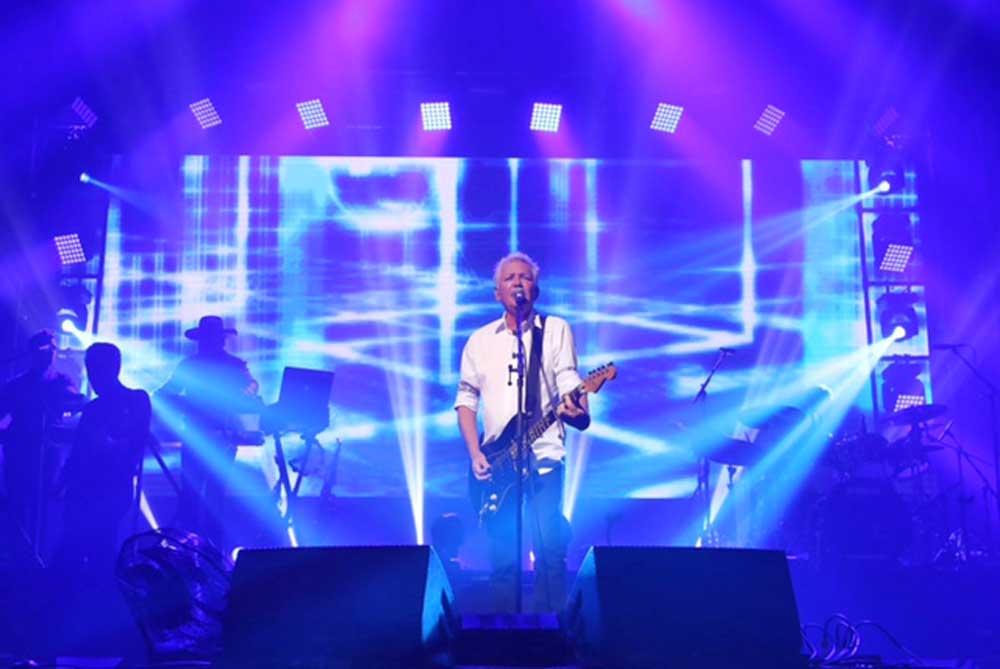
    Touring with an audio package from JPJ Audio, the tour utilized in-house PA systems where available with JPJ supplying speaker systems when required. FOH Engineer Richie Robinson, who has mixed for the band since their return to live shows in 2011, used an Avid Venue S6L saying it is one of the best mixing consoles on the market. He travels with absolutely no extra FOH equipment, which reinforces how good the console sounds on its own.

    I had used an Avid Profile since 2007 and always loved working on it,” he remarked. “However, it got to a stage where I thought ‘well that’s the sound of it’ and decided to try some other consoles that had better preamps and a more open sound stage. While I usually liked the sound of them, I didn’t fall in love with their operating systems as much as I did with the Avid Venue gear. When the Venue S6L came along and I tried it out, I was blown away with how good it sounded. It’s a real win for Avid and I think you’re going to see a lot more of them.

    Icehouse 40 3
    Photo © Troy Constable

    When Richie used to mix Icehouse on an Avid Profile, he implemented a combination of Waves plug-ins and outboard reverbs but he’s been happy with the way the onboard fx plugins sound with the new console.

    With the combination of the new audio engine in the console running at 96khz and the plug-ins running on the AAX DSP cards, even the Avid reverbs sound a whole lot better to me,” added Richie. “I’ve gone back to using the ReVibe reverb which sounds really good and other than that, I bought a few 3rd party plugins for some other eq, compression and saturation flavors. I miss some of my Waves plug-ins but it’s been cathartic to ditch what you’ve been using for so long and just go ‘wow, that sounds so good just straight out of the console!

    One 3rd party plug-in that Richie has used often with Icehouse is the Brainworx bx-console channel strip by Plugin Alliance which he implements over many channels. “There’s a subtle character thing going on with that plug-in that suited this band” said Richie.

    Richie uses the Snapshot and Layout features on the console for all the songs – mainly for turning on and off required input channels and for keeping the top fader layer populated with the key input elements for each song. He also found that snapshotting the effects on the Venue S6L was a very handy tool. As Iva Davies wrote and produced so many of Icehouse’s tunes, he can be quite specific with the echoes and delays used on the original recorded versions so Richie decided to snapshot all of the echo effects. That way he doesn’t have to worry about adding the correct tap tempo to each song – when he recalls the snapshot to the next song all of the stored effect parameters are recalled.

    Microphones were fairly standard with a selection of Shure wired and radio microphones, a couple of AKG414’s for drum overheads plus Sennheiser and Audio-Technica Australia microphones. “We have a Shure KSM9 for when Iva plays an oboe in Man of Colours and that’s probably the funkiest mic we have.” said Richie. “We’ve tried a few different mics on it but that’s the one we kept coming back to.

    Icehouse 40 2
    Photo © Troy Constable

    Onstage, the band are all on Shure PSM1000 IEM’s with most of them using the Shure SE846 ear buds. In addition, Iva has a couple of d&b audiotechnik M4 wedges in front of him as he occasionally removes one of his IEMs. Sidefills are L-Acoustics Arcs with dv-Subs and the drum sub is a pair of d&b Q-subs. Monitor Engineers for the tour were Paul Kennedy (now out with Midnight Oil) and Matt Debien who both used a Yamaha PM5D with an Apogee Big Ben word clock.